
Welcome to the
HOOVER INSTITUTION

Seeking to improve the human condition by advancing ideas that promote economic opportunity and prosperity while securing and safeguarding peace for America and all mankind.




- Featured
- For You

China’s Alternative Order: And What America Should Learn From It
By now, Chinese President Xi Jinping’s ambition to remake the world is undeniable. He wants to dissolve Washington’s network of alliances and purge what he dismisses as “Western” values from international bodies. He wants to knock the U.S. dollar off its pedestal and eliminate Washington’s chokehold over critical technology.
via Foreign Affairs


The Five Futures Of Russia: And How America Can Prepare For Whatever Comes Next
Vladimir Putin happened to turn 71 last October 7, the day Hamas assaulted Israel. The Russian president took the rampage as a birthday present; it shifted the context around his aggression in Ukraine. Perhaps to show his appreciation, he had his Foreign Ministry invite high-ranking Hamas representatives to Moscow in late October, highlighting an alignment of interests.
via Foreign Affairs
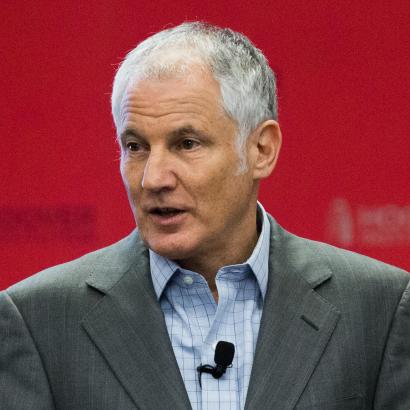
Margaret E. Raymond On Proven Results: Highlighting The Benefits Of Charter Schools For Students And Families

What is MyHoover?
MyHoover delivers a personalized experience at Hoover.org. In a few easy steps, create an account and receive the most recent analysis from Hoover fellows tailored to your specific policy interests.
Watch this video for an overview of MyHoover.
Forgot Password
Login?

Great Powers Don’t Mind Their Own Business, They Shape The Future, Says Condoleezza Rice At 2024 Drell Lecture
Hoover Institution Director Condoleezza Rice gave a speech titled “What Does America Stand For?” Rice discussed the economic, political, and military systems championed by the US following World War II, how those systems are being challenged, and what America’s role in the world should be today.
via Stanford Report


Sustained Debt Reduction: The Jamaica Exception
Sharp, sustained reductions in public debt are exceptional, especially recently. We know this because public-debt-to-GDP ratios have been trending up in advanced countries, emerging markets, and developing countries alike.




What is MyHoover?
MyHoover delivers a personalized experience at Hoover.org. In a few easy steps, create an account and receive the most recent analysis from Hoover fellows tailored to your specific policy interests.
Watch this video for an overview of MyHoover.
Forgot Password
Login?
Commentary on the News

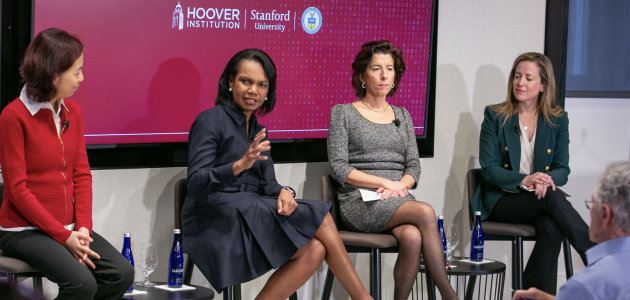

The Second Cold War Is Escalating Faster Than The First
To understand what is at stake in the fight against the axis of China, Russia and Iran, just read “The Lord of the Rings.”
via Bloomberg

Core Institutional Priorities
Featured Fellows
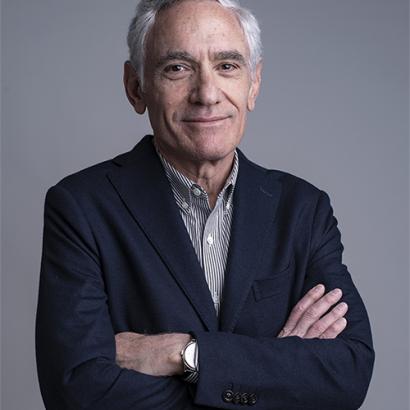
Scott W. Atlas
Robert Wesson Senior Fellow

Thomas J. Sargent
Senior Fellow (adjunct)
Stephen Kotkin
Kleinheinz Senior Fellow
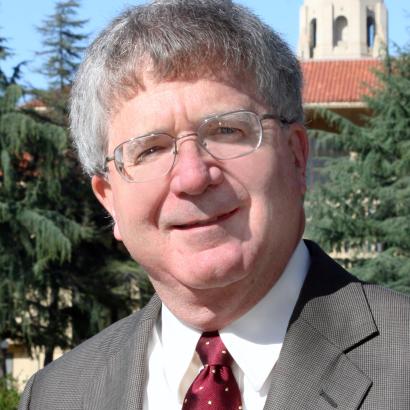
Michael McConnell
Senior Fellow

Morris P. Fiorina
Senior Fellow
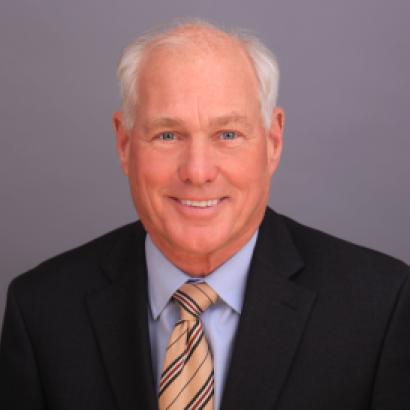
John F. Cogan
Leonard and Shirley Ely Senior Fellow
Featured Work:
Covid Lessons Learned, Four Years Later
[Subscription Required] Mandatory lockdowns had almost no benefit—but did significant economic and health-related damage.
March 18, 2024
Scott W. Atlas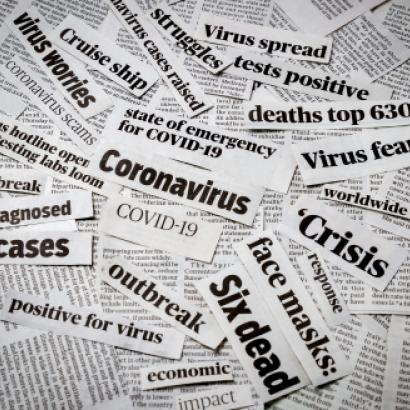
Featured Work:
US Debt and Taxes: 1776-2023
Collect data on promised pay outs, prices, and quantities of US government notes and bonds and on federal government expenditures and tax collections from 1775 to now
February 6, 2024
Thomas J. Sargent
Featured Work:
Stephen Kotkin On Russia's Invasion Of Ukraine And US-China Lessons From The Conflict
Hoover Institution fellow Stephen Kotkin shares his analysis of Russia's invasion of Ukraine, considers the threats posed by autocratic powers, and proposes future avenues for the United States to effectively compete with China in a multilateral context.
February 21, 2024
interview Stephen Kotkin
Featured Work:
Michael McConnell: The Supreme Court Says States Can’t Keep Trump Off The Ballot
Hoover Institution fellow Michael McConnell discusses the Supreme Court’s 9-0 decision to avoid a chaotic “patchwork” of state-level ballot eligibility decisions and the 5-4 majority’s view that Section 3 requires Congress to act before an insurrectionist may be disqualified from office.
March 7, 2024
interview Michael McConnell
Featured Work:
COVID And The Constitution
[Subscription Required] Of necessity, emergencies arise in human affairs and governments must confront them. Because emergencies, according to Merriam-Webster, are “unforeseen combination[s] of circumstances” that “call for immediate action,” they present a special challenge for republics, which, by their very nature, rule by laws enacted through the (often slow) deliberations of representative institutions.
December 5, 2023
featuring Morris P. Fiorina
Featured Work:
Federal Entitlement Programs And The Fiscal Challenge
Federal entitlement program spending has ballooned over the past 60 years and is the main driver behind the growth in size of the US federal government and federal debt and deficits. This unsustainable fiscal path leads to a dead end of crushing tax increases, spiraling interest costs, glacially slow economic growth, and benefit restrictions.
February 20, 2024
John F. Cogan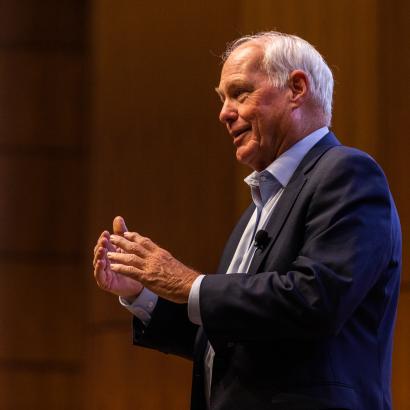
Featured Work:
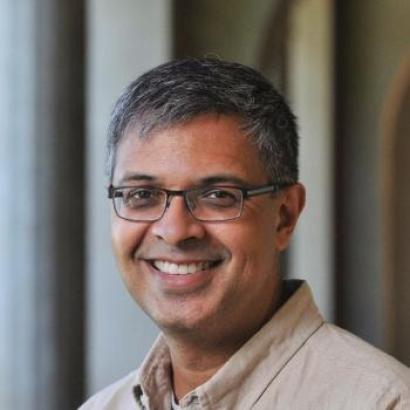
Dr. Jay Bhattacharya: Next Time There Is A Pandemic We Will Lock Down Again, And It Won't Matter What The Evidence Says
Hoover Institution fellow Dr. Jay Bhattacharya talks about his opposition to the government's Covid-19 policies, writing the Great Barrington Declaration, and receiving the first annual Samizdat Prize, an award that will be given by RealClear to journalists, scholars, and public figures who have fought censorship and stood for truth, whatever the cost.
March 12, 2024
interview Jay Bhattacharya
FEATURED PUBLICATIONS
Strategika
An online journal that analyzes ongoing issues of national security in light of conflicts of the past.
Read More


The Caravan
The Caravan is a quarterly publication on the contemporary dilemmas of the Greater Middle East
Read More

California on Your Mind
Analysis, politics, and the economics of the Golden State
Read MoreCalifornia Loses Nearly 10,000 Fast-Food Jobs After $20 Minimum Wage Signed Last Fall


More Videos & Podcasts
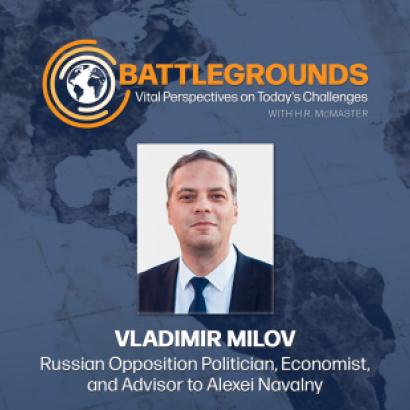
The Russian Opposition And Ukraine: A Conversation With Vladimir Milov
In this episode of Battlegrounds, H.R. McMaster and Vladimir Milov discuss the war in Ukraine, the status of the Russian opposition, and prospects for the restoration of peace, Wednesday, April 10, 2024.

The Rise Of The Machines: John Etchemendy And Fei-Fei Li On Our AI Future
John Etchemendy and Fei-Fei Li are the codirectors of Stanford’s Institute for Human-Centered Artificial Intelligence (HAI), founded in 2019 to “advance AI research, education, policy and practice to improve the human condition.” In this interview, they delve into the origins of the technology, its promise, and its potential threats. They also discuss what AI should be used for, where it should not be deployed, and why we as a society should—cautiously—embrace it.
America’s Immigration Puzzle, Iran Strikes (Out) – And 60 Is The New 40
Nearly 40 years since the nation last saw comprehensive reform on the matter, the consensus is that America’s immigration system is sorely in need of updating to 21st-century realities. Reihan Salam, Manhattan Institute president and author of the book Melting Pot or Civil War?, joins Hoover senior fellows Niall Ferguson, John Cochrane, and H.R. McMaster to discuss a smarter approach to welcoming newcomers to America.
Revisiting Freedom’s Cause: David Davenport And Checker Finn On Rejuvenating Civic Education
Better ways to engage K-12 and college students in the understanding and appreciation of the concept of “life, liberty, and the pursuit of happiness.”
Library & Archives
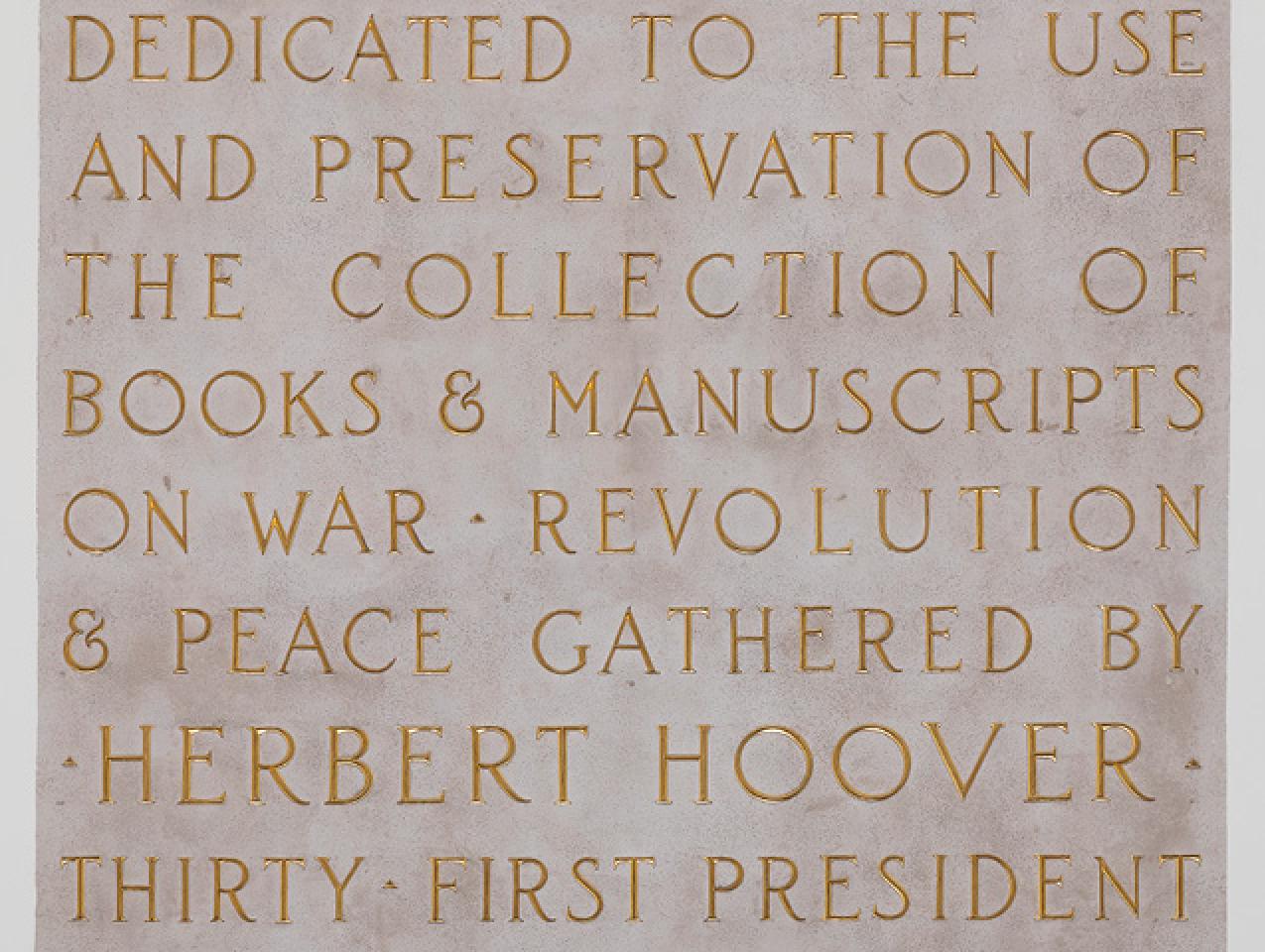
A World-Class Library & Archives
Founded by Herbert Hoover in 1919, the Hoover Institution Library & Archives is home to some of the world's most renowned collections documenting war, revolution, peace, and political, economic, and social change in the twentieth and twenty-first centuries.
Free and open to all, discover how to search the collections, arrange a research visit, or explore exhibitions by clicking below.

Exhibitions | Now On View
The exhibitions Un-Presidented: Watergate and Power in America (February 12–August 11, 2024) and Hoover@100: Ideas Defining A Century (ongoing) are open and free to all visitors to Hoover Tower, at the heart of Stanford University campus.
Learn More
Research Services
Planning an onsite visit to the reading room? Conducting your research from afar? Staff are ready to connect you with the most relevant materials through reference consultations, assisting with registration and material requests, digitization, and more.
Learn MoreThe Collections
Acquiring, preserving, and making accessible collections of enduring value, including more than one million library volumes and over six thousand archival collections.
Digital First Initiative
Our aim is to make full archival collections accessible to researchers around the world through the digitization of textual, graphical, sound, and moving-image materials.
Engagement & Outreach
Building connections to our collections by sparking curiosity in audiences interested in the meaning and role of history through exhibitions, classes, tours, and special programing.
Poll