



Supercharging American Innovation
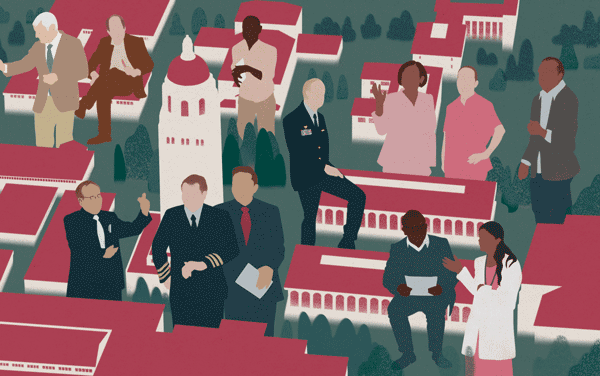
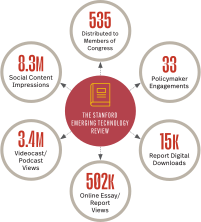
The Stanford Emerging Technology Review (SETR) released its second annual report in February 2025, exploring the policy implications of frontier technologies that are reshaping economies across the world. A university-wide initiative, SETR convenes Hoover’s existing science fellows—including experts in AI, robotics, synthetic biology, and new space frontiers—with Stanford engineering faculty. Joining this effort is the Technology Policy Accelerator, which works to increase American technological competitiveness in key areas such as space, biotechnology, and defense. Scholars affiliated with both efforts are using a whole host of outreach efforts—from research publications to new podcasts, in-person briefings, and policy discussion events—to illustrate to America’s policymakers the significance of how emerging technologies are reshaping our world.

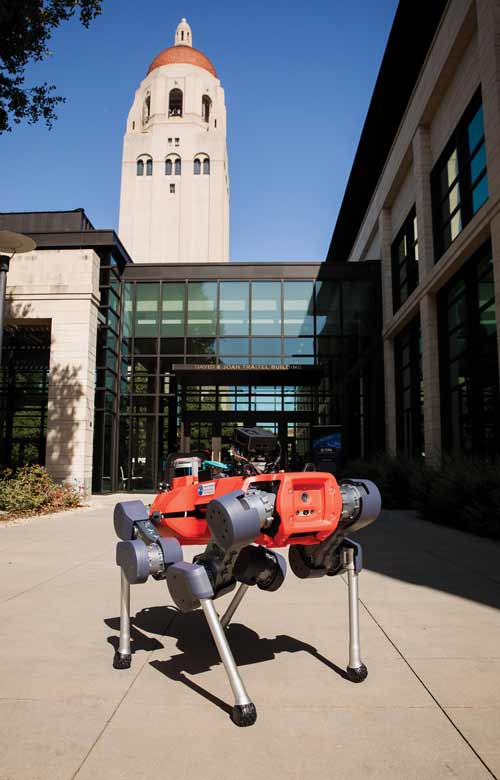
A robot at a launch event for the Technology Policy Accelerator.
Patrick Beaudouin.
Winning the AI Race



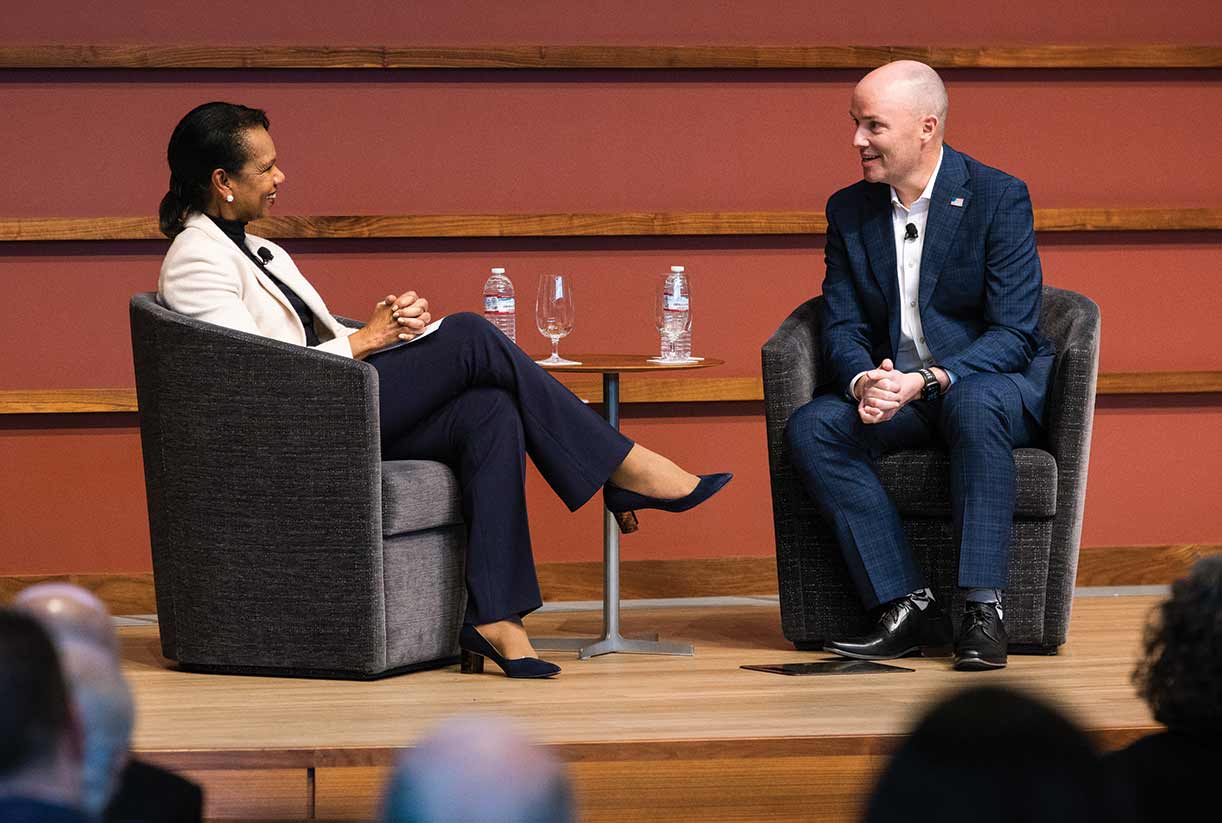
I’m in the ‘run hard and fast’ category and be a little bit light on regulations while we understand what’s happening here.
Condoleezza Rice
The Hoover Institution is part of an all-of-Stanford effort to realize the gains brought on by transformative AI technology for the benefit of all Americans and the free world. To that end, Hoover has been working to develop a markets-oriented framework to guide the rise of the technology and ensure the US dominates its use. But this effort is not without difficulties, as China is in hot pursuit of global dominance in this field. Hoover scholars are also working on initiatives to prepare for the negative consequences of bad actors acquiring advanced AI capabilities and using them to cause immense harm.
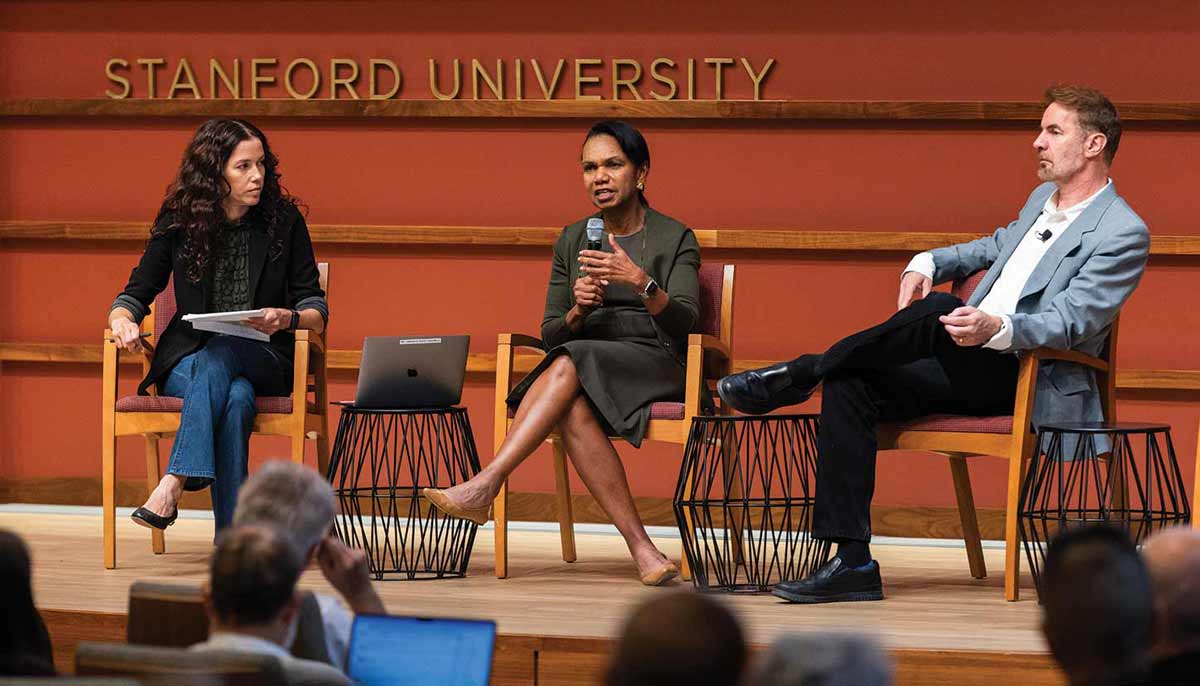
Hoover Director Condoleezza Rice speaks at an event for The Digitalist Papers, where speakers offered possibilities about AI's future impact on American governance, on September 24, 2024.
Patrick Beaudouin.