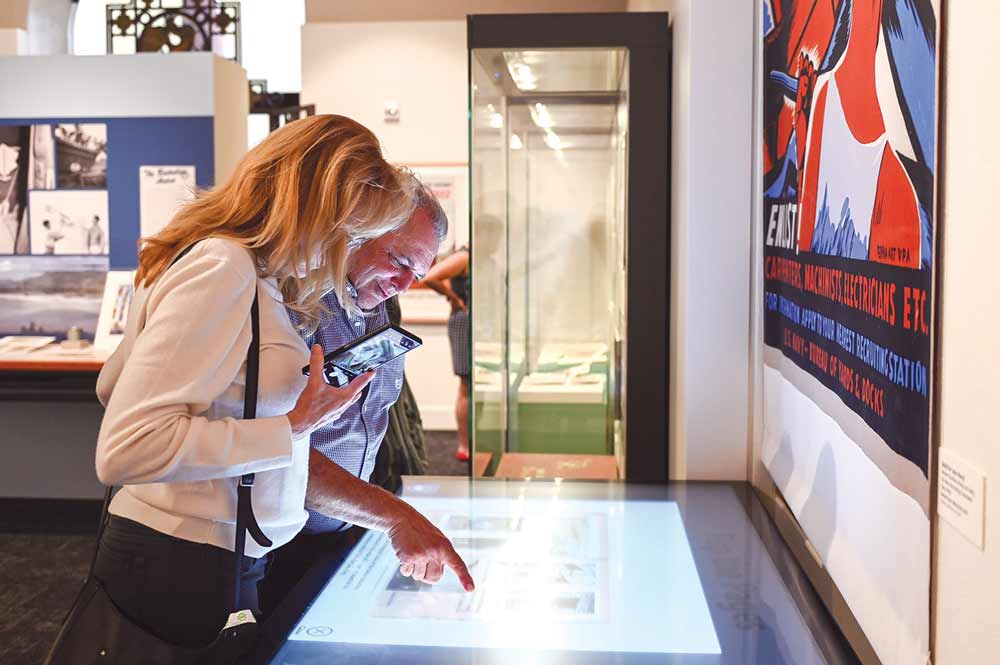
Patrons scroll through a digital display of items that make up the Battalion Artist collection at the Library & Archives in August 2025.
Hoover Library & Archives

A Year of Building Connections

In addition to its collecting and conservation program, Hoover’s Library & Archives builds connections to its world-renowned records through a robust program of fellowships, workshops, exhibitions, and outreach. The Library & Archives supported the development of a number of impactful books that earned accolades in 2024–25, including To the Success of Our Hopeless Cause: The Many Lives of the Soviet Dissident Movement, by Benjamin Nathans, Milton Friedman: The Last Conservative, by Research Fellow Jennifer Burns, and Bread + Medicine: American Famine Relief in Soviet Russia, coauthored by Research Fellow Bertrand M. Patenaude. Library & Archives also launched Reflections, a video series where curators and fellows discuss key moments in world history that have ties to items stored at Hoover.

Protecting Knowledge and Defending Free Access to Ideas

The Library & Archives’ vast repository of personal writings, photographs, artifacts, and records of governments provides access to everyone interested the historical record and generates new insight into the past. Facing a legal challenge to its continued ability to house and provide public access to the writings of the late dissident Chinese Communist Party member Li Rui, Hoover is engaging legal measures to continue to keep this vital collection of documents. Rui’s writings, donated to Hoover by his daughter in 2014, informed Visiting Fellow Joseph Torigian’s latest book: The Party’s Interests Come First: The Life of Xi Zhongxun, Father of Xi Jinping.
Also in the past year, the Hoover Institution Press, in partnership with the Library & Archives, published Unyielding Resolve: Captive Nations and the Path to Freedom. This freedom fighter’s memoir highlights the role of nationalism in the Cold War resistance to the Soviet regime’s domination over non-Russian peoples of the USSR and details efforts to pass a US law designating Captive Nations Week in 1959.
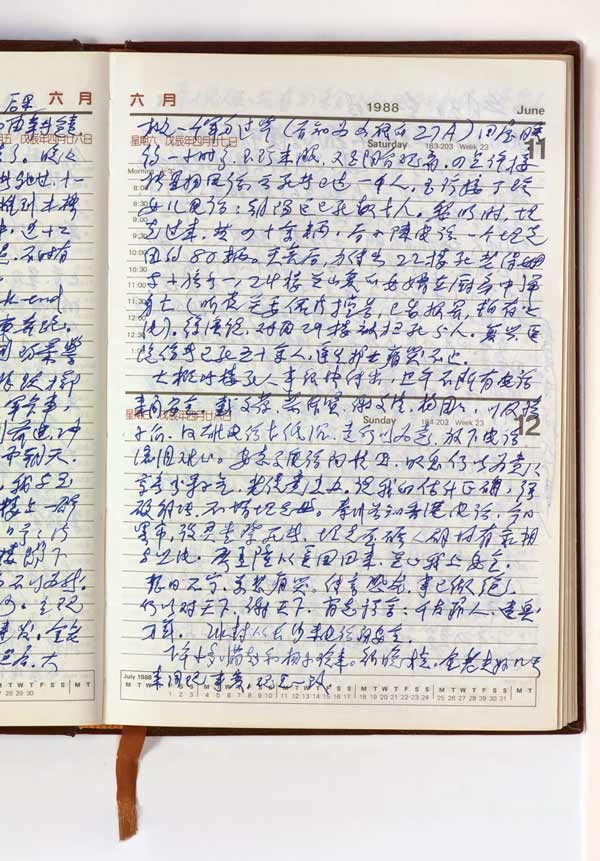
Two pages of Li Rui’s diary from June 4, 1989, during the brutal crackdown on Tiananmen Square demonstrators.
Hoover Institution Library & Archives

Access to Information
The Heart of Free and Reasoned Debate
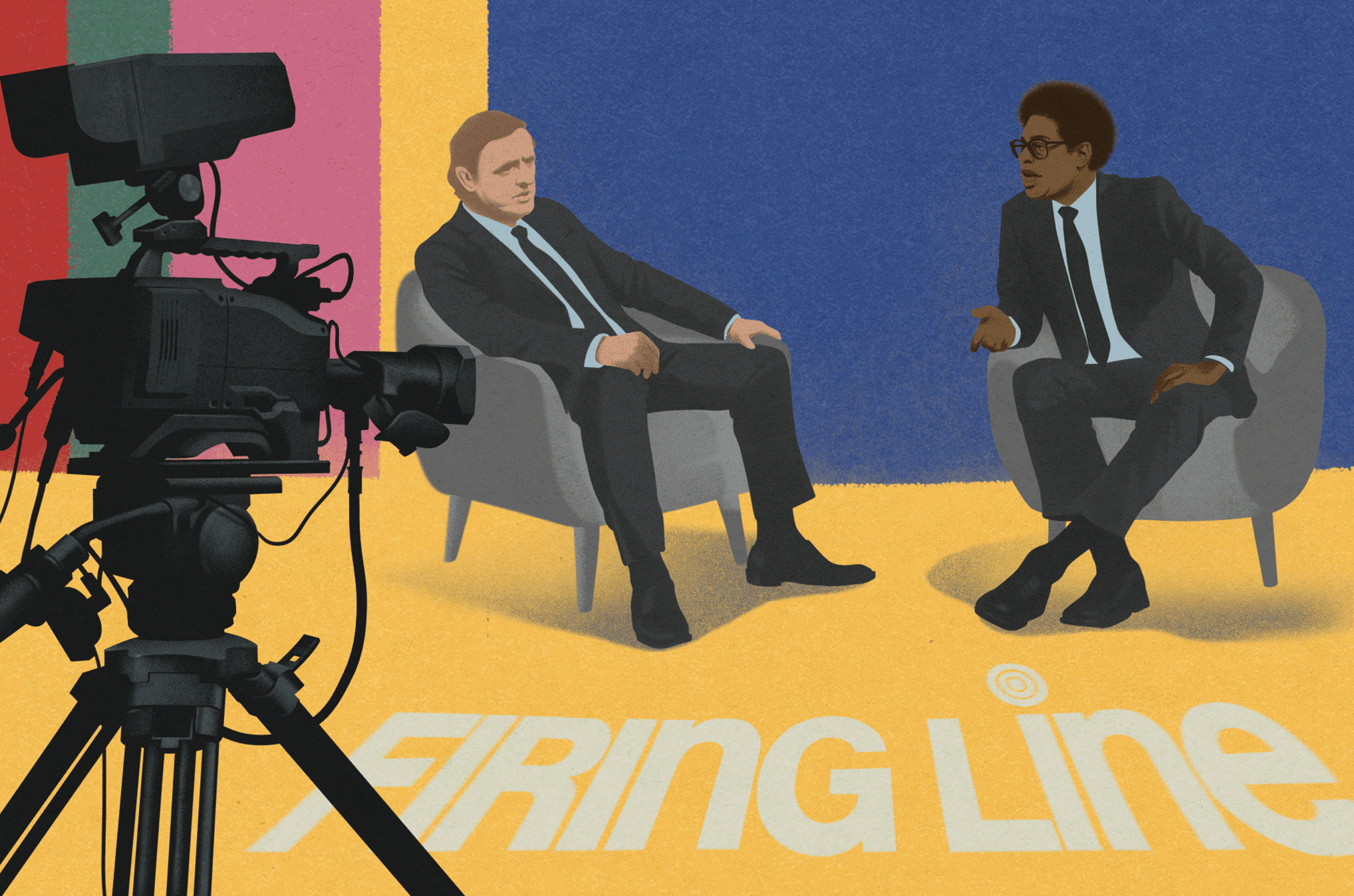
By maintaining and growing its collection of historical media from around the world, the Library & Archives is demonstrating its value as a place to maintain historical materials for future generations. In 2024–25, the Library & Archives continued to accept declassified US government documents and completed new collections related to Soviet-era Russian-language newspapers from the diaspora, materials captured by the US military during foreign wars, and a typewriter belonging to Firing Line host William F. Buckley Jr.
Also this year, Hoover’s Wargaming and Crisis Simulation Initiative, led by Hargrove Fellow Jacquelyn Schneider, opened its own digital collection of historic wargaming reports, wargame design documents, and declassified data to enhance the availability and study of wargames across government, policy, industry, and academia.
Engaging Minds, Building Skills
Where Students Meet History
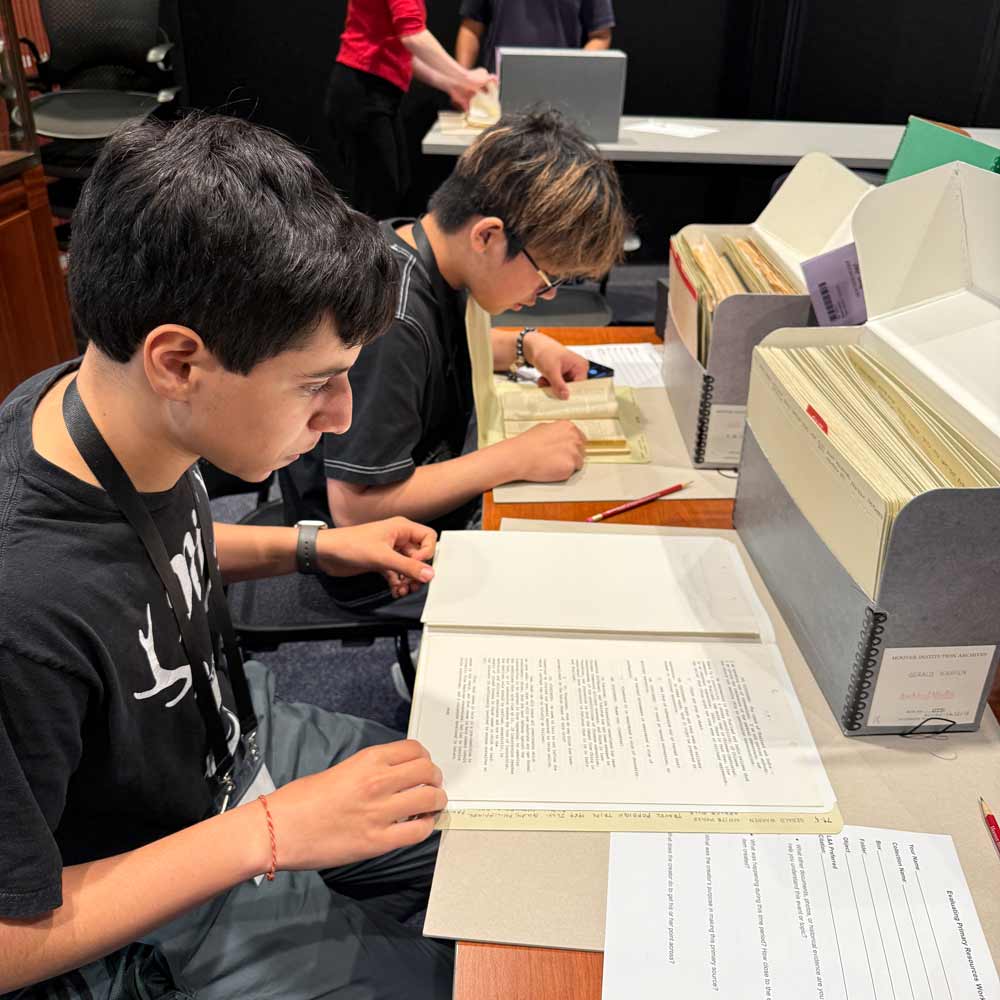
Hoover’s Library & Archives offers students a variety of ways to interact with history through its collections. This past summer, high school students who took part in the Hoover History Lab Skills Academy got to learn about and interact with primary-source materials. The Library & Archives also hosted a history course sponsored by the International Relations Program, introducing undergraduate and graduate students to its collections and operations.
The Library & Archives also partnered with Stanford Libraries during its annual De-Stress Fest to invite students to paint with watercolors and learn about Natale Bellantoni, featured artist in the exhibition The Battalion Artist, on view in Hoover Tower from September 12, 2024, to August 10, 2025.