Published: September 27, 2017

Deterrence is an important part of American foreign policy. Through deterrence, we can achieve our goals through peaceful means. However, it is not easy. Deterrence requires the capability to act, the credibility to follow through on threats, and the clear communication of consequences.

Discussion Questions

  1. Have nations ever resolved conflicts through deterrence rather than a military action? 
  2. Why is staying true to one’s word a vital part of deterrence? 
  3. Why is deterrence a crucial component of the US foreign policy? 

Additional Resources

  • "Deterrence: Its Past and Future" by George P. Shultz, Sidney D. Drell, and James E. Goodby, available here.
  • Hoover fellows Kori Schake and William Perry join a group of experts to share their ideas concerning how the concept of nuclear deterrence might evolve in response to changes in the global strategic balance and the twin threats of proliferation and terrorism, watch here.
  • “Think Before You Act: Defining the Political End State” by Jim Mattis and Kori Schake, watch here.
  • “No Empty Threats: Establishing Credibility in Foreign Affairs” by Jim Mattis and George Shultz, watch here.

Cast

George P. Shultz

George P. Shultz

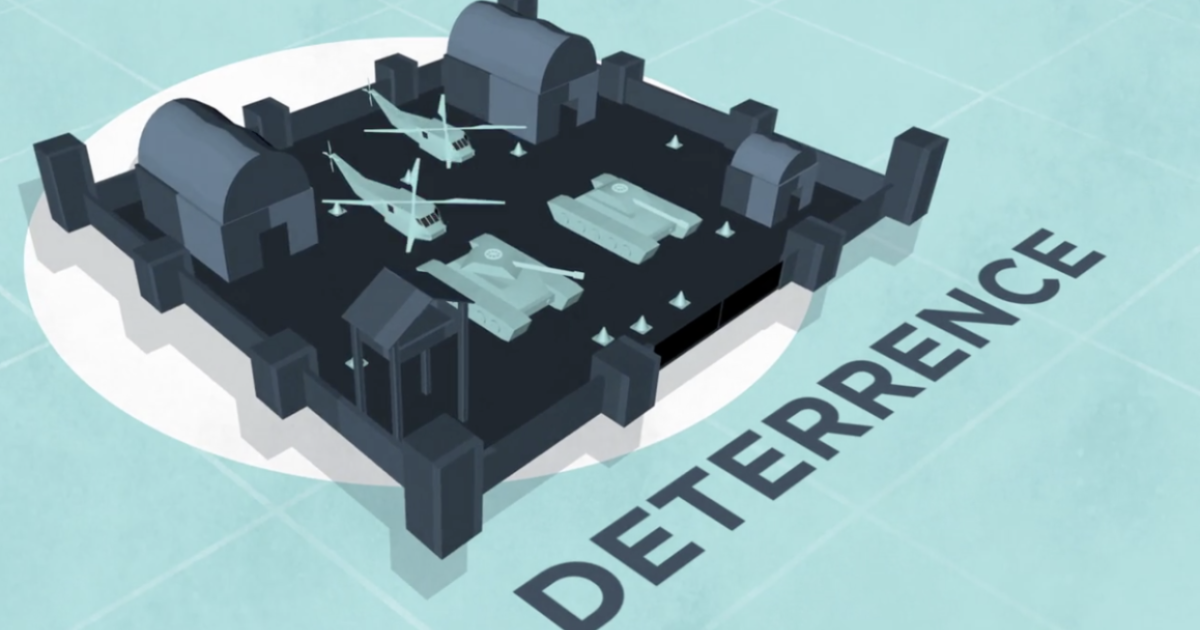
Deterrence is the ability to prevent an unwanted military action through the threat of consequences, and it is a crucial component of United States foreign policy.

We want to be able to deter our enemies because it achieves our goals without starting larger conflicts or risking American lives.

But deterrence isn’t easy to achieve. It requires three things: the capability to act, the credibility that we’ll follow through on threats, and clear communication about what we'll accept and how violators will be punished.

It starts with acting from strength: without the ability to discipline offenders, deterrence is impossible.

Strength isn’t just military force; it includes economic and political resources that improve our options to compel good behavior.

But unless there’s a willingness to follow through, military capability isn’t enough.

If our adversaries believe they won’t face consequences for their actions, they’ll act contrary to our interests. Countries that want to deter others should never make empty threats.

Finally, deterrence requires clear communication of what we’ll accept and how violators will be punished.

When lines are crossed, the consequences should come as no surprise to our adversaries.

The ultimate goal of deterrence is for our adversaries to view restraint as their best option.

Related

Podcasts

25 Years After 9/11: Are We Safer?

Hoover Institution fellow Philip Zelikow explores whether America is truly safer today than on 9/11, how terrorist threats have evolved from centralized sanctuaries to online radicalization, and why conflicts in Gaza and Iran may not drive terrorism the way many assume.

September 2, 2026

Articles

How Targeted Misinformation Stalks Its Victims

False allegations pursue democracy activists, entangling them financially and personally.

September 4, 2026

Podcasts

Keeping A Cold War Chilled: Mobilizing the Modern Defense Industrial Base

In a new century defined by another great-power competition, how does the United States match China in terms of integrating defense needs with its technological and industrial capacities?

September 4, 2026 • 0 Min Listen