
Published: August 7, 2018

Many people worry without explicit prohibitions, internet service providers would prioritize traffic from big businesses in a way that would harm innovation and stifle competition. But the internet has operated for decades without needing explicit regulations, and remedies already exist for the types of abuses many are concerned about. Promoting competition among internet service providers offers consumers far greater protection than heavy handed regulation tomorrow.

Discussion Questions

  1. How does net neutrality affect everyday consumers of the internet?
  2. Have you been personally affected since net neutrality rules were removed again in 2018?
  3. Do you think net neutrality regulations should be implemented? Why or why not?

Additional Resources

  • Read Richard Epstein’s “The Problem with Net Neutrality,” available here.
  • Listen as Richard Epstein considers the arguments for and against net neutrality and analyzes the recent DC circuit ruling on the matter, available here.
  • Watch as Hoover Institution fellow Adam White debates whether the FCC can impose common-carrier regulation on internet service providers under Title II of the Communications Act, available here.

Cast

Richard A. Epstein

Richard A. Epstein

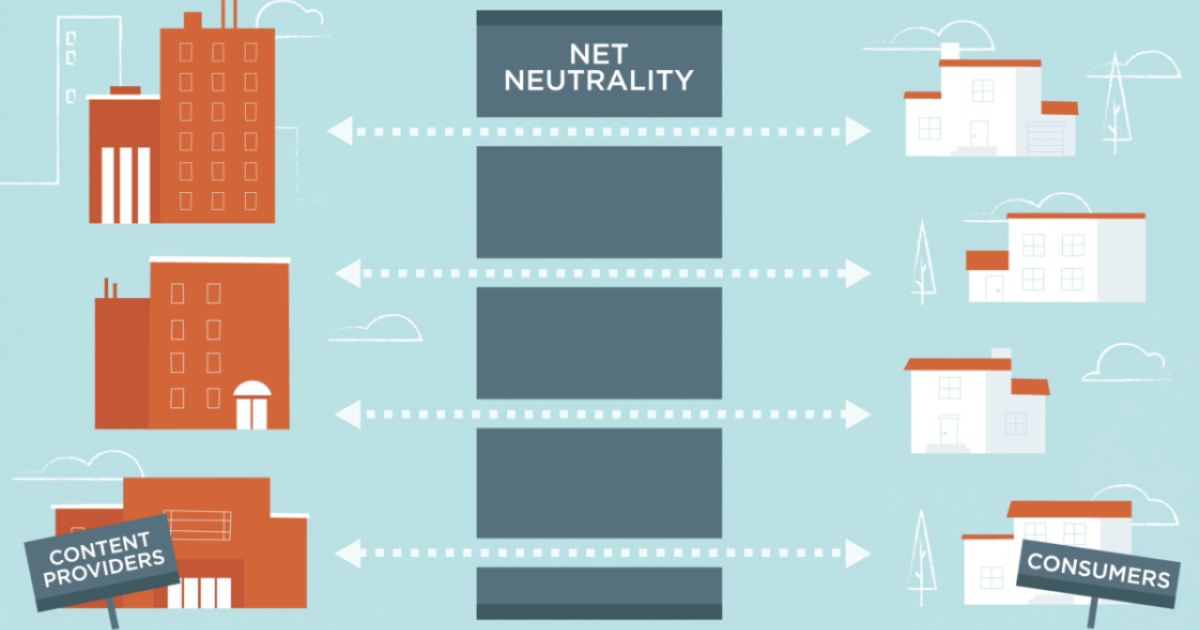
Net neutrality requires internet service providers to guarantee equal access to all content, without favoring or blocking certain applications or websites. 

Many believe that without it, ISPs would promote traffic from big businesses at the expense of start-ups, thereby stifling innovation and reducing consumer choice. 

But these worries originate from unlikely, potential abuses that run counter to decades of experience with a thriving Internet that didn’t have up-front prohibitions 

...and when remedies already exist for if abuses occur. 

Even in practice, deviations from the principle of net neutrality are made to try to satisfy very different demands. 

Time sensitive businesses like finance companies need the rapid speed that ordinary consumes do not. Tiers of service are no more dangerous than with UPS, FedEx, and the U.S. Post Office. 

Of course, no one wants to give monopoly protection to a few privileged internet service providers. 

The cure, however, isn’t regulation, but increased competition among high-speed providers. 

The ability to switch providers today offers consumers far greater protection than heavy-handed regulation tomorrow.

Related

Videos

California’s War On Wealth—And America’s War On Terror

Is the progressive dream of wealth taxes soon to be reality – or a fiscal and economic nightmare – should voters approve Proposition 40 and a one-time 5% tax on the holdings of the Golden State’s billionaire class? And 25 years after one of the darkest days in the republic’s history, what is the legacy of the 9/11 attacks on America?

September 9, 2026

Articles

Letter #9: The Test Of A Nation

A Labor Day letter to America.

September 7, 2026

Articles

A Better Way To Reform Head Start

Trump proposes to convert it into block grants. What it needs is a single-minded focus on preparing kids for kindergarten.

September 4, 2026