Articles
Tokenization Of Real-World Assets: A Market Taking Shape
Managing the profound change demands harnessing advantages, mitigating risks, and creating careful legislation.
October 21, 2026
Published April 23, 2020
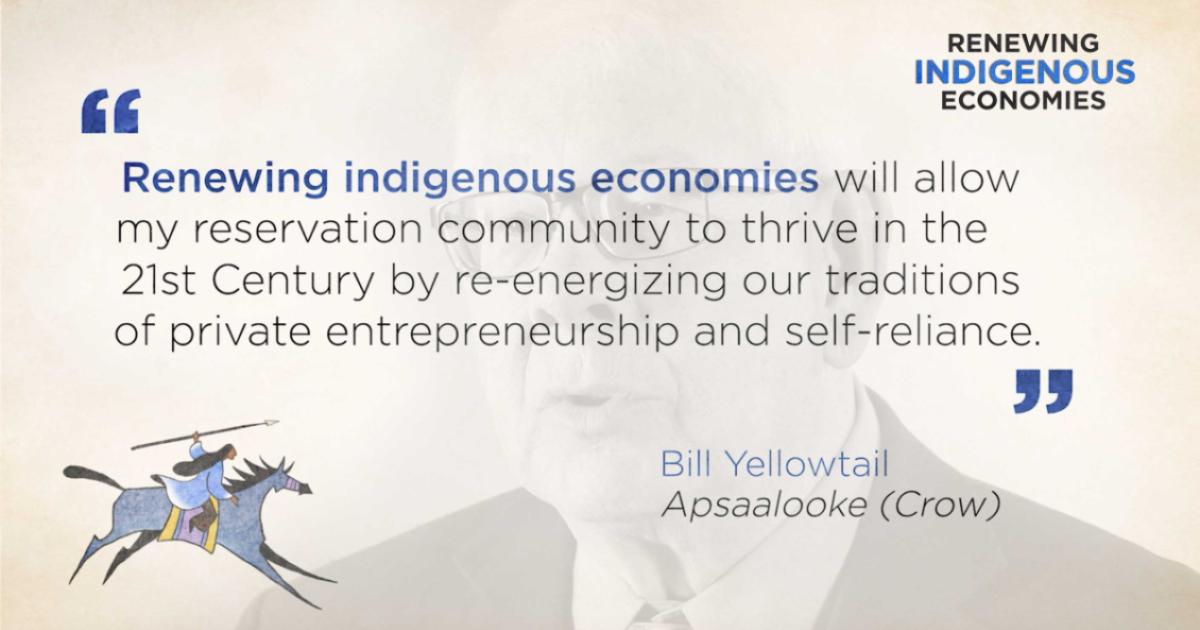
“My reservation community will thrive in the twenty-first century only if we re-energize our traditions of private entrepreneurship and self-reliance.”
Bill Yellowtail, Apsaalooke (Crow)
Former Montana state senator and Katz Professor in Native American Studies at Montana State University
Bill Yellowtail grew up on his family’s cattle ranch on the Crow Indian Reservation in Montana. Holding a degree in geography from Dartmouth College, Yellowtail has been a rancher, educator, fishing guide, Montana state senator, and congressional candidate. An expert canoeist and fly fisherman, he was named Angler of the Year for 1991 by Fly Rod and Reel magazine.
He served as regional administrator for the US Environmental Protection Agency during the Clinton administration, with responsibility for six western states and twenty-seven Indian tribes. Bill received the Dartmouth Environmental Network’s 1994 annual award in recognition of his outstanding contributions to protection of the environment, and he received the Mary G. Ross Award for exemplary service from the Council of Energy Resource Tribes in 1999. He serves on the boards of directors of Humanities Montana, the Burton K. Wheeler Center, and the National Audubon Society.
Articles
Managing the profound change demands harnessing advantages, mitigating risks, and creating careful legislation.
October 21, 2026
Videos
The Fed, inflation, and the economic case for long-term price stability.
October 20, 2026
Articles
Scott Kirby wants a national wealth tax and inheritance taxes near 100%. Among those who would pay are the investors he ultimately works for.
October 20, 2026