
Articles
A Golden State Of Housing Shortages
California wants more homes and less carbon. Its most powerful environmental statute often delivers the opposite of both.
November 16, 2026
Published: June 15, 2021
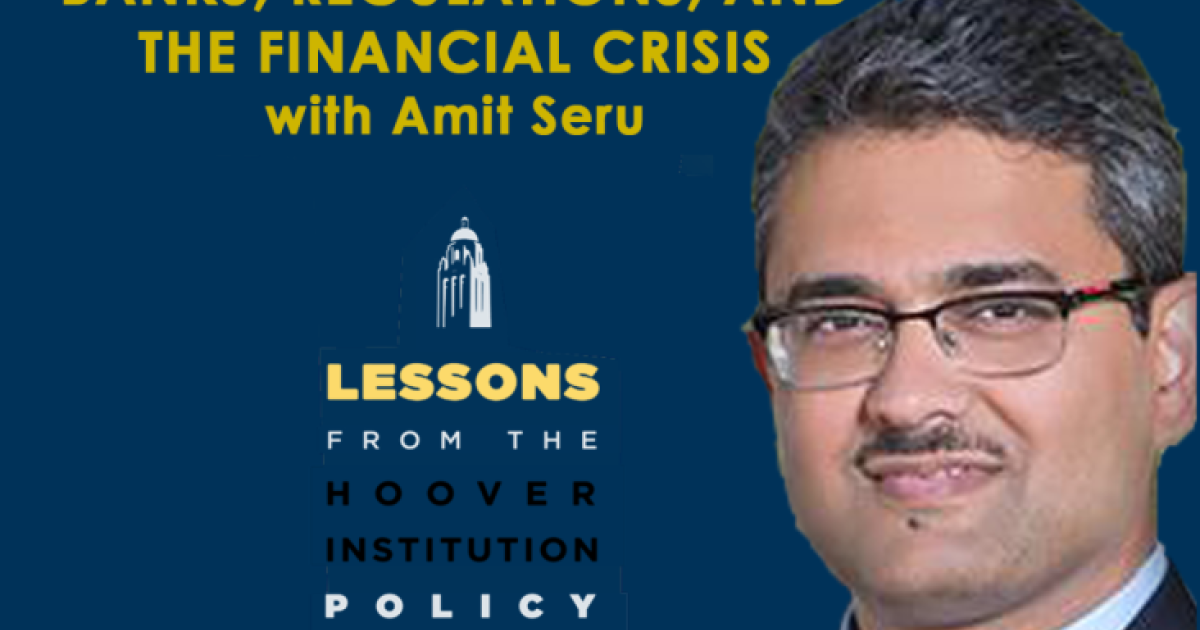
The current regulatory structure for banking services in the United States represents a set of accumulated responses to a history of financial crises, political events, and personalities among a broad array of industry and governmental units. History has shown that banks are not immune even to minute economic shocks. However, regulating the banking system to prevent insolvency is not always ideal.
This lecture was recorded in the fall of 2019, before the COVID-19 pandemic.
Interested in attending the Hoover Institution Summer Policy Boot Camp? Click here for more information.
Discussion Questions
Additional Resources
Articles
California wants more homes and less carbon. Its most powerful environmental statute often delivers the opposite of both.
November 16, 2026
Articles
I had the privilege of attending the Fed’s AI (or SI) task force conference, “Reading the signals: How will SI reshape the economy?” at the San Francisco Fed. The conference was live-streamed at that link, so I won’t do too much summary.
November 16, 2026
Videos
Why does Taiwan matter to the United States, and what would it take to prevent a war with China?
November 16, 2026