My tribe is the Spokane Tribe of Indians, located in the US Pacific Northwest. We are a Salish-speaking tribe that shares common culture with several regional tribes, not just through language, but through bloodlines that were dispersed when the people were forced onto reservations in the late 1800’s. Before contact, the Spokanes were a semi-nomadic tribe who lived off of the region’s major rivers. Although the tribe would make annual excursions into other territories to hunt buffalo, the river provided the main source of sustenance, primarily in the form of salmon which was used for both food and barter.
The obstacles that the Spokane tribe has faced due to colonialism are too numerous to list. We lived through a full century of carefully orchestrated cultural genocide, which nearly worked. Many of the obstacles we faced were not specific to the Spokane Tribe. For example: war, reservations, and boarding schools affected many tribes.
One obstacle that severely altered the lives of the Spokane Tribe, specifically, is the loss of river access. As the land was claimed and settled by the US government, culturally and economically important fishing sites were lost as the federal government allotted tribal lands to white settlers, who then owned and controlled the riverfronts. Later, and more importantly, the salmon runs were permanently destroyed by the creation of dams. The hydroelectric power generated by the dams enabled modern economic development, but it also destroyed a core part of the Spokane tribal culture since the salmon could no longer travel upstream. The river provided 60-70% of the daily diet for the people, and it also was the source of our cultural gatherings. The Spokanes, historically known as a “River people,” could no longer be “River people.”
The long-term effect of relocation away from the river and onto reservations was devastating. In essence, the old ways of providing were lost. In addition, the old ways of “being” were lost, as well, since many historical and cultural practices were banned by settlers and missionaries. As a result, the tribal culture was nearly lost forever.
Fortunately, a small spark can ignite a large fire. The spark that is re-lighting our fire is cultural reclamation. For the Spokane tribe, cultural reclamation started with language. At one point, the tribe was down to 5-6 members who were fluent in Salish, and those were elders. The Spokane tribe made a concerted effort to preserve the language and now, in addition to simply preserving the language, the tribe is actually growing the language! Salish is being taught formally in our elementary schools and the tribe has supported a Salish immersion school that serves the Spokanes and other Salish tribes.
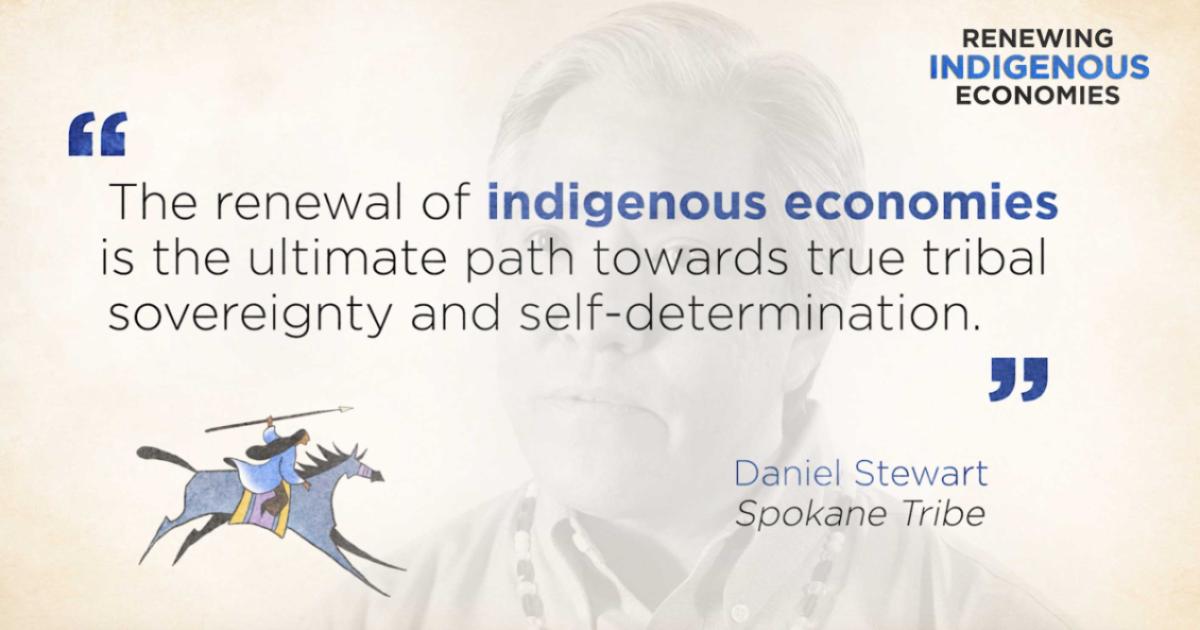
My contribution to cultural reclamation is through teaching entrepreneurship. Our tribe had a rich history of barter and trading resources with other tribes. Entrepreneurship is all about creating new and sustainable resources. Thus, I like to think that we can gain a lost part of ourselves back by re-learning how to create new resources that can be shared and traded with others. We cannot truly reclaim our culture without addressing our economic traditions. In addition, I am a firm believer that true tribal sovereignty and self-determination can only happen if tribes control their own resources. Thus, my mantra is this: if tribes control their own resources, tribes control their own destinies. This is the path to true sovereignty and self-determination.