Published March 27, 2024

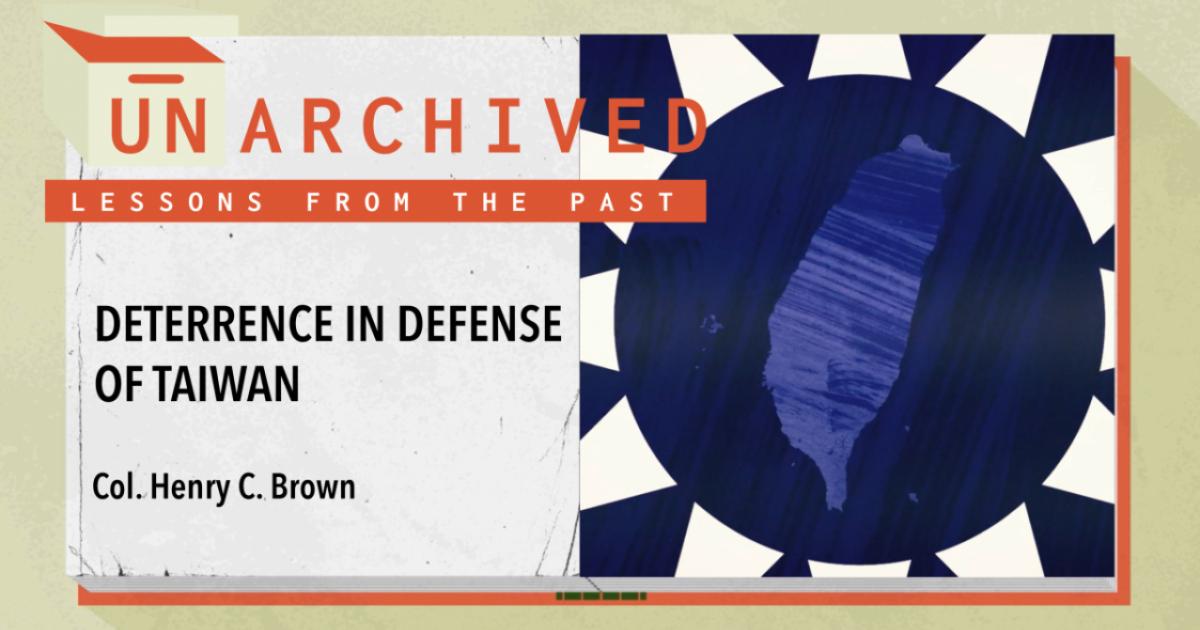
In 1950, US Secretary of State Dean Acheson outlined American military commitments in eastern Asia, hoping to deter Soviet and Chinese communist expansion.  What became known as the "Acheson Line" notably excluded Korea and Taiwan and, inadvertently, informed communist powers where they could expand without US resistance, leading to immediate consequences such as the Korean War and decades of communist expansion. The Acheson Line's failure to include Taiwan has led to unresolved issues, with China now seeking to reclaim the island nation under its authoritarian rule. To prevent a repeat of the Acheson Line's mistakes, the United States must adopt a long-term strategy that supports Taiwan's sovereignty and invests in its self-defense capabilities while projecting strength and maintaining a committed presence to curb China's ambitions.

Check Out More from Col. Henry Brown:

  • Read "Battling the Numbers: South Korea’s Military Downsizes Amid Challenging Demographic Landscape" from Henry Brown here.
  • Read "One war, one speech, and one aggressive, rising China" from Henry Brown here.
  • Learn more about Col. Henry Brown here.

Check Out More on Deterrence:

  • Watch "Deterrence in Foreign Policy: Lessons from World War II" from Victor Davis Hanson here.
  • Watch "Deterrence by Denial" from H.R. McMaster here.
  • Read the book "Deterrence: Its Past and Future" from George P. Schultz, Sidney D. Dress, and James Goodby here.  


The opinions expressed on this website are those of the authors and do not necessarily reflect the opinions of the Hoover Institution or Stanford University. © 2024 by the Board of Trustees of Leland Stanford Junior University.
Cast

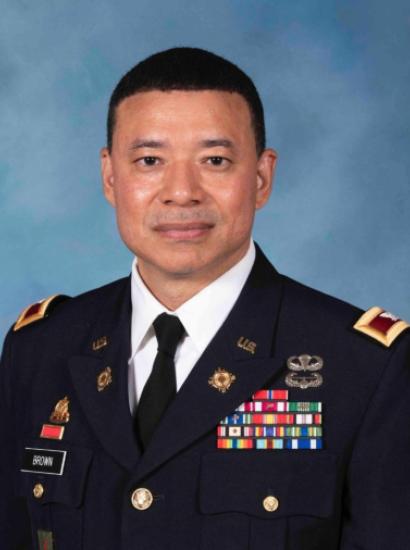
COL Henry C. Brown

COL Henry C. Brown

As China looks to coercively bring Taiwan back under its control, the United States would do well to remember the foreign policy mistake that was the Acheson Line. And the consequences of being non-committal to our allies, early in the Cold War. On January 12, 1950, US Secretary of State Dean Acheson defined the boundaries of America's military protection, in eastern Asia.

This defense perimeter came to be known as the Acheson Line, and ran from Alaska to the Philippines. It included both Japan and the Philippines, but Korea and Taiwan were notably excluded. The line was meant to deter Stalin and Mao from expanding Communism in the region. Instead, it announced to the communist powers exactly where America's security commitments ended, and informed them.

Where they could expand their regional footprints, without fear of US resistance or retaliation. The consequences were immediate and immense, prior to 1950, the Soviet Union was reluctant to support North Korea's plan to invade South Korea, for fear of US involvement. Six months after Acheson's speech, the Korean war began, with Stalin's support.

Over the next few decades, communist forces backed by the Soviet Union and China. Moved into Cambodia, Laos, and Vietnam, triggering a series of civil wars that brought on the communist expansion the Acheson Line was intended to prevent. Ironically, the United States ended up supporting armed resistances in many countries, that were not originally included in the Acheson Line.

Even seemingly minor policy shifts, like Acheson's speech can have profound and lasting impacts, on geopolitical stability. His declaration was nearly 75 years ago, but its failure to include Korea, left the country irreparably split in two, with those in North Korea living in poverty, and oppression. Its failure to include Taiwan, and recognize Taiwanese independence, has led to unresolved issues we are still dealing with today.

China currently seeks to reclaim Taiwan under its authoritarian rule, and the US cannot afford a repeat of 1950, as a key political, economic, and military ally in East Asia. Taiwan's sovereignty is critical to regional stability, and US national security. To that end, America must adopt a long-term strategy, that supports Taiwan and invest in its self-defense capabilities.

America must project strength, and maintain a committed presence to curb China's ambitions, and build a lasting peace in the region.

More from UnArchived: Lessons From the Past

Rethinking Decisive Force in Modern Warfare

Rethinking Decisive Force in Modern Warfare

Tactical Victories. Strategic Success

Tactical Victories. Strategic Success

Tactical Victories. Strategic Success

Tactical Victories. Strategic Success

Why Federalism Matters

Why Federalism Matters

Modern Technology. Human Warfare

Modern Technology. Human Warfare

Proxy Wars

Proxy Wars

Why Russia Fights

Why Russia Fights

Russian Way of War

Russian Way of War

NATO's Enduring Value

NATO's Enduring Value

For Higher Economic Growth, Cut Government Spending

For Higher Economic Growth, Cut Government Spending

More Like This

The Lapsed Atheist: Charles Murray Makes The Case For God

The Lapsed Atheist: Charles Murray Makes The Case For God

Norway: Defense And Diplomacy In The High North And Beyond

Norway: Defense And Diplomacy In The High North And Beyond

Thomas Sowell Legacy: A Conversation with Justice Clarence Thomas

Thomas Sowell Legacy: A Conversation with Justice Clarence Thomas

Can AI Libel You? The Robby Starbuck Case

Can AI Libel You? The Robby Starbuck Case

Jan Karski

Jan Karski

Complicated Legacy: Jay Bhattacharya On Fauci, RFK, And Vaccines

Complicated Legacy: Jay Bhattacharya On Fauci, RFK, And Vaccines

AI-Powered Business Formation

AI-Powered Business Formation

Iraq: Reform And The Fight For Sovereignty

Iraq: Reform And The Fight For Sovereignty

Securing the Future of Semiconductors

Securing the Future of Semiconductors

Tom Siebel On Education, Reinvention, And The AI Revolution

Tom Siebel On Education, Reinvention, And The AI Revolution

Related

VIDEO

China's Alternative World Order

VIDEO

The Boiling Moat: Urgent Steps to Defend Taiwan

VIDEO

America's Backyard