Published: March 9, 2021

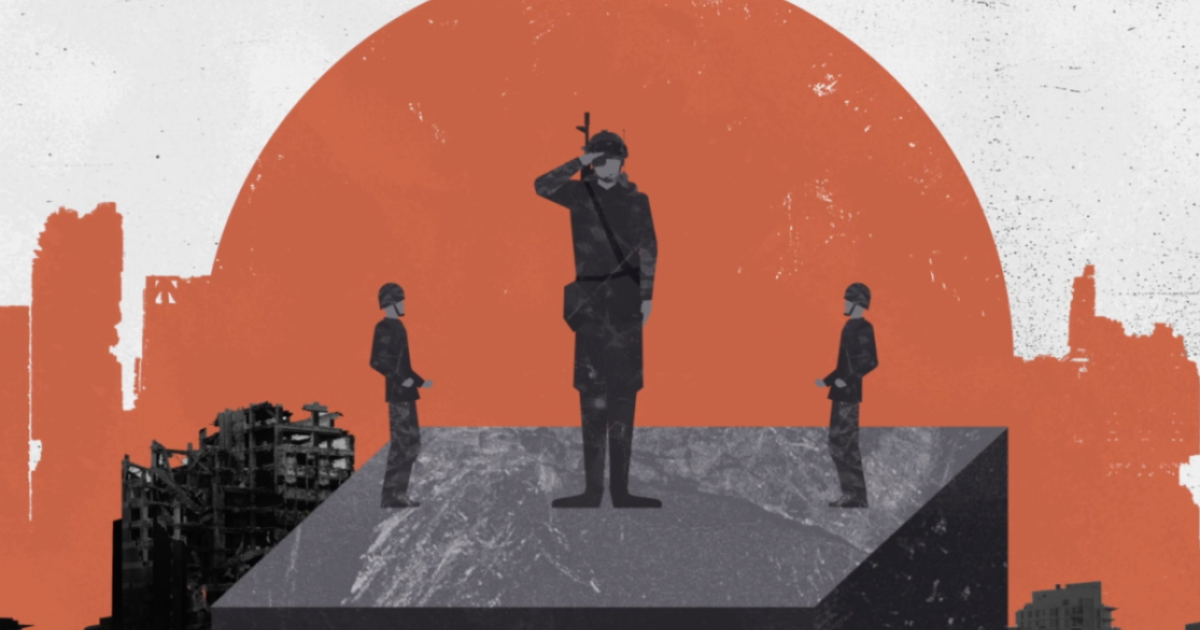
Lessons from history have clearly shown what happens when powerful nations do not show their might. During World War II, the Allied nations were far more powerful than the Axis powers, but their hesitancy in joining the war effort resulted in millions of deaths. Deterrence is about not just military might but also a mindset. For it to work, nations must show their capability to exert force and their clear willingness to use it when needed.

Discussion Questions

  1. Why didn’t the Allied nations show their military might from the beginning of World War II?
  2. How should the United States act to deter global violence?

Additional Resources

  • Read The Second World Wars: How the First Global Conflict Was Fought and Won, by Victor Davis Hanson, which examines how distinct conflicts among disparate combatants coalesced into one interconnected global war. Available here
  • Listen as Victor Davis Hanson gives listeners a guided tour of his book The Second World Wars on The ClassicistAvailable here.
  • How were the Axis powers able to instigate the most lethal conflict in human history? Find out in part one of two with Victor Davis Hanson on Uncommon Knowledge. Available here.
  • Could the Axis powers have won? What are the counterfactuals for World War II? Find out in part two of two with Victor Davis Hanson on Uncommon Knowledge. Available here
  • Listen to “The Second World Wars: How the First Global Conflict Was Fought and Won,” part one of three with Victor Davis Hanson on The John Batchelor Show. Available here.
  • Listen to “The Second World Wars: How the First Global Conflict Was Fought and Won,” part two of three with Victor Davis Hanson on The John Batchelor Show. Available here.
  • Listen to “The Second World Wars: How the First Global Conflict Was Fought and Won,” part three of three with Victor Davis Hanson on The John Batchelor Show. Available here.

Cast

Victor Davis Hanson

Victor Davis Hanson

When stronger nations behave as if they're unlikely to respond to aggression, tragic consequences often follow.

This is why it’s imperative to understand that deterrence requires more than just military might. For deterrence to effectively prevent conflict, it also requires the willingness to use that might.

There is no greater example of this than the Second World War.

From the beginning, it was abundantly clear that the Allied nations - led by the United States, Great Britain, and the Soviet Union, were stronger than the Axis powers of Germany, Japan, and Italy. They had over 3 times the industrial capacity of the Axis powers, and had superior weaponry on land, sea, and in the air.

But despite their obvious power, the Allies projected weakness and timidity from the outset. As German tanks rolled through Eastern Europe, the allies were declaring "peace for our time." And their lack of resolve sent a clear signal - the Axis powers could continue their military conquests, and the Allies would not intervene.

It was only after years of bloodshed that all sides could agree on who was stronger.

The devastating reality is that if the Allies would have demonstrated their power from the beginning - and their

willingness to use it - it might have averted World War II and saved millions of lives.

Unfortunately, based on its current deterrence efforts, it seems that the US has not fully learned this tragic lesson.

Today, the United States is an unrivaled conventional military power. There is no military that even comes close to the power of the United States’ carrier force, strategic assets, nuclear ability, or battle-hardened troops.

But again, deterrence is more than just military might - it's also a mindset. And for too long, the United States has projected only weakness and indecision to its enemies, OR been bogged down in questionable interventions abroad.

Because of this, belligerent actors in North Korea and the Middle East have concluded over the years that the US is unwilling to use its military strength effectively, and they have acted accordingly ever since.

Without deterrence, the end result is a more dangerous world where our enemies believe they can profit from violence and aggression.

We cannot allow this trend to continue.

The lessons of history remain clear. Preventing conflict comes down to having the capability to exert force, and the clear willingness to use it when needed.

Related

Podcasts

Amidst “A World Of Generational Change”: 9/11’s Lessons And Legacy

The 9/11 attacks on the US were 25 years ago this week and, while there hasn’t been a second such shock, questions remain as to the Free World’s preparedness, whether a divided America can rediscover unity, and the strength of international alliances. Phillip Zelikow, the Hoover Institution’s Botha-Chan senior fellow and executive director of the 9/11 Commission, discusses lessons learned from the attack.

September 11, 2026 • 0 Min Listen

Articles

Twenty-Five Years After 9/11: A Call To Serve

For many Americans, 9/11 changed us in profound ways. The images of planes being flown into buildings, of desperate people jumping from the Twin Towers are seared into our memory. Few can understand the hatred that led nineteen hijackers to intentionally take thousands of lives.

September 8, 2026

Podcasts

25 Years After 9/11: Are We Safer?

Hoover Institution fellow Philip Zelikow explores whether America is truly safer today than on 9/11, how terrorist threats have evolved from centralized sanctuaries to online radicalization, and why conflicts in Gaza and Iran may not drive terrorism the way many assume.

September 2, 2026