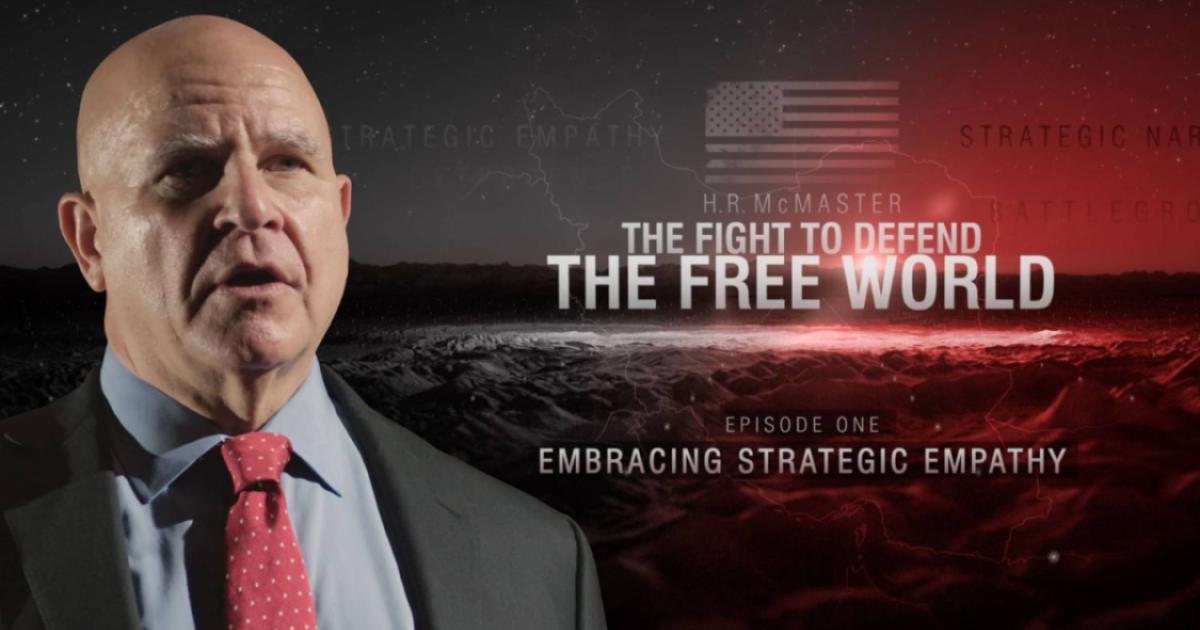

Embracing Strategic Empathy

Published December 8, 2020

The balance of power and persuasion in the world has shifted against the United States and other free and open societies. False assumptions stemming from overconfidence after the Cold War have resulted in strategic narcissism in American foreign affairs. By adopting strategic empathy, we can combat the negative effects of strategic narcissism and secure a better world for future generations.

Discussion Questions

  1. How has the United States displayed strategic narcissism in foreign policy?
  2. How do current challenges to national security differ from those faced before the end of the Cold War? How are they the same?

Additional Resources:

  • Read “Battlegrounds: The Fight to Defend the Free World,” by H. R. McMaster. Available here.
  • Watch “Battlegrounds: International Perspectives on Crucial Challenges to Security and Prosperity,” a video series with H. R. McMaster. Available here.
  • Listen to “Defending the Free World,” an episode of the GoodFellows podcast with H. R. McMaster. Available here.

Cast

H.R. McMaster

H.R. McMaster

Related

Articles

Two Kinds Of War: Ukraine, Gaza, And The Strategic Watershed

The 2025 National Security Strategy has ignited debates about several distinctive assertions, especially the choice of giving priority to the Western Hemisphere, thereby correcting the insufficient attention Washington has long paid to Latin America. In addition, the document may indicate a softening of the perception of China, and it repeats the appeal to European allies to do more for their own defense. Of particular note, furthermore, is the identification of culture as a dimension of security.

October 23, 2026

Articles

Trump’s Capitulation To Putin Is Undermining US National Security

The president’s admiration for the Russian dictator erodes American interests and values.

October 23, 2026

Articles

Who Needs The Bomb?

The Purpose of Nuclear Deterrence.

October 20, 2026