Articles
The Hidden Cause Of The Industrial Revolution
What if the Industrial Revolution began not with steam, but with property rights?
August 17, 2026 • 72 Min Watch
Published: June 27, 2017
Economic growth increases when more people work more productively. However, economic growth has slowed in the last decade, as increases in productivity and hours worked have fallen to fractions of their previous rates. Returning to rapid economic growth will require policies that encourage individuals to rejoin the workforce and businesses to invest in physical capital.
Discussion Questions
Additional Resources

John B. Taylor
Economic growth has been slow for the last decade.
To understand why, it helps to consider the factors that cause growth rates to change.
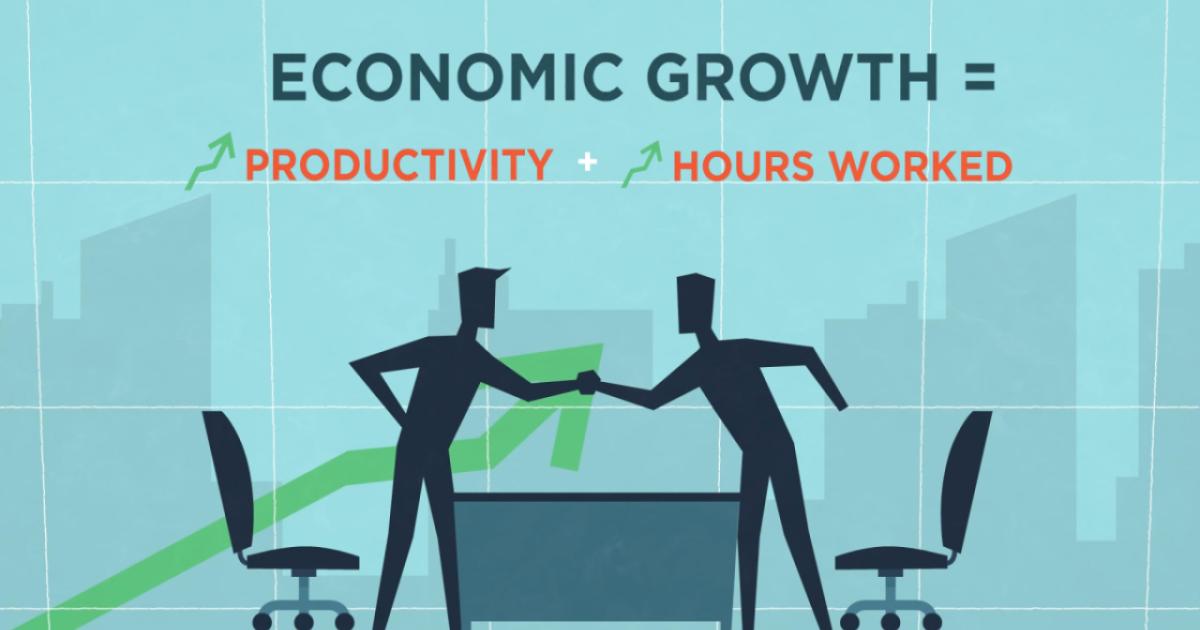
Economic growth comes from upticks in productivity AND increases in the total number of hours worked in the economy.
When more people work more productively, the economy grows.
Productivity increases when workers produce more than they did before. This occurs either because workers obtain higher levels of education or because companies invest in physical capital like tools, factories, and equipment that enable employees to increase their output.
Recently though, productivity has grown at only a quarter of its historical pace, largely due to reduced investment. Economic growth has lagged as a result.
And the percent of people working today is much lower than previously expected. Even after taking into account the Baby Boomers retiring, there are millions of able-bodied adults who are no longer participating in the workforce.
Getting back to our historical level of growth is possible, but it will require policies that encourage people to rejoin the workforce AND policies that spur more investment in education and the tools that help make workers more productive.
Articles
What if the Industrial Revolution began not with steam, but with property rights?
August 17, 2026 • 72 Min Watch
Articles
Lydia DePillis of the New York Times has published a pessimistic piece in the New York Times about the economic cost of our hot 2026 summer and future expected hot summers. In this podcast, I optimistically respond to her piece. Here is a very interesting example she reports on.
August 11, 2026
Articles
What matters when time is short? Ben Sasse joins EconTalk’s Russ Roberts for a candid conversation about mortality, faith, family, work, and the institutions that shape American life.
August 10, 2026 • 80 Min Watch