Articles
“Consensus Truth” In The Age Of AI
We should not be misled by the technology’s skill at summarizing knowledge.
October 9, 2026
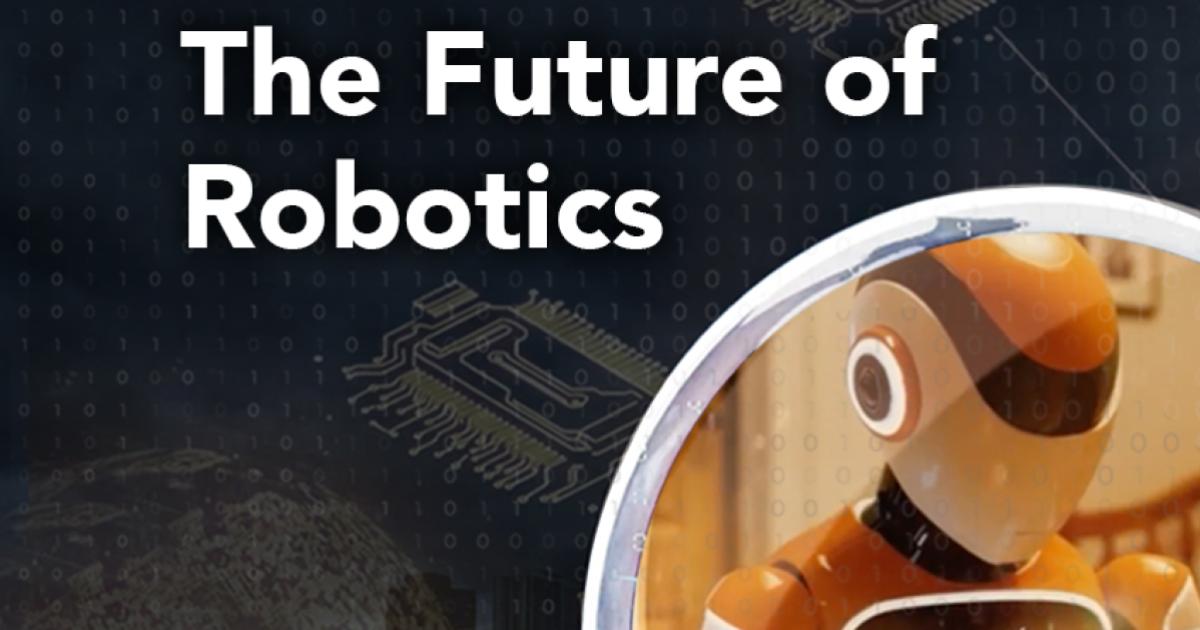
From handling hazardous tasks, enhancing mobility, and enabling precision in fields from healthcare to manufacturing, robots are extending what humans can achieve. Breakthroughs in AI, haptics, and soft robotics are driving innovations that improve safety, expand access, and support economic growth. Yet as robotics technology scales, so do the challenges: dependence on global supply chains, shifts in workforce demands, and unresolved questions about liability and data security. With targeted investment and sound policy, the U.S. can close the robotics gap, converting technological potential into national strength across labor, infrastructure, and sustainability.

Allison Okamura
>> Speaker 1: What kind of technology handles today's dullest, dirtiest, and most dangerous tasks? Robots. After all, robots don't get bored and can handle more hazardous environments than humans. As technology advances, robotics will be applied to nearly any task that requires a physical presence, from construction and agriculture to elder care and sustainability applications.
Some of today's robots are teleoperated, requiring direct human control. Other robots act autonomously, using AI to plan actions, make decisions, and change their behavior on the fly. Haptic or touch feedback technology will allow doctors to teleoperate robots in remote environments, making care more accessible. Soft robots will be able to deform, reconfigure, and adapt to their surroundings, enabling new applications in medicine and search and rescue operations, as well as tasks with complex physical environments like structural inspections.
Wearable robotics will enhance human mobility to assist those with physical impairments and help workers lift heavy loads in construction and manufacturing. But progress in robotics is heavily dependent on global supply chains to source required materials like semiconductors, power supplies, sensors, and actuators. Any disruption to the supply chain can easily halt innovation, highlighting the need for increased manufacturing.
In the US, any new technology can disrupt job markets, and robotics is no different. Some jobs will be lost, many more will be created, and others will change. In construction, for example, robots like the SAM 100 can lay bricks much faster than humans, but workers are still required for tasks requiring fine dexterity and judgment.
Finally, questions on accountability, regulation, and liability remain, such as who should be accountable for harmful robot actions or accidents. And as robots collect vast amounts of data, privacy and security considerations become increasingly important. These questions should be addressed without standing in the way of a robust robotics industry.
The United states currently ranks 10th globally in manufacturing robot density behind many competing nations. This leaves much room for growth and adoption that could help address pressing national challenges like labor shortages, housing, food production, and sustainability.
Articles
We should not be misled by the technology’s skill at summarizing knowledge.
October 9, 2026
Videos
Hoover Institution fellow Dr. Scott Atlas discusses his Wall Street Journal article he co-authored with Hoover Institution fellow Steven Koonin, "Covid, Climate and the ‘Consensus Trap’".
October 8, 2026
Event
How are autonomous satellites and artificial intelligence transforming space exploration, and what challenges must engineers overcome to ensure a sustainable future in orbit?
May 1, 2026