
Published August 3, 2022

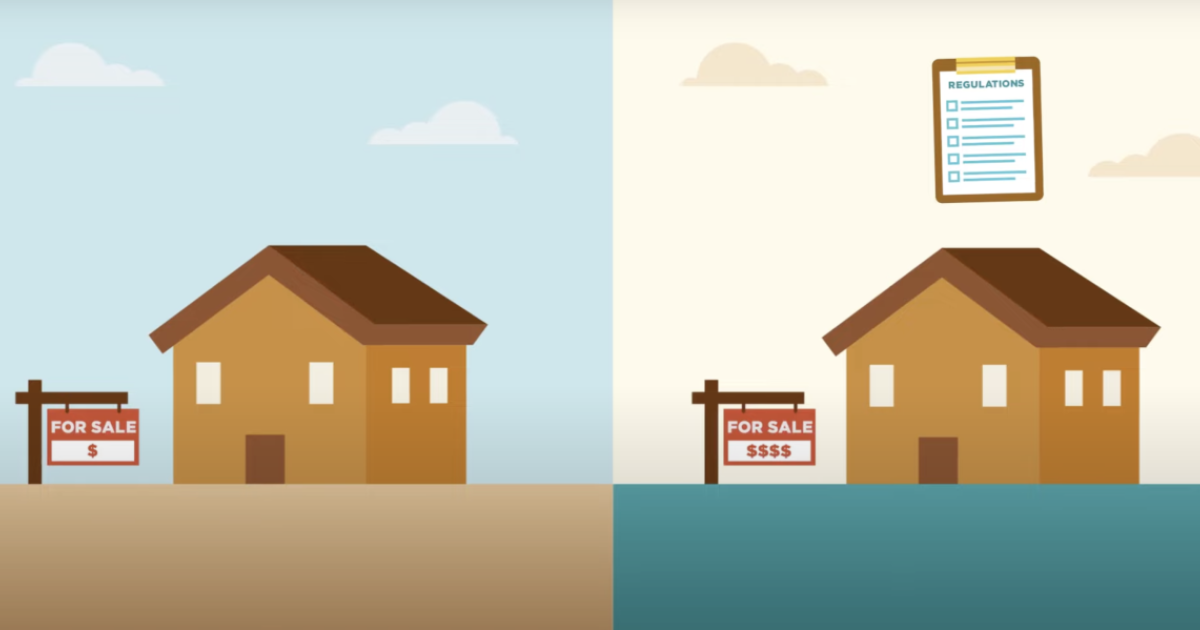
What makes housing expensive? The problem isn’t lack of space—it is that not enough homes are being built. Housing can be made more affordable by reducing regulations and restrictions on building houses and allowing non-homeowners more of a say in how their community will look. 

Discussion Questions:

  1. Why do governments regulate housing? What prevents new housing from being developed?
  2. Are there different forms of housing restriction?

Additional Resources:

  • Read “How to Make Housing More Affordable,” by David Henderson. Available here.
  • Read “Roofs or Ceilings?” by Milton Friedman and George Stigler. Available here.
  • Watch “The Economics of House Hunting Envy” on PolicyEd. Available here.

Cast

David R. Henderson

David R. Henderson

What makes housing expensive?

The problem isn’t lack of space; it is that not enough homes are being built. But why? Given rising prices, developers would love to build more…but governments have made it costly to do so. 

One study asked whether high prices were due to scarce land or restrictions on building. It found that identical lots sell for vastly different prices depending on what regulations builders face.

Local governments impose bureaucratic hurdles like environmental impact reports or deny building permits outright. They claim these policies protect the public and the environment, but more often they are intended to help current homeowners who benefit from rising prices.

Some think the answer is to force builders to erect “affordable housing” specifically for low-income people. But that makes building less profitable, meaning fewer homes are built. 

Instead of enacting more regulations, some states have found a better answer. They are enacting laws that limit local building restrictions. Moving these decisions from the local governments to state capitals reduces the power of homeowners and gives non-homeowners more say in how their communities will look.

The result: more homes can be built and there are more housing opportunities for all.

Related

VIDEO

Is Minimum Wage A Dead End?

Minimum wage policy is intended to increase earnings for low-wage workers and reduce poverty. Evidence from state-level increases, however, shows that businesses may respond by changing how many people they employ, how many hours they offer, whom they hire, and how much work they automate. Workers who remain employed may earn more per hour, but others may lose income or job opportunities, while many of those who benefit do not live in poor households. The Earned Income Tax Credit (EITC) directs support toward low-income working families without putting other workers’ jobs or hours at risk.

Articles

Money and Power: Historical Lessons for Stablecoins and U.S. Dollar Dominance

Economics Working Paper 26126

September 8, 2026

Videos

California’s War On Wealth—And America’s War On Terror

Is the progressive dream of wealth taxes soon to be reality – or a fiscal and economic nightmare – should voters approve Proposition 40 and a one-time 5% tax on the holdings of the Golden State’s billionaire class? And 25 years after one of the darkest days in the republic’s history, what is the legacy of the 9/11 attacks on America?

September 9, 2026