How The Rule Of Law Promotes Prosperity

Published: February 28, 2019

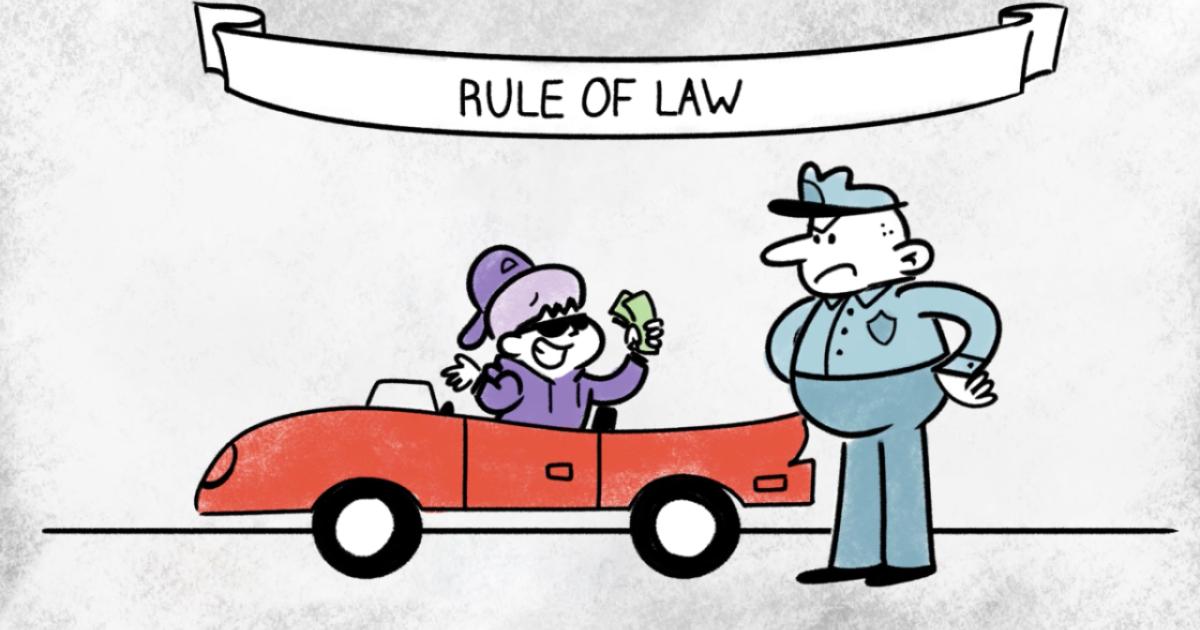
The rule of law is another way of saying that laws, as they are written, are applied equally to everyone. If you break a law, it doesn’t matter how powerful, wealthy, or connected you are: you face the consequences. When followed, the rule of law leads to a more just and prosperous society.

Discussion Questions

  1. Why is the rule of law important?
  2. What are some threats to the rule of law in the United States?

Additional Resources

  • Read “The Legal Origins of American Exceptionalism” by Michael McConnell. Available here.
  • Listen as Michael McConnell discusses “The Legal Origins of American Exceptionalism,” available here.

Cast

Michael McConnell

Michael McConnell

The term “rule of law” is often used in political and economic contexts, but seldom explained. 

The “rule of law” is another way of saying that laws, as they are written, are applied equally to everyone. 

If you break a law, it doesn’t matter how wealthy, connected, or powerful you are: you face the consequences. 

When followed, the rule of law leads to a more just and prosperous society. 

Civil disputes are more likely to be resolved peacefully. 

And in business, people are more willing to enter into contracts if they have a high degree of confidence that those contracts will be honored – or that they will be compensated appropriately if they’re broken. 

The rule of law in politics can be seen around the world when there are peaceful transitions of power following election. 

It even governs behavior between countries as well, as in the case of World Trade Organization disputes or mutually agreed upon free trade agreements. 

And while it can be tempting to bend the rule of law in specific instances that seem especially unjust, the benefits to society are maximized when we follow the law as it is written

Related

Essays

Critical Conditions: An Operating Framework for Allied Economic Statecraft (Japanese)

米国とその同盟国は、重要な原材料、製品、およ び技術が、中国との戦略的競争の核心にあるとい う点で概ね一致している。しかし、経済的な重要度 (クリティカリティ)を定義し、どの資源、技術、製品 が他よりも重要であるかを評価するための、強固で 共通の枠組みを有していない。重要度をめぐる議 論は、抽象的なリスクに終始することが多い。政策 立案者たちは、どの依存関係が武器化される可能 性が最も高いか、世界経済や第三国が武器化に どう適応するか、そして重要な依存関係を事前に 「是正」するためにどれほどのコストがかかるか、と いった点を十分に検討することなく、性急に行動 に移そうとしている。

September 16, 2026

Videos

The Promises And Risks Of Digital Finance

How can we reap the benefits of financial innovation while ensuring a sound, trustworthy financial system? Steven Davis asks IMF head Kristalina Georgieva at Jackson Hole.

September 16, 2026

Videos

Spoiler Alert: Can You Get Sued For Revealing A Plot Point?

Can revealing a plot twist get you sued? Inspired by the controversy surrounding HBO’s Lanterns, Eugene Volokh and Jane Bambauer explore the tension between copyright protection and free speech.

September 15, 2026 • 0 Min Watch