
Videos
Should AI Decide What You Pay?
AI-powered pricing challenges conventional notions of fairness and economic efficiency.
November 17, 2026
Published March 28, 2024
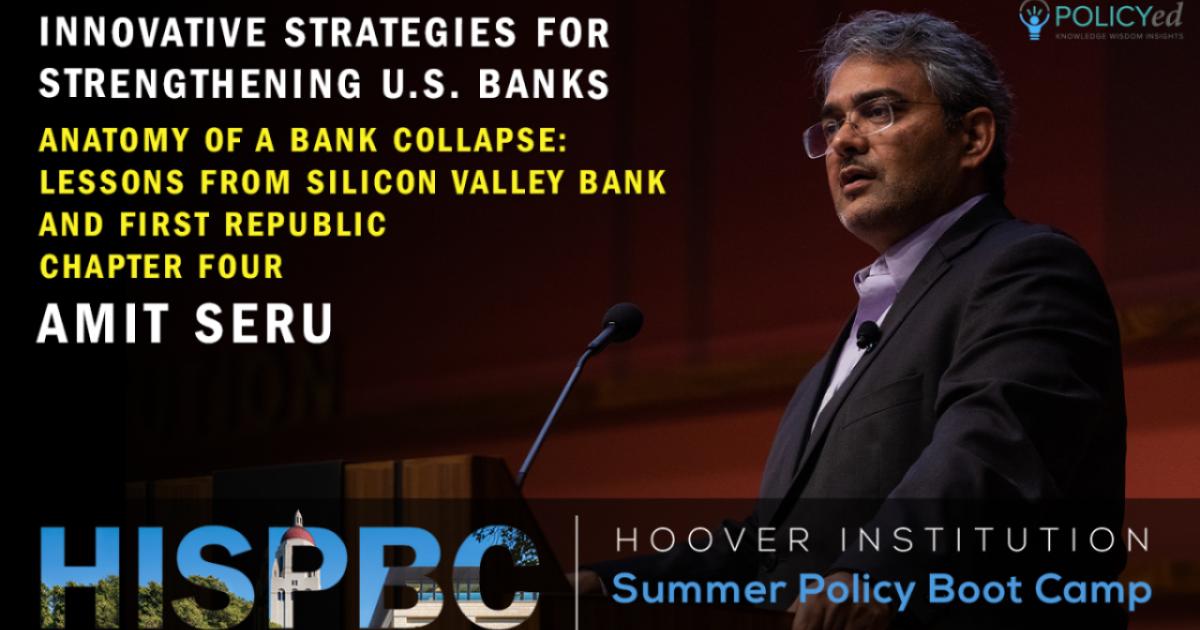
The Silicon Valley Bank collapse exposed the hidden costs of subsidized deposits in the U.S. banking system, particularly those insured by the FDIC. While these cheap deposits may seem beneficial, they create moral hazard by encouraging banks to take on excessive risks, knowing they have a stable funding source. This reduced market discipline and increased risk-taking can lead to a misallocation of resources, increased systemic risk, and a higher likelihood of bank failures which threatens to undermine the stability of the entire banking system.
The opinions expressed on this website are those of the authors and do not necessarily reflect the opinions of the Hoover Institution or Stanford University. © 2024 by the Board of Trustees of Leland Stanford Junior University.
Videos
AI-powered pricing challenges conventional notions of fairness and economic efficiency.
November 17, 2026
Articles
California wants more homes and less carbon. Its most powerful environmental statute often delivers the opposite of both.
November 16, 2026
Articles
I had the privilege of attending the Fed’s AI (or SI) task force conference, “Reading the signals: How will SI reshape the economy?” at the San Francisco Fed. The conference was live-streamed at that link, so I won’t do too much summary.
November 16, 2026