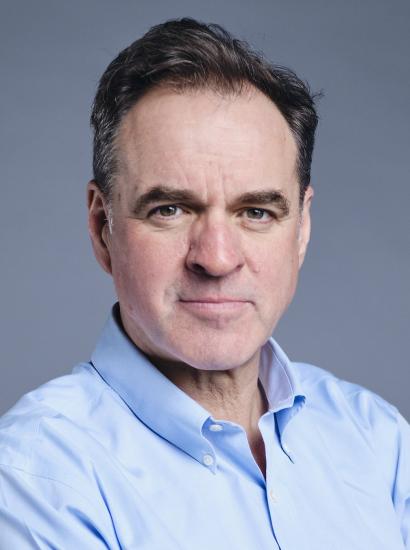
Recorded on November 9, 2017.
With social networks like Facebook and Twitter in abundance, the effects of networks on society in the twenty-first century are inarguable. However, Niall Ferguson, author of The Square and the Tower, argues that networks are not a new phenomenon and have been impacting human culture from the beginning of history.
Niall Ferguson and Peter Robinson discuss networks and hierarchies throughout history in this episode of Uncommon Knowledge. Ferguson breaks down what he means by networks and hierarchies using the imagery of the Piazza Del Campo in Siena, where the Torre del Mangia, representing the hierarchy, casts a long shadow over the Piazza Del Campo, representing the network. Ferguson argues that this powerful imagery invokes the essence of his book and the intertwined nature of networks and hierarchies within society.
Ferguson goes on to discuss the importance of networks in social movements throughout history, including Martin Luther and the Reformation, Paul Revere and the American Revolution, Joseph Stalin and the Soviet Union, and social media and Donald Trump. He argues that a networked world is a dangerous world, in that it allows movements and societies to advance in unexpected ways.
About the Guest:
Niall Ferguson, MA, DPhil., is the Milbank Family Senior Fellow at the Hoover Institution, Stanford University, and a senior fellow of the Center for European Studies, Harvard, where he served for twelve years as the Laurence A. Tisch Professor of History. He is also a visiting professor at Tsinghua University, Beijing, and the Diller-von Furstenberg Family Foundation Distinguished Scholar at the Nitze School of Advanced International Studies in Washington, DC. He is the author of fifteen books, most recently The Square and the Tower.
Related Articles: