Published April 21, 2020

Prior to European contact, indigenous peoples had a long history of engaging in the dynamic economies and governance structures that we recognize today as the necessary ingredients for prosperity. Traditional systems of governance, clear ownership claims, and robust trade networks allowed indigenous peoples to innovate and prosper in a changing world.
 

Additional Resources:

Cast

Terry Anderson

Terry Anderson

Native Americans have been asking politicians to recognize their rights since before 1879, when Chief Joseph said, “Let me be a free man -- free to travel, free to stop, free to work, free to trade where I choose, free to choose my own teachers, free to follow the religion of my fathers, free to talk, think and act for myself.” 

Early in the history of the United States, Native Americans lost sovereignty over their lives and jurisdiction over their land. The federal government forced them onto reservations, declared them wards of the state, and stripped them of their dignity. The federal government restricts individual and tribal rights to this day. This is the main reason why American Indians are the poorest in the United States. But it was not always that way. Prior to European contact, indigenous peoples had a long history of the dynamic economies and governance structures that we recognize today as the necessary ingredients for prosperity. 

Native Americans claimed their territories, made capital investments, and rewarded individual initiative. In the Southwest, agricultural peoples established clear ownership of floodplains, marking and enforcing land boundaries to reward stewardship. In the Southeast, families and clans owned cultivated gardens and orchards. Farther North, people marked trees to denote tribal boundaries, important pathways, and to claim forests for hunting, trapping, and timber. And along the Pacific, tribes used stones and marked trees to indicate ownership of spawning streams, fishing weirs, and clam gardens created by terracing beaches. Where societies considered land to be owned communally, individuals, families and clans were generally entitled to the benefits of their work on that land. 

While indigenous peoples were diverse, they all had well-established rules recognizing the ownership claims that allowed individuals, families, clans, and tribes to specialize in production and engage in trade. Long before colonization, robust trade networks connected tribes and the goods they produced. People from all over the continent gathered in places like Chaco Canyon in New Mexico to trade everything from salmon, to pearls, to buffalo hides, copper, and obsidian.


In these hubs, trading languages, such as Chinook in the Northwest and Mobilian in the Southeast, emerged to make it easier to exchange goods and share knowledge. Plains tribes improved their nutrition with Pacific salmon and coastal tribes stayed warm with buffalo robes from the interior. Trade fostered prosperity, allowing many tribes to devote significant time and resources to leisure, art, and religious ceremonies. 

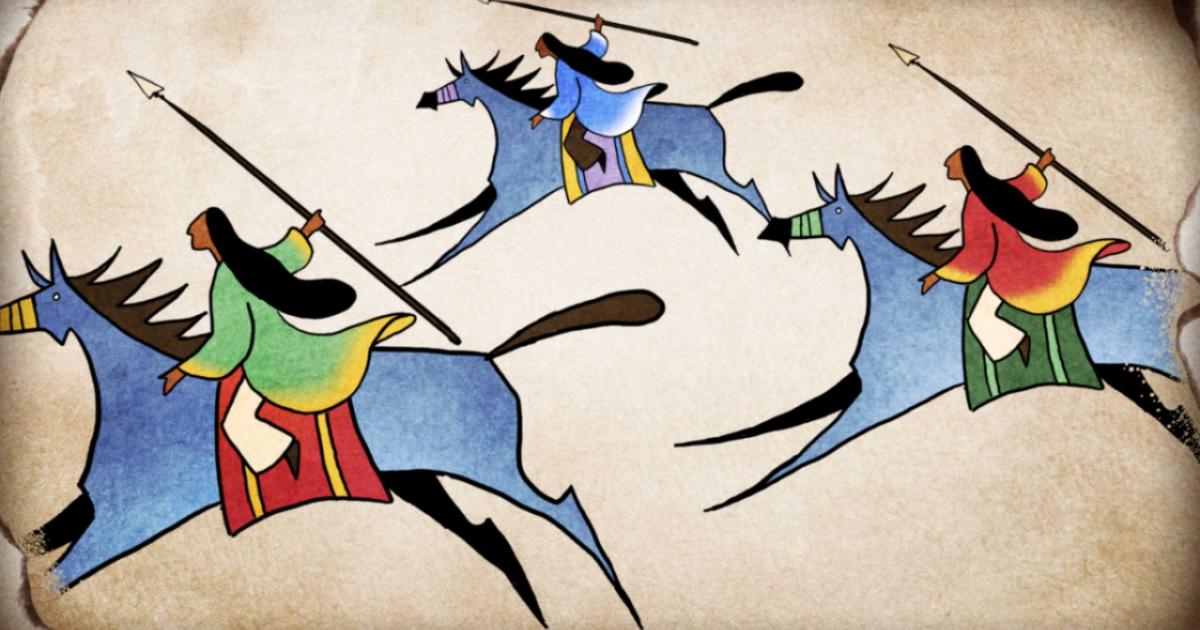
To support all of this economic activity, tribal governments evolved to fit regional conditions consistent with their customs and culture. This enabled indigenous economies to adapt successfully to climate and technological changes. Indigenous traditions of treaty-making and trade allowed Native Americans to adapt and prosper by trading with Europeans who brought beads, steel, horses, and other new commodities. Plains Indians, for example, became very successful horse societies. 

Native Americans didn’t simply survive, they thrived. 

Eventually, however, as European settlement expanded, these dynamic decentralized indigenous institutions were forcibly replaced by centralized federal authority. This had dire consequences for Native Americans. Tribes were driven from their traditional territories and onto reservations where tribal practices — like the sun dance and potlatch — were banned. What was once a relatively free, prosperous, and open society of indigenous economies was replaced with top-down, federal control that stripped indigenous peoples of their autonomy, dignity, and sources of wealth. In order for Native Americans to prosper again, they must regain the freedom and sovereignty to enjoy the same rights that other Americans take for granted.

Related

VIDEO

Should We Regulate AI (Before It's Too Late)?

Artificial intelligence could become one of the most consequential drivers of productivity and economic growth in a generation. Yet concerns about job displacement, misinformation, and political disruption have prompted calls to regulate the technology before its effects are fully understood. History shows that major innovations disrupt existing industries while creating new forms of work and enterprise that policymakers rarely anticipate. Premature regulation risks entrenching established firms, limiting competition, and expanding government influence over information. The challenge is to address genuine harms while preserving the freedom and experimentation that allow innovation to advance.

Videos

Incentives Are For Losers Featuring Adam Mastroianni

Adam Mastroianni and Russ Roberts explore what it takes to do the right thing when the incentives point the other way.

September 14, 2026

VIDEO

Is Minimum Wage A Dead End?

Minimum wage policy is intended to increase earnings for low-wage workers and reduce poverty. Evidence from state-level increases, however, shows that businesses may respond by changing how many people they employ, how many hours they offer, whom they hire, and how much work they automate. Workers who remain employed may earn more per hour, but others may lose income or job opportunities, while many of those who benefit do not live in poor households. The Earned Income Tax Credit (EITC) directs support toward low-income working families without putting other workers’ jobs or hours at risk.