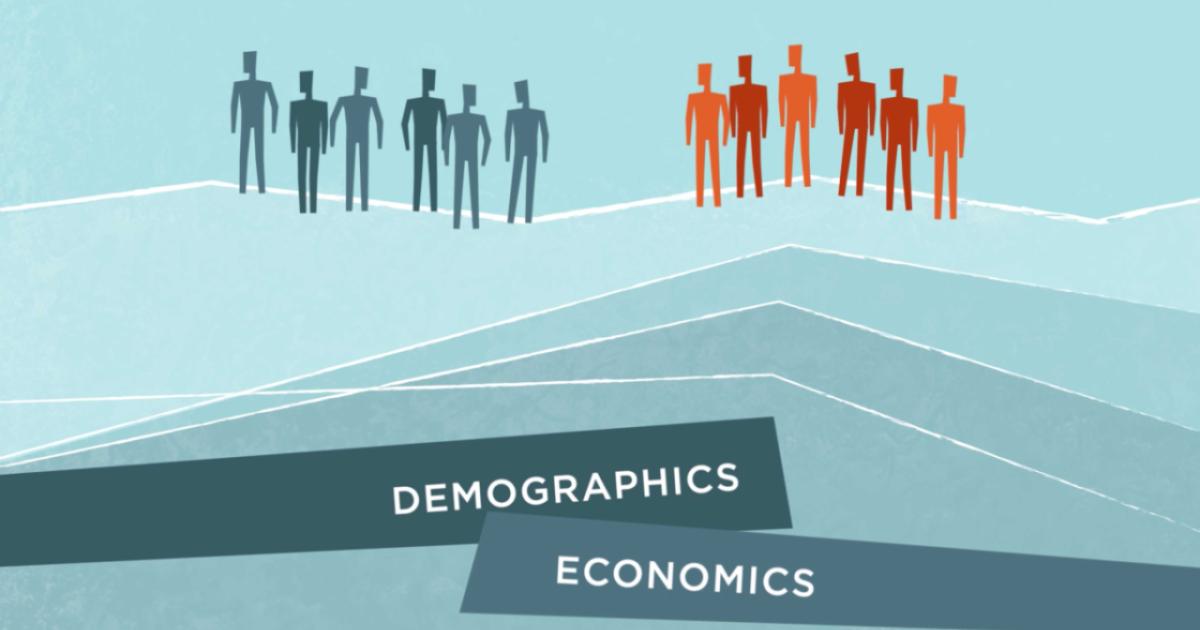

American politics feels more chaotic and unstable than ever. Our political parties have sorted into ideological opposites.
But there is a reason for all this turmoil: America’s political instability is occurring because of deep, ongoing economic and demographic structural changes that are causing existing voting blocs to regroup and reconsider which issues motivate them and which party they support.
As a result, control of the legislative and executive branches keeps shifting back and forth.
And notably, these structural changes are affecting countries all over the world.
What is stable today isn’t stable tomorrow, and political parties have to adjust in order to find positions that win them a majority of voters.
Lucikly there is a reason to be hopeful: This has happened before in our history.
For example, in response to the Great Depression, Democrats found a winning combination of issues with the New Deal. They promised voters security from financial ruin, made welfare a popular voting platform, and as a result, went on to control Congress for sixty years.
Today, political parties are struggling to find a winning combination of positions on the challenges that are causing people to change political allegiances - including global trade, immigration, automation, access to health care, and inequality.
Once one political party figures out a winning combination of policies that can consistently win them elections, political stability will return.