
Published: September 5, 2017

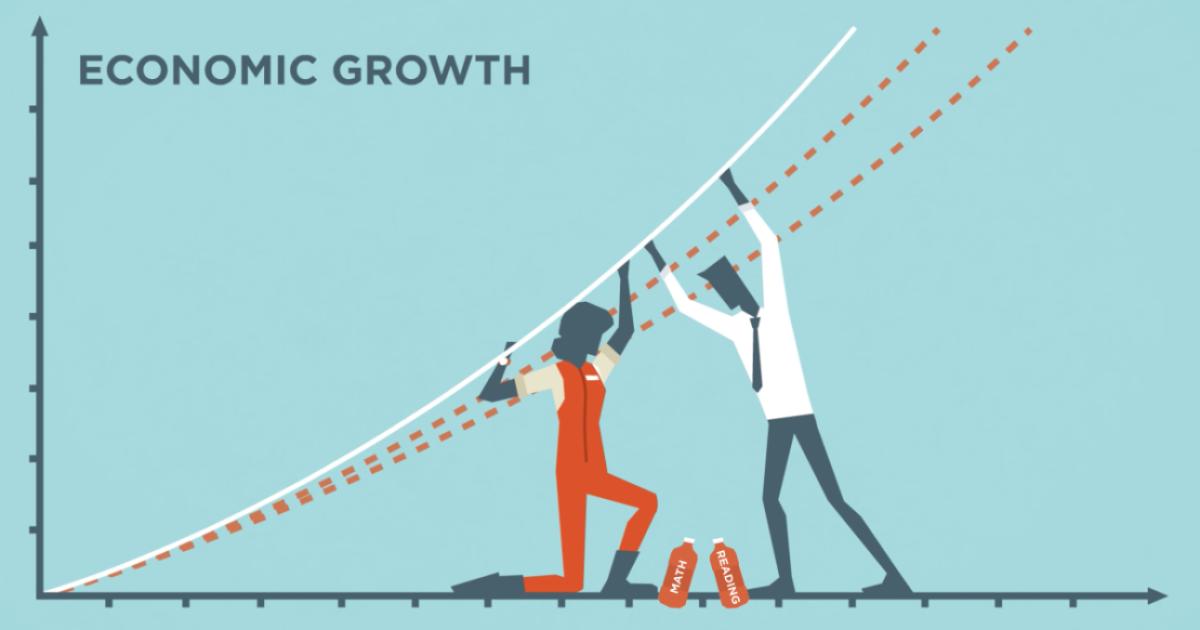
Widespread proficiency in math and reading creates a strong foundation for more advanced knowledge and productive work. Unfortunately, U.S. proficiency in math and reading hasn’t kept up with the rest of the world. If American students become more proficient in math and reading, long-run economic growth will follow.

Discussion Questions

  1. Which nations have invested in their education wisely and reaped the benefits?
  2. What led the U.S. to shift its focus away from its education system?
  3. What can schools do to increase their students’ proficiency in math and reading?

Additional Resources

  1. Read the book this video is based on: “Endangering Prosperity: A Global View of the American School” by Eric Hanushek, Paul Peterson, and Ludger Woessmann
  2. Higher Grades, Higher GDP” by Eric Hanushek and Paul Peterson
  3. It Pays to Improve School Quality” by Eric Hanushek, Jens Ruhose, and Ludger Woessmann
  4. Listen to Eric Hanushek on EconTalk with Russ Roberts

Cast

Eric Hanushek

Eric Hanushek

What does better education have to do with economic gains?

Well, a country’s economic growth is dependent on the skills of its workers....

And it turns out that math and reading proficiency are good predictors of the skills that lead to growth.

Without basic math and reading abilities, people don’t have a foundation for more advanced knowledge that leads to more productive work.

During the last century, The United States grew quickly because it embraced universal education earlier than other countries, resulting in a relatively more skilled workforce.

But our educational advantage has slowly disappeared. International test scores put our math and reading proficiency around thirtieth in the world, which points to low future growth. Even American students with college-educated parents, who would be expected to do well, actually don’t compare to students in other countries.

Just getting to Canada’s level would lead to a more productive workforce, adding trillions to the economy in the long run and boosting every worker’s paycheck.

It wouldn’t fix the economy overnight, but it would immensely improve the lives of future generations.

Whatever policies we choose, one thing is clear: if students become more proficient in math and reading, long-run economic growth will follow.

Related

Videos

Professor Sean Westwood Explains How AI Bots Are Faking Human Responses In Online Surveys

Hoover Institution fellow Sean Westwood sounds the alarm after an AI bot he programmed was able to fool online surveys into thinking it was a human respondent. Westwood says or 75 years, the problem with polls was that they sometimes got human opinion wrong. The problem now is that they may not involve humans at all.

September 3, 2026

Articles

The Rich World’s Climate Distraction

The World Bank and other institutions lose their focus on the best ways to help the poor.

September 1, 2026

Videos

The Fiscal Outlook And Housing Affordability

Richmond Fed president and CEO Tom Barkin joins Steve to discuss Kevin Warsh’s keynote speech at the Jackson Hole Economic Policy Symposium.

September 4, 2026