Published: April 27, 2021
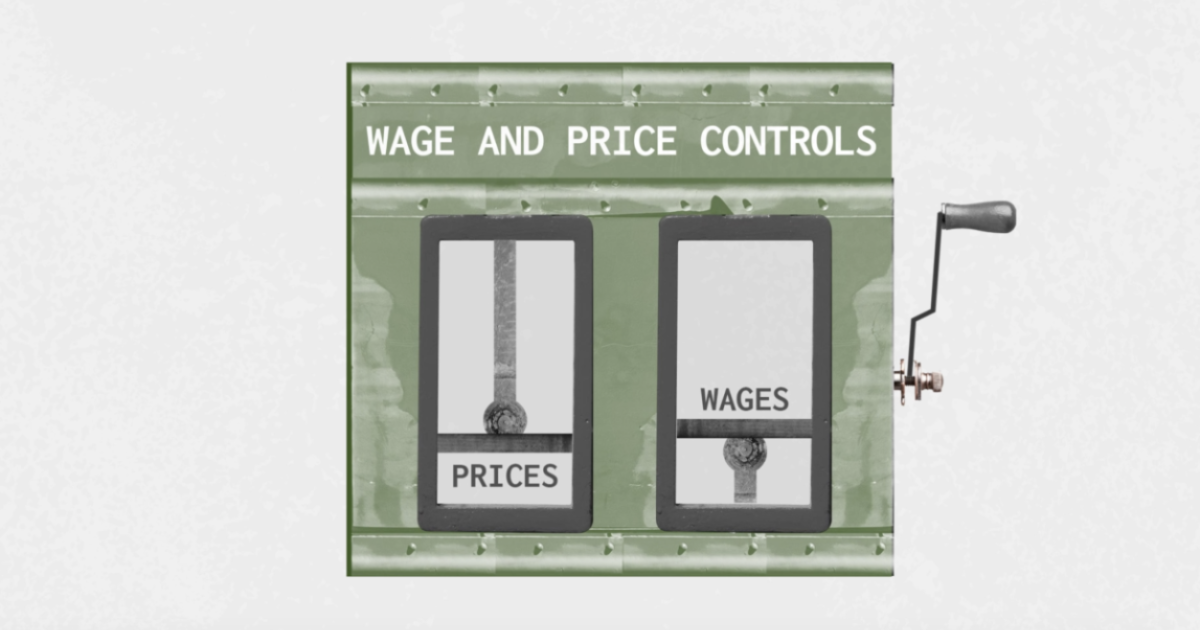
During an economic decline, the first response from many politicians is to manipulate market-based prices or wages. However, history has repeatedly shown that artificially manipulating prices to in order to solve political problems only leads to detrimental shortages, job losses, and other economic hardships. True market-based prices and wages are vital, as they provide insight into consumer preferences, job skills, and available resources.
Discussion Questions
- What are the objectives of wage and price controls?
- Are there any benefits to wage and price controls?
Additional Resources
- Read Choose Economic Freedom: Enduring Policy Lessons from the 1970s and 1980s, by George P. Shultz and John B. Taylor. Available here: https://hvr.co/3v4EAos.
- Listen to the Hoover Virtual Policy Briefings episode “John Taylor: COVID-19 and the Economy.” Available here: https://hvr.co/3dwAr6H.