Videos
25 Years After 9/11: The History And Future Of Surveillance, Technology, And Democracy
How does a free society use increasingly powerful technologies to protect itself without compromising the freedoms it exists to protect?
November 23, 2026
Published June 19, 2026
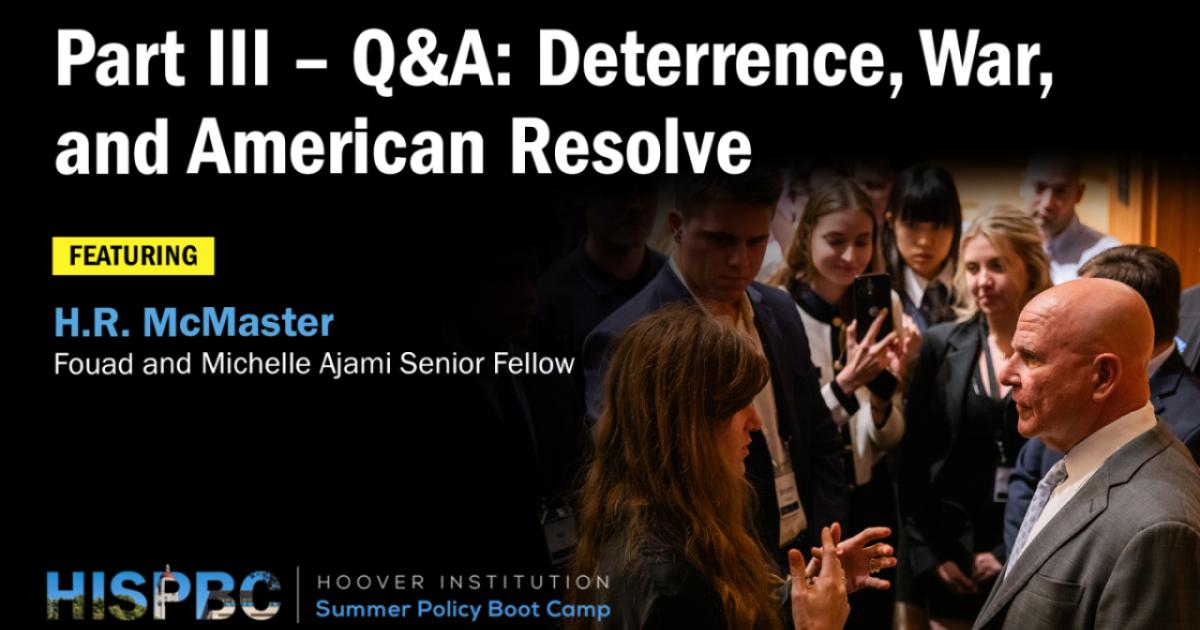
McMaster discusses why adversaries are often emboldened by perceived weakness, how the war in Ukraine fits into a broader contest involving Russia, China, Iran, and North Korea, and why the United States and its allies must adapt to changes in the character of warfare without losing sight of war’s enduring realities. He also reflects on NATO, Europe’s defense responsibilities, advising political leaders, and maintaining professionalism in public service. Across topics, he returns to the same argument: deterrence and effective strategy require strength, seriousness, and a clear view of both allies and adversaries.
Recorded on August 14, 2025.
Check out more from H.R. McMaster:
Learn more about H.R. McMaster here.
__________
The opinions expressed in this video are those of the authors and do not necessarily reflect the opinions of the Hoover Institution or Stanford University.
© 2026 by the Board of Trustees of Leland Stanford Junior University.
Videos
How does a free society use increasingly powerful technologies to protect itself without compromising the freedoms it exists to protect?
November 23, 2026
Essays
Venture-backed startups have given the US military something it lacked a decade ago: a privately financed reserve of companies that can design, test, and field new systems at commercial speed, with investors carrying much of the early cost and risk.
November 24, 2026
Articles
Probably not, but America needs to be prepared for such a scenario.
November 20, 2026