Articles
Tokenization Of Real-World Assets: A Market Taking Shape
Managing the profound change demands harnessing advantages, mitigating risks, and creating careful legislation.
October 21, 2026
Published April 3, 2026
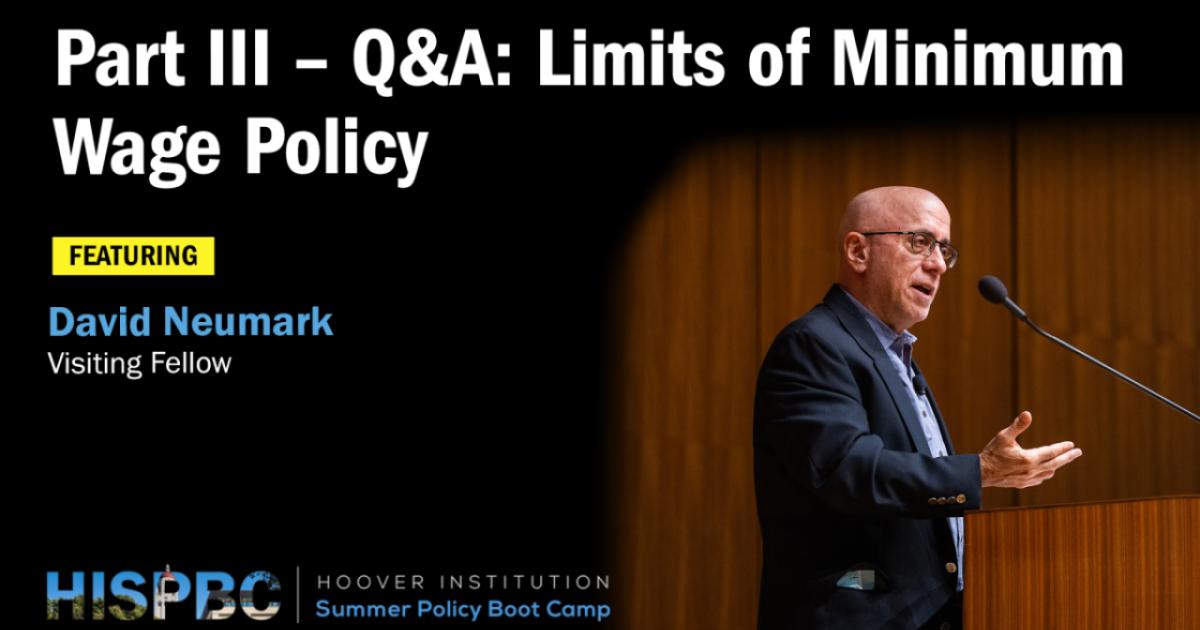
In the Q&A, the focus shifts from wages to households and policy design. Neumark explains why minimum wage increases deliver limited benefits to poor families and why a substantial share of gains accrues to workers in middle-income households. Evidence from tax and price data shows that higher costs and employment losses are disproportionately borne by low-income consumers and small employers. By contrast, policies such as the Earned Income Tax Credit target poverty more directly while strengthening incentives to work, highlighting a persistent mismatch between policy goals and policy choice.
Check out more from David Neumark:
Learn more about David Neumark here.
Recorded on August 14, 2025.
__________
The opinions expressed in this video are those of the authors and do not necessarily reflect the opinions of the Hoover Institution or Stanford University.
© 2026 by the Board of Trustees of Leland Stanford Junior University.

David Neumark
Articles
Managing the profound change demands harnessing advantages, mitigating risks, and creating careful legislation.
October 21, 2026
Videos
The Fed, inflation, and the economic case for long-term price stability.
October 20, 2026
Articles
Scott Kirby wants a national wealth tax and inheritance taxes near 100%. Among those who would pay are the investors he ultimately works for.
October 20, 2026