Working Papers
A Network Approach to Geopolitics
Economics Working Paper 26127
October 16, 2026
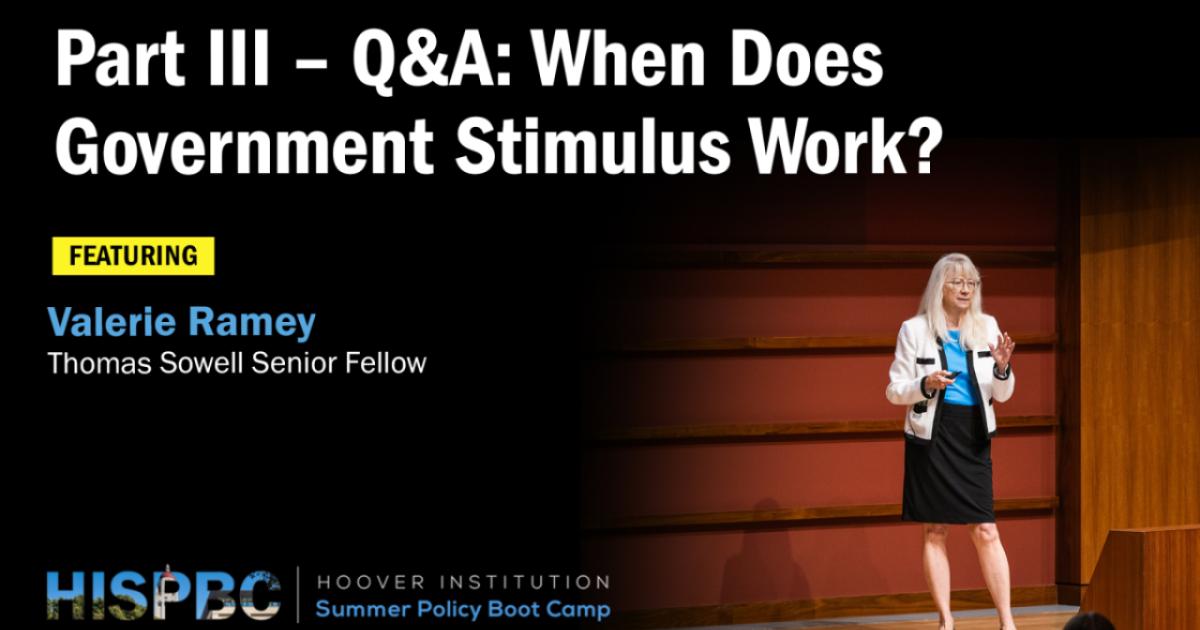
In the Q&A section, Ramey considers when fiscal stimulus may be justified, why some COVID-era spending went too far, and which policy tools can produce the strongest short-run effects. The discussion underscores a basic constraint: stimulus must be judged not only by what government spends, but by the economic gain it produces relative to the debt it leaves behind.
In the Q&A section, the focus shifts to how fiscal policy should be used when policymakers decide stimulus is necessary. Ramey discusses the limits of COVID-era payments, the difficulty of timing infrastructure spending, and why direct government purchases can produce a larger short-run effect than temporary transfers. She also considers temporary tax reductions that encourage households to move purchases forward. Across these approaches, the same constraint remains: stimulus works only if it arrives at the right time and generates enough economic activity to justify the additional debt.

Valerie Ramey
Working Papers
Economics Working Paper 26127
October 16, 2026
Videos
How did Donald Trump go from political defeat and the aftermath of January 6 to a second term in the White House?
October 19, 2026
Videos
Mickey Levy on his early career working with Alice Rivlin at the Congressional Budget Office and with Arthur Burns at AEI, as well as being part of the Shadow Open Markets Committee from its early days in the 1970s.
October 16, 2026