
series_item_video
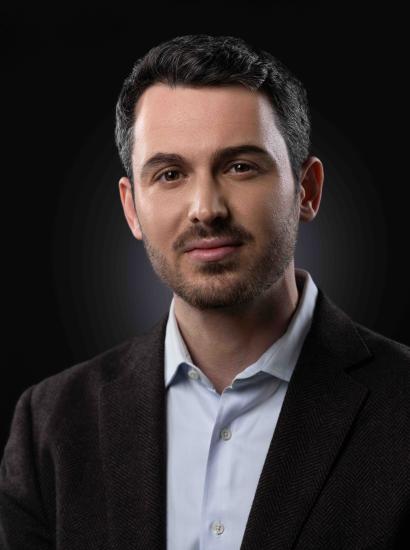
In a year full of talk about revolutions past (1776) and present (AI), there’s yet another upheaval to ponder: an emerging “quantum revolution” that will change the boundaries of science and industry as it deeply impacts global commerce and geopolitics -- the US, China, and European nations are all making advancements in the field. Hoover fellow Eyck Freymann and three co-authors discuss their recent Hoover Institution paper detailing how America and its global friends and allies can win the “quantum race”. Among the topics visited: quantum’s promise in terms of improving current living conditions (for example, studying climate change) and its myriad challenges (most notably, data privacy and international espionage). Also discussed: the need for considerable investments in research, an emphasis on diplomacy and greater international cooperation, plus lessons learned from the semiconductor industry regarding supply chains, intellectual property, and geopolitical vulnerability.
Recorded on July 14, 2026.
- Quantum of Solis is a James Bond film considered one of the weaker entries in the franchise due in part to a shaky cam that many viewers found disorienting. Speaking of disorienting, what about the quantum era in which the world has entered? Will the technology live up to the hype and which nation or nations are best suited to win this competition? We've asked four experts in this field to gather assessment of whether quantum will indeed, like AI, become the next world-shifting technology. What does that mean for all of us in practical terms? It's coming up next on a new episode of Matters of Policy and Politics. Stay tuned. It's Tuesday, July 14th, 2026, and you're listening to Matters of Policy and Politics, a podcast devoted to the discussion of Hoover Institution policy research, as well as issues of local, national, and geopolitical concern. I'm Bill Whalen. I'm the Virginia Hobbs carpenter distinguished policy fellow in journalism. I'm not the only Hoover fellow who is moodlighting as a podcaster. If you don't believe me, go to our website, which is hoover.org. Actually go to hoover.org/podcast. And there you'll find just the whole retinue of what we have. That includes the audio version of The Goodfellow Show that I had the great honor moderating. Now the word revolution has been bannied about a lot this year, be it the events of 1776 or today being Bastille Day in France, what transpired in Paris in 1789. And there's, of course, the AI Revolution, which began about three years ago with Nvidia's accelerated computing platforms. Today, we're going to discuss the quantum revolution, the strategic implications in quantum computing, sensing and communications, which nation or nations are best positioned to win the competition of the quantum era. It's a subject of a paper published earlier this month by the Hoover Institution. It's titled The Quantum Revolution: A Guide for Allied Policymakers joining us today to discuss their findings, the four co-authors of that paper. And here they are. Ike Fryman is a Hoover fellow director of the Hoover Institution's Allied Coordination Working Group and a participant in the Hoover Institution's Applied History Working Group. He's the author of several critically acclaimed books, including Defending Taiwan, The Arsenal of Democracy, and One Belt One Road, and he is a returning visitor to our podcast. Sophie Cost is an analyst at Green Mantle, a geopolitical advisory firm where she researches emerging tech, US-China competition, and economic choke points. She worked previously on energy security at the Center for Strategic and International Studies and at Safe's Critical Minerals Center. Katarina Klotz is a PhD candidate at the University of Oxford research, researching the impact of dual use technology on the state's economic and military security strategies. She is also the Europe analyst at Green Mandel. Previously, she researched the geopolitics of space and quantum technologies at the Oxford Internet Institute and the Oxford China Policy Lab. Last but not least, Sebastian Ordell. Sebastian is a physicist and engineer on the quantum control team at Quantum Machines where he builds a genic AI systems for the autonomous operation of spin and superconducting quantum computers. Ladies and gentlemen, thank you very much for coming onto this podcast. It's the first time we've done a group pod like this, so wish us all luck. Thank you so much for having us on. Looking forward to it, Bill. Thank you, Ike. So let's begin this podcast with what I like to call tech for dummies, your moderator playing the role of the dummy, as my knowledge of computers is pretty much limited to this laptop that sits in front of me. So Sebastian and Katerina, I turn to you. Sebastian, maybe you can briefly explain what exactly your spin in super conducting quantum computers. And Katerina, if you can build on that and explain exactly what exactly are quantum technologies. So go ahead, Sebastian. Thanks for having us, Bill. So I may start briefly with what is a quantum computer, and then I can hop out to production spinky qubit systems. So yeah, quantum computers are a new technology which use the peculiarities of quantum physics which is a, a branch of physics physics which focuses on the very small to, to put it plainly. And yes, quantum computers u- use this kind of strange physics to create a new rules, a set of rules for doing computing. And spin and superducting quantum computers are particular variants of the hardware that has been developed to achieve these, these new set of ru
- of rules for computing. Spin qubits use technologies which are very similar to the traditional transistors that we use in classical computers. And superconducting systems use a slightly more exotic hardware to achieve the same needs. Katrina? Yeah. Yeah, maybe I can add on that, and because quantum computers are not the only quantum technology. So quantum technologies in general are these technologies that rely on these very hard to understand physical properties. And next to quantum computing, there's also quantum communications and quantum sensing. So communications leverages the exactly, exactly the same physical properties to basically construct communication networks that are completely safe from earstropping. So classical encryption, as we know, it relies on mass. So you may have seen these codes of zeros and ones, and they are hard to break, but they are not unbreakable. However, quantum communication uses these atomic level properties that mean that if you intercept with the communication stream, that alters the physics, and because it alters the physics, that destroys the communication you can't eavestrop anymore. And then the second different technology that we can also talk about is quantum sensing. So you will know sensors from sort of before the quantum, before the quantum revolution sensors measure properties such as time, gravity, and magnetic fields. And what's different about quantum sensing is really the sensitivity and the scale at which we can measure with quantum sensors. So because these quantum properties are so minuscule and on such a low scale, we can just look much deeper and look at much more materials, at molecules at a much preciser scale. And Sophie, is quantum technology a unique technology due to itself, or does it build off of other existing technologies? Well, a bit of both. A lot of the hardware that's used to build these quantum computers, quantum sensors is exotic. So it comes from just cobbled together electronics that are built in labs. It involves new players that are building, for instance, dilution or cryogenic systems that are essential to cool down these systems to make them functioning. So it includes both classical technologies that we've used for decades, like commercial electronics that are produced in China and other countries, and exotic hardware that is unique to this field. Well done. And Ike, is this the next big thing? Because I've been hearing for the last few years AI is the next big thing. So is this the next, next big thing? Well, it seems likely to be, but we don't have a clear sense of timeline, and we don't know exactly which of these capabilities will manifest first and which among them will have commercial implications and which will just be technologies that are used by states and militaries. But the argument we make in this piece is even though the physics is quite spooky, even though the companies that are developing these products are still very far from profitability, even though an enormous amount, technically speaking, still has to go right for this stuff to be geopolitically seismic, now is the time for allies to start getting together and consulting about what our coordinated strategy should be. And the reason is the sheer range of uncertainty that these technologies introduce to a very wide array of industries and military and geopolitical functions. And the fact that as Sophie was explaining, these supply chains are still not developed and they're not fully formed. We have learned some lessons in the case of classical computing chips where now over 90% are of our advanced semiconductors come from Taiwan, a small island right off the coast of our number one geopolitical competitor. And that supply chain also depends a whole bunch of single points of failure, including ASML lithography machines that come from one company in the Netherlands. We don't want to make some of these mistakes again because our adversaries, China in particular, have learned the lessons and they want total national self-sufficiency. And as we look across the map, we see that in a number of these aspects of the technology, particularly on the hardware side, we are very dependent on particular companies, countries, and labs. So competing effectively with China, making sure we are not strategically surprised, is going to require a whole lot of allied coordination right at the outset to make sure that none of these bottlenecks fall under China's control. And in terms of conversations, are labs talking to labs, governments talking to governments, companies talking to companies? Some. And there has been encouraging progress in the last 18 months because to its credit, the Trump administration may mistreat allies in other respects, but they do understand that this is an issue too important to do just by the United States. There is a, a US-UK dialogue on quantum. Quantum is a big part of AUKUS pillar two, the high-tech cooperation program through which the US, Australia, and the UK are cooperating. There's increasing dialogue, including, you know, funding that is happening across the Atlantic, and there's a whole web of research partnerships that Sebastian can talk about. But it's not happening enough. And even within the European Union, for example, the institutions don't exist to pull together the various expertise on the technical side, on the commercial side, and on the geopolitical military side. And that is the main thing that we are trying to do with this paper. We're trying to take these very spooky technologies which are really not intuitive and say, let's reduce them. Let's simplify them so that regular people who are coming at this from a non-technical perspective can wrap their minds around them. And then let's frame the set of questions that the allied governments have to answer when they get together. So you used the word spooky to describe the technology. AI, of course, gets a very bad rap, everything from cheating on exams to deepfakes and so on and so forth. What about quantum though? Is quantum, is quantum as much a menace as AI is portraying us? Well, maybe Seb, you can give us some examples of what makes quantum spooky. Yeah. I mean, so quantum is spooky in that it obeys these strange laws of physics that are counter to our normal intuition about how, how the, the world works. But I, I think kind of on the applications front the, the spookiness there, or at least the concerns regarding quantum technologies are principally in the cryptography regime. And quantum techno - well, quantum computing particularly one of its principal applications is the ability to crack RSA encryption and other encryption methods, using bochures algorithm. And this obviously has huge like geopolitical and commercial implications. And you know, it's, it's important that this technology doesn't get into the wrong hands. There are also you know, other applications for quantum sensing in which are dual use and can have, you know, will have significant military applications. So I think on, on this side of the technology that, yeah, have more nefarious potential applications. But of course there are also more useful applications. Just adding, adding to what Seb just said about these applications relevant to geopolitics. I mean, with quantum computing the ability to simulate molecular interactions could generate some significant advantages in material sciences, in defense applications, in logistics, in energy. In quantum communications, as we've said the goal is eavesdrop-resistant links. Today's developments are still vulnerable to attacks, but the, the potential for eavesdrop-resistant links is, is massive from a geopolitical perspective, and free space links that are weather and denial prone that are weather and denial prone today. And then finally, quantum sensing. It would push, you know, precision and timekeeping, in field sensing, inertial navigation, and it could enable jam and spoof resistance navigation. So these implications map onto core state functions and including intelligence surveillance and reconnaissance adjacent missions. Can we talk a bit about the implications just on the cryptography side? Because I think people don't really have a sense of the stakes of this. The world's major intelligence agencies right now are scooping up absolutely vast quantities of encrypted data. Anytime you send information over the internet, hopefully if you're sending personally identifiable information, if you're sending your credit card numbers, all that sort of thing, it is encrypted end-to-end. And that means if someone is intercepting that communication, it's just a random tangle of ones and zeros they can't pry it apart. But militaries and allied intelligence agencies and institutions within governments have been using these same encryption schemes to send the most sensitive information they've got. Everything about the design of our nuclear-powered submarines to how our nuclear weapons work and how to control them. All of this information has been scooped up by adversaries on one another. And so far, they can't do anything with it. But if you imagine that they get access to quantum computers that they can use to decrypt some of these communications anything that has been communicated in the past could potentially become transparent. And so you can imagine the implications for nuclear deterrents in particular, but also any of the most sensitive secrets that governments keep. You don't want China to acquire this capability before the democracies do. Right. So the military implications, probably huge financial implications as well. Right. How do you trust the banking system? Exactly. So the time to start building this set of preparations is now, because migrating these protocols that the internet has relied on for decades is going to require an enormous amount of work from lots of institutions. It will cost billions of dollars, and governments will need to be aligned on how it works. We can also probably say something, even though we are very, very far away from there now. The sheer speed at which quantum computing is making progress, it is so blazing that it's exponentially faster in some respects than classical computing and AI. So I think it's maybe worth a beat on just the speed at which these technologies are advancing and what that means for the timelines. So maybe Sophie, you can, you can share a bit about the original data analysis or Sophie and Kati about the data analysis we did in this report. I don't think there's an understanding of just how fast the tech is improving. I can, I can kick off and then Kati can compliment whatever I'm missing. But when you look at several metrics, none of which are you know, a clear representation of the field, but taken together, they, they indicate extremely fast progress. If you look at metrics like quantum volume, which tries to be a bit more holistic, this has increased extremely fast over the past five years. If you look at coherence time, so how long qubits, which are the building blocks of quantum computers stay in their states, that has improved exponentially across different hardware modalities in quantum computing. Again, it's difficult to make this comparison to Moore's Law. AI is not quantum and vice versa, but the progress in this field has been accelerating. And Katie, why don't you, why don't you compliment this? Yeah. Yeah, absolutely. And I think it's perhaps exploring that analogy with Moore's Law, because that's like a very tangible, a very tangible thing. So Moore's Law has sort of basically been this rule that for the last around 60 years in classical computing, there has been a super consistent trend. And that was that transistors, so the things you need on chips keep getting smaller, faster, and cheaper. And the price of these transistors has roughly halved every two years for the last six decades. Now, as Sophie said, there's no metric like the transistor size that we have in quantum. But since 2018, we see that quantum volume, which is the most comprehensive benchmark, has been rising roughly 10 times a year. And so that just sort of to kind of show you how material the progress is. But I guess the, the word of warning here is that, as Sophie has said, there are so many different components that matter and that need to play together. So for example, qubit counts, so the number of qubits that you have in a quantum computer. As that rises, computation capability rises. But these qubits are error prone, so they might be disturbed by environmental noise like heat or magnetic waves or something like that. So if you think about that, even if the qubit count rises, if their fault tolerance doesn't increase as well, then sort of progress in one metric doesn't really help overall progress. So whilst we're underaggressive assumptions might arrive at something called fault tolerance, sufficiently fault tolerant computation in the early 2030s, if only in one of these metrics progress completely stalls, that really inhibits the utility of any other breakthroughs. In your report, you talk about policymakers wanting to treat quantum as a single domain. And what you push back and say is, wait a second, it's not one race, it's actually three races. What are the three races? Well, so as you've seen, and I think I may want to come into this as our Taiwan expert as well. And you see, as we've talked, there is some complementarity between these three domains of communications, computing and sensing. And I think especially on computing and communication, it's very clear that the communication side of things is sort of the preemptive response to computation. Quantum sensing is slightly different from that. But the interesting thing is that different geopolitical actors are kind of prioritizing different technological domains here. So we see in the US, quantum computing is definitely priority number one. On the other hand, China first started out prioritizing quantum communication, so to put the first communication satellite into space and have established the first quantum infrastructure that goes thousands and thousands of kilometers. And then finally, Europe, my home is waking up to the reality of having really lost or missed a train on AI where the race is now basically between the US and China. But since we're not behind yet on quantum, there's especially in the sensing space and in the stack of control hardware, a sense that getting good at these components and building leverage there, building comparative advantages there is also something that can guard Europe against this other dependencies. So there are, I think, three, if not full races on computation, communication sensing, and then all the stack that you need to facilitate all of that. But yeah, Sophie might have more to say, especially on US-China here. So just briefly, I mean, on the fact that there's three different races and countries are prioritizing different technologies. I mean, if you look at the history of the past, or about the past 15 years, in 2013, China became pretty concerned about its cybersecurity vulnerabilities. And this was after Edward Snowden exposed this massive US intelligence and surveillance efforts across the globe. And this included China. There were leaked documents that showed that the NSA had this internal project to build a quantum computer. And so the Chinese leadership reacted by making quantum communications a national priority. And 10 months after the Snowden leaks, China was already working on this quantum key distribution network, which is a form of quantum communication to hedge against that threat. So these, these nations are all prioritizing different technologies in different ways. The US is more focused on quantum computing and, and quantum sensing to some degree, at least publicly. I would just add, you know, these are three different races. And as a result, it's possible that one, because there's so much technical uncertainty, it's possible that one of these pops and ends up having very geopolitically significant implications being in the headlines and so forth years before the others. But each of them is also part of a network of fundamental science and supply chains that crosses borders. And this is a very important point. And here it actually is useful to draw the analogy to chips. So if crudely we're saying the US is winning in quantum computing, China, so it seems is winning in quantum communications, and quantum sensing is a three-way race, US, Europe, China, all competing for the lead. They are each dependent on one another for these inputs. But China is the only one that has made an executive decision that they want total self-sufficiency for the whole supply chain. And the US and Europe, by the way, that includes the UK, Japan, Australia, others, are very much entangled. Some of these exotic equipment makers, we've been talking about lasers or cryogenic freezers, the control electronics and the rest. The United States is going to remain very dependent on Europe. And Europe having learned the lesson of AI, AI is now just a two-horse race, basically, the US versus China. Europe does not want to find itself in this position again. And I think the Europeans see an opportunity to steal a march on the United States to attract back some of the quantum talent, to encourage venture capital for quantum companies in Europe, because all the good quantum talent and quantum companies in Europe have basically come to Silicon Valley. And this risks becoming a space where the US and Europe are working across purposes, or even are coming to think of themselves as competitors or adversaries. And in a sense, they are competitors, right? If this is going to carry meaningful geopolitical weight, the Europeans definitely want this so they, the US doesn't have leverage over them. And that's the new world that we're in. But we are going to have to manage as transatlantic friends and partners how to be competitors, but also collaborators. Because at the same time as we may have friendly competition between us, one thing we should agree on is that none of us want to be dependent on China for any part of the supply chain. Should we be considering some sort of alliance or partnership along the lines of, say, AUKUS? I think the answer is yes. And AUKUS pillar two is a very exciting proof of concept. Let's go back in time for a minute. The US-UK special relationship, which is so deep and so intimate that when the United States makes decisions about how or when to employ nuclear weapons, there's always a Brit in the room. That's an extraordinary thing. How did we get there? Well, ultimately, special relationships come down to your comfort in sharing the most sensitive and advanced technologies with one another. And the origins of the US-UK special relationship is a program called Tube Allies, which is at the beginning of World War II when the Nazis were on the march in Europe and the British were essentially fighting them alone. The British came to the United States and they said, "Here's our treasure chest of all of our advanced technology." And this included some of the tech that went into the Manhattan Project. And the Brits said, "We have this. We have previously thought of you as a competitor and a rival, but now the Nazis are such a threat that we need you to help us keep developing this and see if we can put it to work for the military." And a series of programs led by an MIT professor named Venevar Bush. This is the basis of the defense innovation ecosystem between the US and UK that has kept our two countries, you know, at the forefront for decades and helped to maintain peace and stability around the world. The realization that AUKUS represents is that in many of these advanced technologies, not just quantum, but also space, also under sea capabilities and some cyber we need to be working with a broader set of countries. Now, the starting point here is going to be countries that we already trust with our most sensitive intelligence and secrets. So start with the Aussies, and then I think next up would be the Canadians. But this can't just be a question of you're in the club or you're out in the cold. There needs to be a ladder towards increasingly high trust technology sharing. And we need to start building those processes and institutions with the Japanese and Europeans and others. Right. So you didn't mention Western Europe, you didn't mention Japan, you did mention Catis Brits in this in this umbrella. Well, I, I, I think my point is that we need to think beyond. So AUKUS is great and AUKUS is, it's unlikely to include Europe for a number of reasons based on how we handle some of these very sensitive technologies. And my point is you can't just say there's a club with a very, very high bar for entry. And if you can't be in the club, sorry, you're out in the cold. Because there, there's countries who for a whole bunch of political and technical reasons, Japan is a great example. There's certain kinds of technology sharing we don't do with Japan, in part because Japan doesn't have, until this year, doesn't have a set of laws and institutions to go after foreign spies. So Japan is crawling with foreign spies. This is known to be a problem. And the government is beginning to crack down. For historical reasons, like very good historical reasons, Japan didn't have a counterintelligence service. But this has made it uncomfortable for the US and Japan to do cooperation on some of these ultra, ultra sensitive military relevant technologies. And I think one point we're making in this piece is the time has come to start pulling together the broader coalition and asking what are the right institutional frameworks we have to build starting now so that over the next five, 10 years we can build out that trust. These institutions and these tech sharing pathways, they don't exist right now. And if we don't build them, the US and Europe are going to become competitors or even adversaries in this space, and that would be a terrible mistake. Do we talk to the Chinese about quantum or as with many Sino US mayors, do we just eye them suspiciously from a distance? I think at some point it may be useful to have a dialogue with the Chinese about quantum, but right now they are very secretive. For this report, because I work a lot with Chinese language materials, we looked at the material that does exist in the Chinese language about this technology. And you can actually learn a fair amount from that that's not part of the public conversation, but they are increasingly cracking down on it. Like five years ago is for a lot of my work, I pull documents from Chinese language databases and so forth. And this is like how they talk to their own system. This is not super secret papers. These are papers that are for open access to anyone in China. It's not that hard for us to see them. I've been using these kinds of materials for some time, but already you're seeing these databases get scrubbed. And most of the development in the States and in Europe is happening either in university laboratories that are just publishing all their stuff online or in private companies. And those private companies may be secret about the details of the tech, but they are going to say so Something about what they're developing because they need funding or they want advertising, they want to raise their profile. In China, most of the development is happening inside state-owned labs and increasingly they're turning to not even publishing their most advanced material at all. They're just using it for internal circulation. So they are becoming more of a black box, which is uncertain and concerning for us because it's going to be harder for the allies to know how do we allocate our resources? Where are they actually catching up or even taking the lead and where are they behind? Right. That's a good segue to our next question. In your report, you say that quantum sensing is the closest of these technologies to commercial and military deployment. And you also suggested that's not necessarily good news for the United States because the US lead in sensing has narrowed considerably since 2022. So how have we lost the lead who's cutting into it? As I've mentioned earlier a little bit, it's a three-way race, but it's especially the race where Europe is really putting all its power behind for a variety of reasons. A, because it is the most open race, but also because historically sensor manufacturing in Europe has been world leading. So there's a lot of opportunity for big sensing companies to just build a quantum branch, say Boston, Germany or something. They just added a quantum business to their portfolio. And if you look at talent streams as well, you'll see that Europe's put a lot of money into universities to produce quantum graduates. So quantum theory, quantum plays, quantum engineering programs. Actually, we're putting out Germany and the UK are both putting out more quantum graduates than the US, for example. And of those, because of path dependency, et cetera, et cetera, a lot actually go into sensing and there are lots of startups in the space. Now, from a geopolitical perspective, that's uncomfortable for the US for two reasons. The first one is it's closer to commercialization than quantum computing or quantum communications because as we said, it basically makes existing sensors better. It's sort of a step up in an existing technology that has existing applications. So for example, on Mount Aetna in Sicily, they've installed one of the first quantum sensors that now helps detect earthquakes, et cetera. And it's just much, much faster and more sensitive than previous technologies. So from the commercial side, you kind of want to be close to the thing that's going to get commercialized soon. And then geopolitically, there are a number of very, very interesting military applications for which sensing is central. So we all know and use GPS for navigation, and so do our militaries. And as we've seen in conflicts like in Ukraine most recently, one of the things that cyber attacks do is they jam and spoof them. So basically sensors will interfere with the GPS signal and therefore then send military in the wrong direction. And having quantum sensing-based navigation at one point will completely deny that as a possibility. And similar but sort of further away in the future applications that are also geopolitically relevant are that quantum sensors may one day become capable of helping detect submarines or sealthy objects, which especially in an environment like the South China Sea where there's a lot of plausible deniability between China and the US and submarine operations, et cetera, et cetera, and definitely destabilizes an equilibrium that exists right now. Sophie, do you want to build on that? I think Qanti covered most of it. I would say one of the reasons the US is or the US lead in quantum sensing has narrowed is because a lot of the funding historically allocated from the government has gone towards quantum computing, not quantum sensing. And a lot of the grants, for instance, issued by DARPA have prioritized quantum computing. And the Trump administration is trying to focus a bit more on quantum sensing. And there's a defense innovation unit at the Department of War that announced an initiative of about up to $200 million, I believe, over the next year or so that will focus on these quantum sensing technologies. So there is a renewed interest on the part of the government on in quantum sensing, but it is driven by this narrowing lead. Like the Trump administration the president signed two executive orders late last month related to quantum technologies, one of which has the Congress Department announcing its intent to take equity stakes in nine, I believe, US quantum companies. Question, is this a good idea? And this sounds kind of similar to Intel and chips. Well, I'm skeptical as a general, as a general point that, that the US government is going to be an effective-This Is the larger principle, just you don't like the government taking a share of a company or? I think, I think that historically speaking, the US government doesn't have such a great track record doing industrial policy with these sorts of moves. Right. And that's not to say it can't work. It seems to be working relatively well for Intel, although the whole sector's doing very well. So separating that out isn't easy. I think, I think it is more important to be having the allied conversations and figuring out how comfortable are we depending entirely on Finland for certain kinds of hardware or depending entirely on Japan or on Switzerland or on some company in Northern Italy for certain kinds of hardware. In, in the case of classical computing as Chris Miller has brilliantly, our colleague, our Green Metal colleague, Chris Miller has now Hoover colleague as well, has brilliantly documented in his book Chip War, we built the most efficient possible supply chain to make chips. And then we realized that they were geopolitical. We did the design in the United States. We used Dutch lithography machines, some Japanese chemicals and other advanced materials, some South Korean high bandwidth memory. We put it all together in Taiwan. There's some other steps as well, package them in Malaysia. And that was optimized just for profit, just for efficiency. And then we realized it was geopolitical. And then we say, oh, shoot, oh, shoot. Now we have to have some coordination mechanism so that if we want to export control this to China, if we want to prevent China from sending in spies to espionage to discover how these companies do stuff to steal their intellectual property, to interfere with them in other ways, we need to work together with the Dutch, with the Japanese. This is our, the South Koreans, this is our team now. We need to start having this conversation for quantum. And it's, it's a, it's a question that we need to have within countries. What kinds of sovereign control do we believe we're going to need? And then how do we build the trust so that we can allow allies that just already have comparative advantage? They have the economies of scale, they have the talent, they have what, whatever other advantages they have to specialize and become the key allied node supplying some part of the broader whole to the whole allied ecosystem. And what I think we're going to discover if we start having these conversations is we maybe trust the Fins for some stuff, but not for others. And the Fins trust the United States for some stuff and not for others. But this is going to be a much more complex coalition management exercise than with AI. And we need to start appreciating it as such because there's just going to be much more diplomacy involved. And if the US and European and other allied governments are going to be putting money into these companies, I think that probably isn't a bad idea. Equity stakes are not the only way to do it. Grants loan, low interest loans. There's other ways you can support these emerging, this emerging ecosystem. I, I think clearly our societies are better at generating this stuff inside companies than inside secret government labs. But, you know, you don't want to be competing against each other. And you want to build the trust so that if our respective economies are pursuing industrial policy, it just doesn't turn into what the Inflation Reduction Act did to to US-Europe relations, which is just a massive trade conflagration. That would be pretty stupid. In fact, we want to create the trust so that researchers and capital can flow across the Atlantic and across the Pacific if it has to. But like the, if we continue on the current trajectory, I, I'm very concerned that the US-Europe relationship in particular turns into a rivalry over a quantum as opposed to a friendly competition. And I think there's a real distinction to be drawn there. Yeah, I think that's, I think that's really important, perhaps sort of some perspective to add from Europe. If you go to any kind of quantum conference, if you talk to you know, the quantum, the quantum falls at the EU level, et cetera, et cetera. There's actually a very big sense that there is urgency to build alliances, to corporate and also to have Western only supply chains as far as possible. But what's striking about all these conversations and panels that I've been to is, you know, you'll always see the UK there, the EU, Canada, South Korea, Japan, but the US is oftentimes not in the room, which is perhaps, you know telling of, of the state of the Transatlantic Alliance. But for all the various reasons that we've, you know, laid out in our report and now, now on this podcast it is very important on quantum that, you know, the transatlantic alliance remains alive just because the stakes of quantum decryption, et cetera, are, are so, so huge. Now, the federal government has created a, or has laid out a migration target for 2035. So they're talking about a, a, a vast transformation within the next decade. Is this overly ambitious? And when we talk about the shift to quantum, we talk about quantum bancing. Should we be thinking in the next 10 years or do we need to map this out into 10, 20, 30, 40 years? So I believe that the Trump administration with a recent executive order actually accelerated this timeline to around 2031. 2031. And, you know, our report, when we had, when we published it, the latest cost estimate for migrating government systems to post-quantum cryptography algorithms was around $7 billion. Now, that's $7 billion is not a huge amount. So it, it is feasible to, to migrate these systems. This requires extensive coordination between, for instance, the NISD, which is the central government agency in charge of developing these post-quantum cryptography algorithms, and other government agencies. But I think this is not a major challenge from a technical perspective or from a financial perspective. But you Want - It just requires Governance. You want to make sure that businesses that are holding the intellectual property to make, you know, the stealth components for our F - 35s and our submarines, that businesses that know all of the secrets of how you make semiconductor chips that businesses that know how to make advanced materials of all kinds are able to keep their IP protected because there will be large scale espionage, not just from China, but potentially Russia and North Korea as well. And this could happen soon. You know I have a colleague who, who works on some of these issues who Sophie and Katzi know well who says that his best practice is just set all of his community, all of his work communications on auto-delete because he assumes that in five years everything can be decrypted. The way that large organizations that hold sensitive information operate may have to change fundamentally in a post - RSA encryption world. And the time to start thinking about that is now, not after the, the, the codes get decrypted. And crucially, I mean, the estimates of the amount of resources or physical qubits that are needed to crack public encryption, those estimates keep getting revised down every, every year or every couple years. So the timeline is compressing. Final question for the panel. So we know that AI is here, and I know it's here because every time I go to do a search on Google, it asks me if I want to do AI. I see it all over my social media feeds. And of course, it's in our almost daily conversation for the news, it seems. So AI is here. But as we look at quantum, and let's maybe discuss maybe five years from now, how is quantum going to affect me in my daily life? You know, IQ, you've referenced, for example, data privacy, but how am I going to actually feel and experience quantum technology? I think the most likely answer is not at all. Not at all. And it's very possible that in 2035, 10 years from now, the answer is also not at all. And that is because even though the fundamental progress is absolutely happening at blazing speed, there's a lot of separate technical uncertainty that is stacked on top of each other to make these systems work when we're talking about quantum computing in particular. And this, by the way, is a big source of uncertainty for the companies that are doing this leading edge development. And the share prices of these companies have been ricocheting up and down because some of them are worth billions of dollars. They have no revenue. They're probably going to have no revenue in a couple of years. And then it may be the case that they're making tons of money in eight years, or it may be the case that they're making zero. And how do you price a company like that? Well, it's largely based on vibes or on ways that you're interpreting the trends, a trend line that you need to go exponential to make any money at all. And this is both an opportunity and it's a risk for this emerging nexus of companies in the US and allied countries. The incentives for the CEOs in these companies is to hype their tech as much as possible. In the same way that some of these AI CEOs have been talking about how it's going to possibly destroy the world and deliver us a hundred years of biomedical advances in a decade and all the rest. They're saying that in part because they want to get investors excited to keep the funding environment friendly. Quantum companies have even more of a need to hype their tech, and they're vulnerable to the slightest slowdown. And so right now it seems that the ecosystem doesn't need much state support. They're doing great by themselves. They're raising tons of money from the private markets. That may change. And this is another reason for allied coordination. What happens if we go into a quantum winter because investors decide, actually, this is something for 2037, not something for 2032. And they yank all their investing. And there's a risk that there's a mass die-off of these companies. The allies are going to want to be braced for that so they understand, are we going to let these companies fail? If so, how are we going to protect their IP? Are we going to try to consolidate them? What are we going to do for the sector as a whole? And again, the time to have these conversations is when the going is good, not after the bottom has fallen out of the market. Sebastian, to go along with that. Yeah, I would agree with what Ike said. I think also, yeah, in terms of the visibility of the applications of quantum technologies to like a normal person operating a society, the visibility won't be the same as AI technologies. I think there'll be downstream consequences that may influence you, as I mentioned, better medicines or improved solar technologies, or indeed best decryption methods, which actually we might counter with post-quantum cryptography. And to a normal user of encryption, nothing will look very different even though the entire staff underneath what's happening has changed. So I think the visibility is very different to AI, even once these technologies are mature and potentially very disruptive to many industries. Kathi, do you agree? Yeah, I agree. And I would perhaps even venture to say if you as a normal person aren't really affected by quantum in five or 10 years from now, that's probably good news because that means policymakers have taken the right actions to protect data, your financial messaging, your healthcare records, intelligence, communication, et cetera. So if action's taken now, then a lot of the big risks can be taken off the table. And then I think we've talked about the commercial side a bit more than the scientific side, but obviously quantum technologies are also leveraged within academia. And there are lots of exciting things happening like better medical imaging, being able to detect diseases earlier, discovering new materials with sensors. You can produce new gravity field maps, which might point us to new resources. But ideally you'll just find that academic and research progress gets faster, delivering a lot of good things. But governments have acted to make sure the biggest threats don't materialize. Sophie, you waited patiencelys or guessed what? You're going to get the last word, so why don't you take us home? Hard to top all of these great contributions. I mean, I agree with all of that has been said. I think focusing publicly on these really exciting developments in the sciences is really important. I think the ability to deliver faster scientific progress is something we should strive for, just like AI should be able to deliver faster scientific progress and better medication, better imaging, better material science.This could have vast climate impacts. If we're able to build better battery chemistries that can last for longer, that would be an incredible achievement. And I think being able to focus on those things will generate more funding. And I, I would say I agree with Katie that if we don't hear about it in five to 10 years, the hope is that the governments have acted in migrating our systems to post-quantum cryptography algorithms. So that is my biggest concern is our ability to migrate quickly, quickly enough, given that the resources just needed to break encryption keep getting revised down every year. And the great thing about writing papers like this is within five or 10 years, you could go back to it and say, "Boy, was I smart or what was I thinking?" Exactly. All Right. Mike Freeman, Sophie Kost, Konti Klotz, Sebastian Norbell, thank you very much for your thoughts. Congratulations again on the paper. Well done. Thanks for having us on, Bill. This is a lot of fun. My pleasure. You've been listening to Matters of Policy and Politics, a podcast devoted to discussion of Hoover Institution policy research, as well as issues of local, national and geopolitical concern. If you enjoyed this podcast, please don't forget to rate, review, and subscribe to our show. And if you wouldn't mind, please spread the word. Tell your friends about us. The Hoover Institution has Facebook, Instagram, and X feeds. Our X handle is @hooverins.That's spelled H-O-O-V-E-R-I-N-S-T. I also recommend you go to hoover.org and sign up for the Hoover Daily Report, which keeps you updated on what Mike Freeman and his colleagues are up to. That's limit your inbox weekdays. The title is Report Again, The Quantum Revolution: A Guide for Allied Policymakers. And again, it's available at hoover.org. I recommend you check it out. For the Hoover Institution, this is Bill Whalen. Till next time, take care. Thanks for joining us today. This podcast is a production of the Hoover Institution, where we generate and promote ideas advancing freedom. For more information about our work, to hear more of our podcasts or view our video content, please visit hoover.org.
Related
Videos
H.R. McMaster On Trump's Iran War Ahead Of The Midterms, Murphy's Claims About US Base Access
Hoover Institution fellow H.R. McMaster discusses the state of the Iran war ahead of the midterms.
October 10, 2026
Articles
The More Putin Escalates His Attacks On Europe, The More Europe Should Support Ukraine
Moscow’s imperialist strongman believes decadent European democracies can be cowed. Our job is to prove him wrong
October 11, 2026