Articles
“Consensus Truth” In The Age Of AI
We should not be misled by the technology’s skill at summarizing knowledge.
October 9, 2026
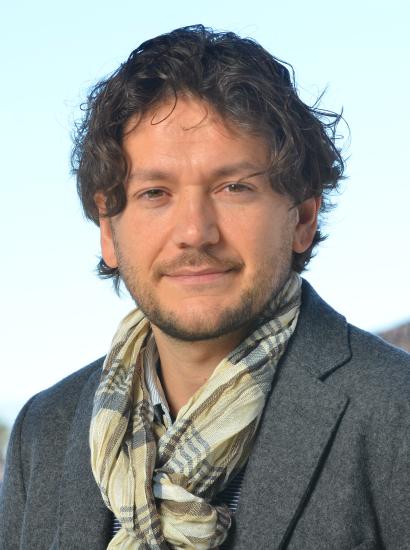
To the notion of a vast and empty outer space, imagine instead the lower orbit of planet Earth cluttered by thousands of aging tracked objects losing their functionality and far too much debris – some of it moving at speeds of kilometers per second, posing a threat to satellites and mankind’s ability to communicate and make scientific, economic and climate forecasts, not to mention great powers’ national security. Simone D’Amico, a Hoover Institution science fellow and founder of Stanford’s Space Rendezvous Laboratory, discusses his recent report on space safety and offers ways to make the heavenly objects safer, securer, and more sustainable. Among his suggestions for easing a stressed space domain: harnessing emerging technologies, improving communications between satellite operators, and seeking greater consensus among the world’s space powers in terms of traffic coordination.
Recorded on July 20, 2026.
- Space, the final frontier, or so Captain James T. Kirk told us some 60 years ago when Star Trek debut. But exactly how safe is that frontier is what surrounds earth is a crowded space, what with rockets, platforms, satellites, and a proliferation of space debris all orbiting the planet. You're about to hear from the Hoover Institution Science Fellow and Stanford researcher who's going to explain how policy remedies, technology improvements, and yes, even a global plan can make the skies above us safer. What's coming up next on a new episode of Matters of Policy and Politics? Stay tuned. It's Monday, July 20th, 2026, and you're listening to Matters of Policy and Politics, a podcast devoted to discussion of Hoover Institution policy research, as well as issues of local, national, and geopolitical concern. I'm Bill Whalen. I'm the Virginia Hobbs Carpenter Distinguished Policy Fellow in Journalism. I'm not the only Hoover fellow who doubles as a podcaster. If you don't believe me, go to our website. We'll actually go to the following URL, uver.org/podcast. And there you'll find the whole lineup of what we're talking about these days. That includes, by the way, the audio version of Goodfellas, which I have the great honor of moderating. So space, the final frontier, but how safe is that frontier? And we're not talking about being invaded by aliens, but how are we going to keep ourselves safe from what's floating in orbit, and how are we going to keep these objects in orbit from smashing into each other? Joining us to talk about this and more today is Dr. Simone Damako. Dr. Damako is a Stanford Associate Professor of Aeronautics and Astronautics, the WMKEC Faculty Scholar in the School of Engineering, and a professor of geophysics. He's also the founding director of the Stanford Space Rendezvous Laboratory, co-director of the Center for Aerospace Autonomy Research and Director of the Undergraduate Program in Aerospace Engineering. Here at the Hoover Institution, Dr. Demako serves as a science fellow. He also spearheads Hoover's Responsible Space Policy Initiative as part of Hoover's Technology Policy Accelerator. He joins us today to talk about a report who's co-authored for Hoover. It's titled Space Safety and Sustainability. Simoni, thanks for coming on the podcast. Thank you, Bill. Thanks for having me. So this is a good day to be talking about space because this is the 57th anniversary of the Apollo 11 moon landing. I think you were not around for that, were you? That's 1969, so I think that predates you by a few years, doesn't it? Yeah. So not yet, unfortunately. Question for you. I was around for Apollo 11. I was only nine years old, but I was at a summer camp, and I remember them putting us, pulling us away from what we're doing in the summer camp, putting us at an assembly hall and watching this because by God, it was serious history in the making. The nation came to a halt. A lot of the world came to a halt to watch this. But I was thinking about this, well, Artemis II's mission was unfolding, and this was historic. These were four astronauts going the furthest into space, but it didn't really seem to make capture the public's imagination. So question to you, Dr. Damako, what is it going to take to get this nation and really the world interested in space again, excited about it again? Oh, this is a very interesting question. I was surprised to see let's say a mild reaction from the public to such an historical event because for the first time since the Apollo program we humans were orbiting around, around the moon. However, probably the public has only seen a type of repetition of what has happened 60 years ago. And so probably only the experts or people involved in the program really appreciated the breakthrough that Artemis II made in terms of how far, you know, humans got, you know, the, the farthest ever, in terms of the technology that was used for communication, for example, using laser links. And, you know, overall, a brand new effort to bring humans back to the moon to stay, not just to visit once and to put some flags on the surface. So I think the public will start recognizing this when first signs of a permanent colony on the surface of the moon will be there to see for everybody. So that probably it's what it will take for the public to really appreciate the revolution that is happening with the the moon's exploration and the Artemis problem. Do you think that maybe it's also a factor of us just being surrounded by so much technology on a daily basis? You know, I'm looking at my little phone right now, which has technology you cannot have imagined of, you know, 57 years ago when we were landing on the moon. So maybe, maybe it's just harder to Impress us. Yeah, we're certainly spoiled. I mean, no doubt. Yeah, it's, it's a pity because, you know, probably humans are more concerned with with our own devices and with our personal sphere, with, you know, social networks et cetera, these days rather than the mystery of the universe and what's up there, the desire of knowledge, and the desire of exploration that is inherent and it's what makes humans different from the other species. Tell me how you ended up studying the field of space safety. Is this an academic course one pursues, or like many academic pursuits, is this sort of a, a roundabout thing? Oh, well speaking so this connects very well with with my previous statement. For me, it's all about the desire of knowledge. So the desire to answer fundamental questions about the earth, about life, about the universe with instruments of extraordinary precision. So space provides that vantage point that no other domain provides. And the first mission I worked on in the past, you know, I'm talking about the beginning of my career in 2003, basically. It was the launch of the GRACE mission, the gravity recovery and climate experiment that showed me firsthand that spacecraft can reveal invisible processes. I'm talking about water movement, underground resources, you know, mass redistribution climate signals that cannot be measured or very difficult. It's very difficult to measure otherwise. This is why space safety matters to me. So we risk losing a precious resource, scientific, now economic, and also a security resource if the orbital environment becomes unusable. So this is really the, the beginning of my interest of of space, space safety. But if you are talking about the event that made me focus more on this topic starting about three years ago, it's really an invitation from Hoover to represent space technology for the CTER program, the Stanford Emerging Technology Review. And so I was asked, I was so honored, you know, to represent space, space technology as part of that program, which is intended really to understand the policy implications of space technology. And that gave me the opportunity to really start doing, you know, more rigorous research on the safety, sustainability, security aspects of space. I'd like to read back some words you wrote, and those words are, and I quote, "Space is the invisible backbone of a modern society." Explain that. So we don't realize how much we rely on space technology and how this is changing over time. So we use space technology for navigation. For example, you know, through GPS or, or the other global navigation satellite system. So we use space technology to predict the weather or major environmental disruptions. We, we use space technology, for example for communication. Now even internet, but before, you know, television et cetera. We use space technology to synchronize in time our transactions, our financial transactions, et cetera. Numerous and numerous. You know, space is used to monitor the earth and understand the earth as a dynamic system, you know, to predict disasters to really make our lives safer. You know, there are so many ways that safe is used, and I'm not talking about, you know critical assets that are used for defense purposes. It's really the security that space brings us. So this is something that the people don't realize, and I consider that's why I say it's the invisible backbone. And today we are talking about moving assets which are of concern on the ground. Think in terms of power generation, think in terms of AI data center. We are talking about moving that to space to make these technologies more environmentally sustainable. Especially when we talk about AI data center, we talk about the disruption that they put into communities. We talk about power consumption depletion of water that is need, is needed to cooling the GPUs and the servers. And so we are looking at space as that way in order to improve our life on earth and the sus - for a sustainable development of space of, of technology that we use every day. I woke up early this morning to see if anybody was writing about space, given that this is the Apollo 11 anniversary and jackpot. There is an op-ed today in the Washington Post. Its headline is Space Debris is Making Earth's Orbit a Danger Zone. It's written by a former business professor at the University of Massachusetts Amherst and a physics and astronomy professor at the University of North Carolina Asheville. And there are some incredibly alarming numbers in here that I want to read back to your statistics this cite. They claim there are 100 million particles each about the size of a grain of sand, but each of those particles can tear through a spacesuit if they collide. The op-ed claims that there are 4,000 tracked objects larger than four inches flying around in space retina around the planet. And it also says that track debris accounts for just 5%, 5% of debris capable of damaging a spacecraft. So only one in 20 objects were, were tracking according to this piece. And so I read this and I thought, okay, how does this really affect my life? And then I stumbled onto something I didn't know about. It's called the Kessler Syndrome. Can you explain to me what the Kessler Syndrome is and how it would change my life if it came into play? Yeah. Thank you, Bill, for bringing up, you know, this this new article. So I would like first obviously to answer your question, but then try to provide a different angle. Okay. To look at things that, in my opinion, is more effective and practical when talking about safety, security, sustainability of space. First of all Kestre syndrome was theorized by another engineer. And we're talking about, you know, several decades ago. And the hypothesis was that given the very high speed of residence-based objects, we're talking about several kilometers per second in orbit. An impact of one of these objects will basically vaporize destroy the satellite and cause thousands of more of these objects flying actilometer per sec. Now, this will cause over time a cascade of events. So that depends on the density of these space objects. It's almost like an exponential explosion that you encounter in a nuclear weapon, so to say. So exponentially growing the number of these collision events and creating a debris cloud that could render entire orbital shells unusable for generations to come. Right. So obviously this is scary, you know, to hear about that because as I was saying, space is precious. It's a pressure resource that we need to protect for for many reasons. And we don't want such a catastrophic thing to happen. However, there is a risk of arguing about some fear mongering or creating unnecessary alarming scenarios without and then, then instead looking at the state of practice and understand what is the real problem today. And what are the first steps that could be done in order to foster safety, sustainability, and security? Starting from defining what they are. Then looking at the state of practice on how, you know, these things are done operationally and say, okay, what is mis- missing? So what are the risks we have and what is missing? So there is an angle that I would like to look at thing that is more rational and related to the state of practice. So Tell me what you and your colleagues are looking at then. First of all I like to give some definition of terms. When we talk about safety, I mean, I see basically three areas. Sure. So I distinguish security in the short term, and that's protecting strategic assets. Right. From safety, which is in, in the medium term, which is ensuring the uninterrupted, healthy operations of satellites, all the satellites overall. And then sustainability. Sustainability acts on a longer timescale. And this is about preserving the orbital environment. Right. And this is probably where the article that I didn't read yet from, from the Washington Post that's probably, you know, the angle that he's taking about the sustainability issue. But if you look at all these three metrics, this space domain is more stressed than ever. So we have more military confrontation. We have more collision avoidance maneuvers. And I can, you know, talk I should talk more about that because they are an indirect measure of the collision risk. We have more debris. We have pollution coming from light, from radio leakage from atmospheric pollution due to the vaccorization of satellites that are reentering. So Getting a bright, so you're getting a brighter night sky is what you're getting, right? Right, but also clean air. Right. Because all this metal is being dissorted in the atmosphere from all the, you know, hundreds of satellites that are reentering and so forth. So in, if you look at the latest statistics, for example, from the European space agents or from NASA, there are about 45,000 regularly tracked objects in, in earth orbit. Only 16,000 of them are functioning. Considering that 20 years ago, they were 800, the number of active satellite. We went from 800 in 20 years to 16,000 functioning satellites. So it's a 20-fold increase. But this is only the visible tip, so to say because statistical models that are being ref- referred by that article, I guess, estimate in the millions of the number of objects which are larger than, that are smaller than 10 centimeters, excuse me. The smaller objects are not routinely tracked but they can still damage or destroy a spacecraft. But the real problem today is really about the uncertainty associated with the knowledge of the resident space objects. So we have a poor knowledge of where these objects are, and we have a poor capability to predict where they will be in the future, to assess the collision risk. So what happens is that the collision risk that is estimated on the ground using current technology is is very coarse. And so operators are conservative, and they keep doing collision avoidance maneuvers in a preventive fashion in order to avoid these collisions. Consider that Starlink, which is the largest mega constellation in Albany right now, conducted more than 300,000 collision avoidance maneuvers in the last year. What, what is the problem? You know, we don't see so many collisions. Okay, first of all, there have been major collisions in the last, you know, few decades at least four. And each of these events is a dramatic event because it causes thousands of, of debris. You know, for example, one is the collision in, I think it was 2009, between an iridium satellite, which is a US commercial communication satellite, with a cosmos satellite, which is a Russian satellite that was not functioning. But it was poorly tracked because we used the ground through radar and telescopes to track these objects. And we don't have that complete coverage. We have poor revisit times. And so Iridium didn't see it. When I see, when I say didn't see it, I mean the ground didn't see that they were on a collision path. So they collided. This is considered by NASA, really the most severe fragmentation event on record, produced 1,800 trackable fragments, not speaking about the thousands that are not trackable from the ground of a, of a few centimeters. So collisions remain rare because operators work very hard to avoid currently using a primitive approach. But saying that we should not worry about, it's like saying that aviation is safe because airplanes rarely collide with one another. Well, safety comes from the constant monitoring, from the coordination, from the evasive actions, and not from the absence of risk. So consider the space stations. So the International Space Station conduct, conduct regularly collision avoidance maneuvers. Right. Astronauts a few times had to prepare for an escape moving to this SpaceX Dragon capsule or to the Soyuz capsule ready to escape because of a potential collision. But there are two things that really should be red flags for us today. So one, on one hand, these numbers reflects that there is a functioning avoidance system. And it comes with a warning. So uncertainty and congestion are creating an enormous operational workload. The number of collision avo- avoidance maneuvers in space, there is theoretical and empirical evidence that is not increasing linearly with the number of satellites in orbit, but it is increasing quadratically. So this means an exponential curve that becomes and there is only one big mega constellation. So it becomes unsustainable when we start having two, three, four, five mega constellations of similar size. So one, the fact that the systemic risk increases more than linearly with the number of satellites, that's, that's a concern. And second, the fact that most of these maneuvers, collision avoidance maneuvers are not necessary. So the reason why they are done is because we have a large uncertainty of where other objects are. So we have the technological gap there, and we have the policy gap because operators from other donations or from companies, they don't share orbit data. And since they don't share orbit data, these are considered non-cooperative. It is very difficult to track them accurately in order to coordinate space operations. So that's a major con- concern for constellation such as Starlink. Right. Or Amazon Leo, et cetera, in coordination with the Chinese mega consolidations or the Russian. Right. If we had a litter problem on the Stanford campus, very simple. We would just get a bunch of people to pick up the litter. We'd recycle it, problem solved. Question, can we pick up the debris in space? I think NASA has debris removal vehicles, doesn't it? But can, can you improve this problem a little bit by just going out there and removing debris, or do we just have to hope the debris just collides into the other debris and takes care of itself? Oh. So one thing that we stress in our report is that safety, security, sustainability is, is a problem that has to be seen in an holistic manner. So we need really to address the complete lifecycle of a space mission. And what you refer to is unorbit servicing. It's a, a bigger topic of unorbit servicing that is foundational for a secular space economy. So it includes inspection, repair, re- refueling, reboosting of a satellite to extend its lifetime relocation or de-orbit as a service. It's something you were hinting at. Right. So I Would like to mention one mission that is currently on orbit. And the it's it has been developed by a startup company catalyst in collaboration with, with NASA. To try to boost the NASA swift telescope. This is a telescope that is very valuable for astronomical observations. And it's reaching the end of its life, and not because it's not functioning anymore, but because it ran out of propellant and it's decayed in an uncontrolled manner. And so catalyst and NASA are in a race to try to grab it and reboost it. So can you understand the sustainability implications of having this technology to prolong the lifetime of space assets, to preserve the scientific assets, prevent uncontrolled reentry, et cetera? So this is a technology that has never been demonstrated before. Several companies are developing it in a context of the orbit as a service in the context of reboosting as a service in the context of, you know, debris, debris removal et cetera. But unfortunately, it's something that we don't have yet as a capability. Okay. Let's get in the report, the time in which is space safety and sustainability. You discuss this report technological gaps. One of those is tracking. Kim, how do we track better? So in our report, we address, you know, several actionable recommendations. And you really mentioned the first one in terms of the domestic technology improvement. We consider the future as a, a joint architecture of ground and space sensors. So today the state of practice is to use radars and optical telescopes on the ground. Right. To Track objects that pass opportunistically appear in the field of reg- regard or the field of view of these of these sensors. This comes with limitations because it takes a long time to track all the objects. This sensor work only during some parts of the day. And the revisit times are very short. And these all compound to provide a very close knowledge of the orbit catalog and a very poor determination of the uncertainty associated with, with this orbits. So in order to improve it, the key is to integrate ground-based observations with space-based observations. Ideally, and that would be in an ideal world. Every satellite will use its own cameras. And keep in mind that every satellite has or almost every satellite has a stat tracker. It's a camera that is used to determine the orientation of the space. So in a real world every satellite will contribute to observing the space environment in order to collect measurements infuse that together with ground observations to improve the capabilities of our system. So space traffic management should really become a distributed sensing and computing problem where observers are not only on the ground, but also in space. We improve tracking by using this multiple, so data from multiple sources, by using multiple modalities of sensing. So not only radar and indivisible spectrum, but we can do it in the infrared. We can do in hyper-spectral. And so you see, it's a matter of improving how we sense and from what sources, and how to combine together all this information - Right. In a data fusion pipeline. Now, there is a framework out there to work off of, and it's called the Outer Space Treaty, but that treaty is two years older than the Apollo 11 mission, 1967. And this strikes me as outdated. In 1967, space was a. Yes, it was a two nation competition, the United States and then Soviet Union. But today, a lot more players in space. I think I saw a stat where 80% of debris now belongs to the US, Russia, and China. Do we need to revisit that treaty? This is an important question. And, and I would like to, to stress first of all, the importance of the 1967 outer space treaty. Because that's really the constitution of space law. And it comes with very enlightening principles. So these are governing principles for space activities in the exploration of space and, and outer space. And if you read, you know, what is really the the key pillars, these are remarkably, let's say, current in terms of their of their elements. I can mention just a few, like freedom of use and exploration of space, or non-appropriation, like outer space, the moon, other celestial bodies cannot be clean. Or demilitarization. So nuclear weapons or weapons of bombas destructions are prohibited in orbit or on celestial bodies. The liability of states. So nations are responsible for all national space activities et cetera. So these are broad principles, very honorable. And so, and it, it took a huge effort in order to get the Outer Space Treaty Finalized. So I think it's not a good idea to go there and try to change it or renegotiate it. It will be basically impossible in the current geopolitical situation. Instead, what we lack in my opinion, is the space traffic code that is built on top of the outer space treaty. So national space traffic coordination laws, so licensing requirements data standards, operational rules. So basically each nation can build on top of the outer space treaty with their own space traffic rules in order to ensure, ensure safety and sustainability. Let's talk about what you're doing with the United Nations. You're involved with the UN Committee on the Peaceful Uses of Outer Space. What, what exactly is that, sir? So this is an, an interesting initiative from the Department of State that has formed a group of experts to help shaping space traffic coordination at a, at a global level as an interface to the United Nations. It is an incredibly difficult effort to find consensus at the at the level of the UN. And and so I consider, you know, this effort obviously very important in order to familiarize with the points of view and the interpretations, you know, the how space traffic Coordination is done in other in other nations. But I think that this should lead to a basically a slightly different approach by the US in order to basically influence how specific coordination is done through leadership. So the global plan should not require, you know, one world government, you know, for space, obviously. So, but an interoperable standard. For interoperable standard, I mean data formats uncertainty conventions. We need to speak the same language across the world. So maneuver intent messages. It's really a data sharing agreement including performing expectations and safety protocols. And GNSS or the global navigation satellite system is a great analogy to this because GNSS is a federated system. So now we don't know, you know, people don't know, but the GPS receiver or the GNSS receiver that we use tracks similarly signals coming from Baidu, which is the Chinese GPS, from GPS, which is the US, from Glonas, which is the Russian, from Galileo, which is the the European. And all this is coordinated in an harmonious manner by teams from this nation that tries to have, you know, the best possible system that work for everybody. So that's not happening for space traffic coordination. So my point is that norms emerge when they are used routinely. And the United States has this incredible advantage compared with other nations because it has this ecosystem, a space ecosystem that is a mirror of the world ecosystem. We have small companies, large companies. So we have government for civilian purposes and for military purposes. We have academia with, you know, students driven satellite projects, et cetera. And so the United States could implement the practical standards domestically and including allies over time adopted at scale so that it can become a de facto a global norm. I mean, that will be in the interest of the US to influence norms for space traffic coordination, considering how much we rely on space technology more than other countries. Right. And is there a spirit of goodwill here between the United States and other countries? Because especially when you're dealing with Russia and China, there's always an issue of trust, especially when it comes to data and sharing sites. Yes. There is a dual use problem when it comes to sharing of orbit data, because on one hand, sharing orbit data which is really the, the key principle avoids collisions. And that's a good thing. Yeah. But on the other hand, it also exposes vulnerabilities, expo- exposes capabilities of potential adversaries. Right. And so this is where I advocate for an infrastructure. It's basically a system where points of contract can be shared in a digital infrastructure where data can be shared with the right protections. So to protect data which are sensitive from a defense perspective. But that infrastructure does, doesn't exist today. And so it's very difficult to coordinate. Let's get into a couple of recommendations on in your report, then I want to ask you a couple questions about SLAB, which I find very interesting undertaking. In your report, you recommend a national space situational awareness system. What exactly would that look like? Right. So this is not a new thing. I mean, if I would like to mention that, you know, the US is is doing some interesting let's say promising steps in terms of policy with two acts. So the Orbits Act and the Safe Orbit Act. Now the the Orbits Act, very quickly, it's re - it's a proposal to begin cleaning up the most dangerous abandoned objects in orbit. So this is stuck in Senate even if it, it has been reported favorably by the Senate Commerce Committee, but it is not low. And and so we are we are, we are being a little bit slow there. The Safe Orbit Act is what you are alluding to. It's the proposal to build the civil traffic control backbone for space. So it gives a, a statutory authority to the Department of Commerce, a system that is called TRACS, which stands for Traffic Coordination System for Space, to acquire, integrate, and disseminate space safety data. However, it's receiving pushback, you know, for, from many directions. It was placed on the Senate legislative calendar back in last year, I think in September, and it has not become low. And so what is crucial is that similar to how we have FAA - Right. For air traffic control and we will not ask Boeing or Airbus to do air traffic control for us for obvious, for obvious reasons. In the same way we will need an authority that is at the, at the government level, similar to FAA, that will deal with space traffic coordination. And so what we should avoid, obviously, is to get in the way of commercialization of progress. And so similar to how GPS was initially a government-based, and then became really the beginning for a trillion dollar economy around GPS, where all common companies could build on top in terms of services, in terms of receivers, et cetera. I think that the National Space Situation Awareness System could do something similar. It's a minimal civil infrastructure layer for space traffic, where common data standards are defined, common interfaces, validated points of contact. I want to stress that now, nowadays, when a collision risk above a certain threshold is reported to an operator, the operator is left on its own to decide what to do. And most of the time, it has to, okay, find who to talk to, who is the operator of the other side of it. Right. And then via email, or rather a doc channel, try to find a telephone number in order to coordinate how to avoid a collision. This is so primitive. And so even a meaning, almost embarrassingly minimal step of having a national database for points of contract, that could be part of the civil infrastructure. And then a basic service in terms of conjunction screening, so uncertainty sharing, you know so that for example, university project or small, small companies can have a capability to avoid collision without exorbitant costs. So I don't think that this should be monopolistic. So it, it can be federated as I said, similar to GNSS where each GPS system, for example, or each space traffic coordination system remain sovereign, sovereign system, but with interoperable and shared standards. That all makes sense. So why is Congress reluctant to do this? That's a difficult a difficult question. So regarding trucks specifically, there is a perception that tracks. Let me just repeat what, what is trucks is the traffic coordination system for space which is at the Department of Commerce, has gone beyond its original mandate of acquiring, integrating, and disseminating, you know, space safety data. So from some companies there is a perception of let's say interfering with commercialization efforts that, you know, from companies that are providing or are trying to provide these services on a commercial basis. And there, there are also complaints about it being slow or lower than than ideal in the implementation of of the system. So this is some, some of the pushback that goes back to the original question, how much do we regulate and how much do we leave to the market? And so there are conflicting opinion, opinions there that are, and trucks is there in the middle that is risking to disappear. But obviously that will be dramatic because it would, you know, set us back in terms of the desire of having an infrastructure in order to to ensure space traffic coordination at a national and then later at a global level. And do you have a certain blend in mind when it comes to the government and the private sector working together, and should the government have the dominant role? Should the government be lax and let the private sector do its own thing? Well my personal opinion is that there should be a layer that is governmental, that is as minimal as possible on top of which companies can build. And, and this layer can come really with a definition of standards of what is what companies are obliged to share in terms of orbit data, in terms of uncertainty, in terms of maneuvering capabilities of their spacecraft, in terms of maneuver intent and so forth. Even just having standards of, of what needs to be shared and having a sh- share point of contract, a database, that will go a very long way. So this is one aspect of it. Then there is the technological aspect. The government obviously could foster the development of technology that is needed to close the gaps. We were talking about persistent custody of objects. So we were we, we are talking about advanced algorithms which are data-driven, such as machine learning and AI in order to improve our capability to model space weather and thus improve our capability to predict the orbital of space assets. We were talking about on orbit servicing, the capability to inspect, repair, prolong the lifetime, and so forth. And that's where the government can play a role in helping funding research and development and the development of these these technology. So I, I think that there is a sweet spot where government can play a role, and then business can build on top. So Moni, I have relatives visiting me tomorrow, and I'm going to walk them around the Stanford campus. And one of the duties of the Stanford campus, besides being a beautiful campus and flat and easy to walk on, is you walk by a building after building, and you see the titles on the building, and your family asks you what goes on in that building. And sometimes it is so impossibly complicated and intellectual that you can't explain it. Question to you, sir, if I were to walk into the space rendezvous laboratory, or slab, as you like to call it, the space rendezvous laboratory, what would I see? In other words, what's a day in the life of your research look like? Oh, thank you for the question. The Space Rendezvous Lab is my research lab a stand for, a stanford that I founded 12 12 years ago to enable future miniaturized distributed space systems for you know, a number of applications astronomy and astrophysics, for earth science and for on our big logistics, which is what we are talking about today as well. So first of all, the space rendezvous lab is a place where researchers, students meet. So you'll see a multifunctional meeting room, which is where, you know, a lot of brainstorming happen, our meetings with our, you know kitchenette, you know, we, we spend time together. You'll see an open space for for the desks of the students that work together as a team, as a family, and help one another, you know, contributing to the state-of-the-art on these topics. And, and this is crucial, the space rendezvous lab is not only a place where people do rendezvous, so where they meet, but where spacecraft do rendezvous. And so we have an experimental part of the space rendezvous lab, which includes a robotic test bed and special devices where we can test space hardware, where we can test algorithms for onboard autonomy in the loop. So what is different in space than in other robotics disciplines such as drones or cars is that we don't have the space environment available at hand on the ground to test things. So we need to pretend. And so we spoof basically the sensors so that they believe that they are flying in orbit. And we do that while reproducing the illumination environment, and then we have discoverers flying around on robots. We have two robots that reproduce trajectories of space objects that navigate with respect to one another and mimic operations such as proximity operations, such as inspection of an object to test all the autonomy on board et cetera. So you will see students working on this test, but testing their algorithms with actual space hardware in in the room. And the obligatory question, Eddie Stanford, professor, how is artificial intelligence changing your research? So AI is obviously affecting my research dramatically in, in a number of way. First of all, it's providing new capabilities in terms of reasoning onboard. So it's really boosting autonomy. So that's that's something, it's a new capability that is becoming available for for spacecraft these days. And the second way it's affecting us is that it's coming with new fundamental research questions. So AI, as you know, is a data-driven approach. It's data hungry. And something that we do not have in space are a, a large amount of data. And so how do we enable the AI capabilities with a sparsity of data, with a scarcity of data? So that's a fundamental question. You know how do we make. We call it a sim to real gap. So how do we have AI models that meet requirements, the very tight requirements that are asked by space, developed on the ground on simulation, and demonstrate that they are going to behave and provide the right performance on orbit? So these are all research questions that are coming that are especially relevant for space, which is a risk averse. Also, AI comes with large compute requirements. You know, we need, for example, GPUs in order to implement these models. And GPUs have only been demonstrated for a limited amount of time in lower four bit. So how do we improve our processing capabilities so that we can implement AI at the edge in an environment which is you know, not forgiving and so forth. So you have now written a report. It's title again, Space Safety Sustainability. You've outlined the problem. Too many objects in space, typically tracking them, and you have recommendations for how to address this problem. Question to you, sir, how do you measure success? Success. I mean, success is certainly not measured by counting agreements or acts or, you know, rules so that are introduced. This is not our measure of success. But we measure success by quantifying operational performance. So the collision risk per satellite period or custody of objects, how long does it take to track the complete space object population? Or orbit uncertainty? Revisit times. How long does it take before I can revisit the same space object?. Time delays. How long does it take to provide a robust warning for for collision avoidance? False alarms, et cetera. So the number of uncontrolled objects, for example. So the real test is whether the satellite numbers can raise to foster, you know, progress and economy and safety and so forth on the ground while the systemic risk does not rise with them. So how to keep the systemic risk at a stable level while increasing the space object population. So this is really the measure of success. As of now, we see that this is going in the wrong direction because we have a quadratic curve where the number of collision avoidance maneuvers is increasing more than the number of satellites. And that's a, a key metric that we need to monitor. And that will be the measure of success. Okay. Final question for you, sir. What next for the responsible space safety? Excuse me, what. Ellen, you have to edit this. Final question for you, Simone. What next for the responsible space policy initiative? Where, where would you like to take it? So after we have done all this work and reported on the state-of-the-art state of practice and actionable recommendations, so the next step is really implementation. So, and this is in two areas on the policy side and on the technology side. So on the policy side that means engaging Congress the Department of State the Office of Space Commerce to turn our principles into the operational standards we are talking about. On the technology side, it means demonstrating distributed autonomy. So that persistent sensing onboard compute, basically bringing intelligence to where it's needed. So where the risk is at is right now, which is in orbit. And that autonomy capability is not available today. So demonstrating that we can update the space object catalog, predict the collision risk, and do collision avoidance maneuvers autonomously onboard. That that will be the next step from a technological perspective. I look forward to see what else you come up with. Anything else you'd like to add before we sign off? No, I would like to thank you, Bill, for giving me the opportunity to talk about this topic and familiarize people with such a, such an important issue we are facing today. Well, I think it's certainly an underrated problem because if you don't care much about space safety, just think what happens if satellites go out and you are out of luck, my friend. Exactly. You've Been listening to Matters of Policy and Politics, a podcast devoted to discussion of Hoover Institution policy research, as well as issues of local, national, and geopolitical concern. If you enjoy this podcast, please don't forget to rate, review, and subscribe to our show. If you wouldn't mind, please spread the word. Tell your friends about us. The Hoover Institution has Facebook, Instagram, and Xbeeds. Our ex-handle is @hooverinsta, spelled H-O-O-B-E-R-I-N-S-T. I also recommend you go back to hoover.org and sign up for the Hoover Daily Report, which keeps you updated on what Dr. Simone Demeko and his Hoover colleagues are up to, and that's delivered your inbox weekdays. I mentioned Slab during this podcast, that's the Space Rendezvous Laboratory. You should check out its very cool website. It is slab.stamford.edu slab, spelled as you might expect, S-O-A-B. Go to the tabs that say projects and publications. Just a lot of neat stuff there. For the Hoover Institution, this is Bill Whalen. Till next time, take care. Thanks for joining us today. This podcast is a production of the Hoover Institution, where we generate and promote ideas advancing freedom. For more information about our work, to hear more of our podcasts or view our video content, please visit hoover.org.
Articles
We should not be misled by the technology’s skill at summarizing knowledge.
October 9, 2026
Videos
Hoover Institution fellow Dr. Scott Atlas discusses his Wall Street Journal article he co-authored with Hoover Institution fellow Steven Koonin, "Covid, Climate and the ‘Consensus Trap’".
October 8, 2026
Event
How are autonomous satellites and artificial intelligence transforming space exploration, and what challenges must engineers overcome to ensure a sustainable future in orbit?
May 1, 2026