Published: August 10, 2021

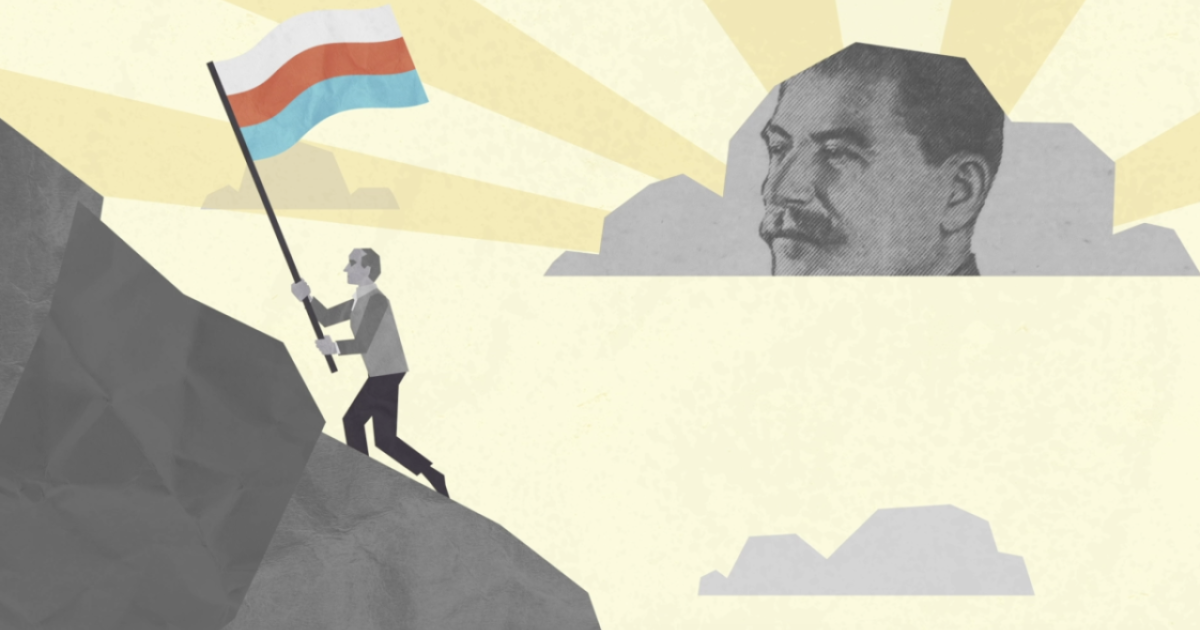
To legitimize his authoritarian agenda, Vladimir Putin is attempting to improve Josef Stalin’s image. However, history cannot be rewritten, nor can it forget the millions who perished in waves of Stalin’s political repression. Stalin’s crimes against humanity demonstrate an inherent danger that comes with totalitarian leaders who have no regard for the rule of law or individual rights.

Discussion Questions

  1. Why is Vladimir Putin trying to rehabilitate Josef Stalin’s image?
  2. Can Vladimir Putin succeed in improving Stalin’s image?

 Additional Resources

  • Read “Russia’s Re-Stalinization,” by Paul R. Gregory. Available here.
  • Read “A Green Light for Russian Hegemony,” by Paul R. Gregory. Available here.
  • Read “Women of the Gulag: Portraits of Five Remarkable Lives,” by Paul R. Gregory. Available here.

Cast

Paul R. Gregory

Paul R. Gregory

Today, Russia’s president Vladimir Putin is seeking to rehabilitate Josef Stalin’s image to give himself more legitimacy for his own authoritarian agenda.

Putin believes that Russia’s position in the world depends on a strong leader, and Stalin, while not perfect, embodies the type of iron-fisted leader Russia needs.

In the middle of the 1930s, Josef Stalin unleashed the Great Terror on the people of the Soviet Union. He wanted unwavering allegiance to the world's first socialist state, and his campaign of brutality would crush any perceived dissent or opposition.

The Soviet government would go on arrest millions. Stalin’s police force, the NKVD, would extract confessions of supposed treason, by torturing prisoners and threatening their families.

The outcome of the interrogations was almost always the same.

Innocent men and women confessed to crimes against the Soviet Union.

With the confessions in hand, judges would quickly confirm the prisoners’ guilt and sentence them to death or imprisonment in the gulags.

In 16 months, an average of fourteen hundred people would be executed daily. Hundreds of thousands more were sent to the gulags, most would never be free. They would die from starvation, exposure to cold Russian winters, or at the hands of guards.

The vast majority of victims were ordinary workers and peasants. But no one was safe. From communist party officials to his loyal

executioners in the NKVD, Stalin’s wrath could turn on anyone.

Stalin officially ended the Great Terror in 1938, but the political rerror continued. Before Stalin’s death in 1953, the Gulag population exceeded 2.5 million.

Stalin’s role in the Great Terror cannot be denied. He carefully orchestrated the mass killing and imprisonments. He met for hours in his office with his handpicked loyal NKVD executioners. He personally signed off on “shooting lists” of state and party leaders.

These crimes against humanity cannot be ignored. They demonstrate the inherent danger that comes with totalitarian leaders who have no regard for the rule of law or people’s rights.

And as Putin whitewashes the past and glorifies Stalin’s image, we must ask - how long before he follows in Stalin's even more brutal footsteps?

Related

Videos

California’s War On Wealth—And America’s War On Terror

Is the progressive dream of wealth taxes soon to be reality – or a fiscal and economic nightmare – should voters approve Proposition 40 and a one-time 5% tax on the holdings of the Golden State’s billionaire class? And 25 years after one of the darkest days in the republic’s history, what is the legacy of the 9/11 attacks on America?

September 9, 2026

Articles

Letter #9: The Test Of A Nation

A Labor Day letter to America.

September 7, 2026

Articles

A Better Way To Reform Head Start

Trump proposes to convert it into block grants. What it needs is a single-minded focus on preparing kids for kindergarten.

September 4, 2026