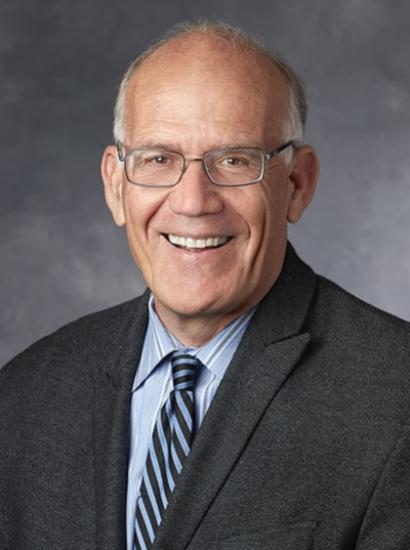
Victor Davis Hanson on Essential Workers

Published July 29, 2020

Panic buying, caused by the COVID-19 crisis, has turned our attention to essential jobs and workers. Non-essential workers are typically compensated more than essential workers are. We need to have a fundamental shift in how we think about essential jobs and how the people employed in those jobs are compensated.

This video’s audio track is excerpted from an episode of The Classicist podcast, published by the Hoover Institution.

Additional Resources:

  • Listen to The Classicist podcast episode “Plagues, Ancient and Modern” with Victor Davis Hanson. Available here.
  • Read “The Virus Is Not Invincible, But It’s Exposing Who’s Irreplaceable” by Victor Davis Hanson, via American Greatness. Available here.
  • Watch the Hoover Institution’s Virtual Policy Briefing “COVID-19 and the Lessons of History” with Victor Davis Hanson. Available here.

Cast

Victor Davis Hanson

Victor Davis Hanson

When I see this panic buying and shelves empty from largely suburban and urban shoppers I ask myself, “where do they think this stuff comes from?” 

It was stocked by people of the lower middle class that worked all night  and they were supplied by truckers who came from packing houses and food processing plants and directly from farms being worked by people on tractors by farming engineers, hydrologists, farm laborers, farm managers, who have not taken one moment off. 

So what I do, and what an advertiser does, or a high price corporate lawyer, a lot of these jobs are not essential to keep us alive one more day. 

A fracker is, a farmer is, a trucker is, and yet somehow, we’ve lumped these people in as the losers of globalization, the people who are very lowly compensated are doing everything and they’re essential. 

I hope people will start to see that, that shift in their estimation of what’s important and what’s not.

Related

Congressional Testimony

Examining Healthcare Markets: Fraud And Competition

(23:52) Hoover Institution fellow Dr. Brian Miller testifies in front of the House Judiciary Subcommittee on the Administrative State, Regulatory Reform, and Antitrust in a hearing titled "Examining Healthcare Markets: Fraud and Competition."

September 14, 2026

VIDEO

Should We Regulate AI (Before It's Too Late)?

Artificial intelligence could become one of the most consequential drivers of productivity and economic growth in a generation. Yet concerns about job displacement, misinformation, and political disruption have prompted calls to regulate the technology before its effects are fully understood. History shows that major innovations disrupt existing industries while creating new forms of work and enterprise that policymakers rarely anticipate. Premature regulation risks entrenching established firms, limiting competition, and expanding government influence over information. The challenge is to address genuine harms while preserving the freedom and experimentation that allow innovation to advance.

Articles

Can We Solve Gun Violence?

Cities are the economic engine of America. The gravest threat to that engine is gun violence. Beyond the lives lost and families devastated, every murder that happens in an American city reduces that city’s population by seventy people—fewer people and businesses moving in, more moving out.

September 10, 2026