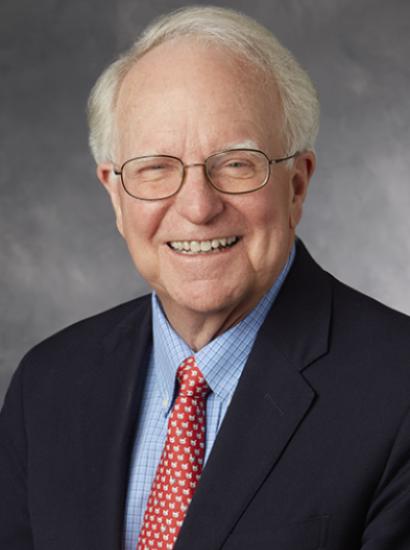
What 2026 Nobel Laureate Robert Hall Taught Us About The Economy

Robert E. Hall, the Hoover Institution’s Robert and Carole McNeil Senior Fellow (Emeritus) and Stanford professor of economics, has been named a co-recipient of the 2026 Nobel Prize in Economic Sciences for his contributions to understanding macroeconomic stabilization. Hall becomes the sixth Hoover economist in the past half-century to receive the honor, continuing a tradition that began with Milton Friedman.

In a new episode of Matters of Policy & Politics, Hoover senior fellow Valerie Ramey, who once served as Hall’s graduate research assistant, discusses how his pioneering work in New Keynesian economics has shaped modern economic research and influenced monetary and fiscal policy. Ramey also explores Hall’s contributions to understanding economic shocks, his distinctive approach to explaining complex economic ideas, and his lasting influence on generations of economists.

RELATED SOURCES
Cast

Bill Whalen

Bill Whalen

Valerie Ramey

Valerie Ramey

Robert E. Hall

Robert E. Hall

Related

Articles

Data Center Siting And Community Opposition

Where data centers locate to fuel the growth of artificial intelligence (AI) is of burgeoning political importance with economic and environmental implications. We highlight local factors associated with siting and opposition.

November 3, 2026

Event

Money and Power: Historical Lessons for Stablecoins and U.S Dollar Dominance

The Hoover Institution Economic Policy Working Group hosted “Money and Power: Historical Lessons for Stablecoins and U.S Dollar Dominance” with Michael D. Bordo, the Duncan Stewart Distinguished Visiting Fellow at the Hoover Institution.

April 23, 2026

Articles

We Just Created More Than 1,000 Synthetic Controls To Study California's $20 Fast Food Minimum Wage

Synthetic control methods hold the promise of identifying a credible counterfactual by closely reproducing pretreatment outcome paths. Their reliability, however, depends in part on how effectively they constrain researchers’ less-visible degrees of freedom. We explore these methods’ sensitivity by constructing 1440 plausibly defensible specifications to estimate the employment effect of California’s $20 fast-food minimum wage. While over 96 percent of the estimated employment effects are negative, the range is vast, illustrating that synthetic control methods are sensitive to specification choice.

October 30, 2026