
Published: August 23, 2017

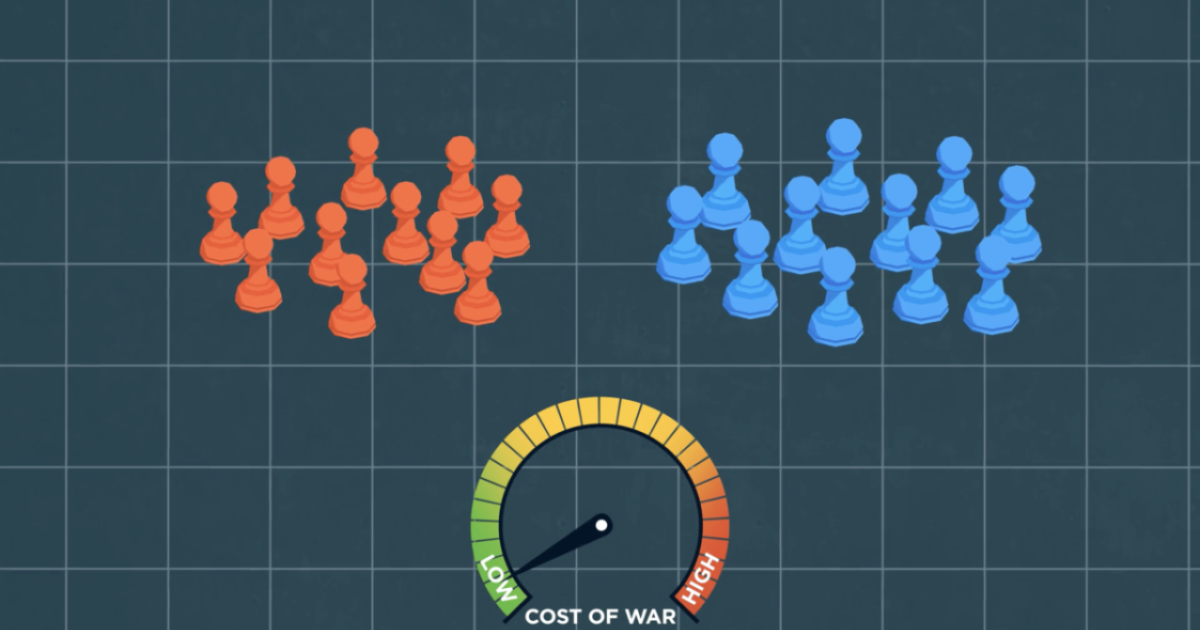
War is politics by other means. In other words, when political leaders cannot get what they want through peaceful methods, they judge the cost of achieving their goal through military force. Preventing armed conflict requires raising the cost of using force. Until the cost of any armed conflict is prohibitively high, conflicts will continue.

Discussion Question

  1. Has a nation ever been deterred from using force due to the threat of consequences?
  2. What are historical examples of countries going to war due to the miscalculation about the time and resources necessary to win?
  3. How do we convince other nations that the cost of war is too high?
  4. What may cause political leaders to think that war will be quick and cheap?

Additional Resources

  1. Read “Words Matter, Even a Few” by Victor Hanson to learn why words matter in international relations.
  2. In Warriors and CitizensGeneral Jim Mattis and Kori Schake offer different perspectives on whether or not the different experiences of US military and the broader society amounts to a "gap"—and if the American public is losing connection to its military.
  3. “Bellum Interruptum” by Victor Davis Hanson, available here.
  4. “War: The Gambling Man’s Game” by Kori Schake, available here.
  5.  Podcast with Kori Schake on American dominance of the international order, available here.

Cast

Kori Schake

Kori Schake

Victor Davis Hanson

Victor Davis Hanson

If we want to prevent wars, we have to be willing to engage in them. 

It seems counter-intuitive, but it’s true. 

Think of it like this: if a kid is getting bullied by someone bigger than him, he might call on the help of his big brother. The big brother could certainly defeat the bully but if the bully knows the big brother doesnt’ fight, why would he stop bullying? 

Here’s how that works with war: 

When one country wants something that another country prevents them from having,  and the conflict can’t be resolved peacefully, they begin to seriously consider war. 

More specifically, they consider what war will cost. 

The only chance we have to make them back down is to try and convince them that the cost of war is too high. 

And the only way to convince them of THAT is by showing them that we have a bigger, better, military force that we’re ready to use if necessary. 

In other words, we convince them that it will cost too much or it will take too long. 

Basically, the big brother has to be willing to fight which might convince the bully that he’ll lose. 

By getting involved, we hopefully prevent them from engaging in a war they’ve decided they probably won’t win.

Related

Videos

H.R. McMaster Reacts To Army Secretary Dan Driscoll's Wartime Resignation

Hoover Institution fellow H.R. McMaster talks about Army Secretary Dan Driscoll handing his resignation to President Trump after months of disagreements with Defense Secretary Pete Hegseth.

September 1, 2026

Videos

The Dangerous Decade: Can America Deter a War with China?

What will it take to defend Taiwan—and preserve peace with China?

August 31, 2026 • 60 Min Watch

Videos

Anne Neuberger: The National Security Threat You May Never Have Heard Of

Hoover Institution fellow Anne Neuberger argues that the next global arms race won't be about missiles. It will be a battle for quantum supremacy.

August 28, 2026