Articles
Tokenization Of Real-World Assets: A Market Taking Shape
Managing the profound change demands harnessing advantages, mitigating risks, and creating careful legislation.
October 21, 2026

AUDIO ONLY As the United States and the world embark on fraught conversations about race, history, law enforcement, and the underpinnings of our very civilization, Ayaan Hirsi Ali joins Peter Robinson for an enlightening conversation.

As the United States and the world embark on fraught conversations about race, history, law enforcement, and the underpinnings of our very civilization, Ayaan Hirsi Ali joins Peter Robinson for an enlightening conversation. A refugee from Africa, Hirsi Ali fled to Europe to escape an arranged marriage, becoming an activist, (now former) member of the Dutch Parliament, and now a research fellow at the Hoover Institution. With a different set of life experiences and perspective from American-born Blacks, Hirsi Ali discusses how, as a Somalian, she views America as the best place on earth for minorities to grow up and achieve their potential. While acknowledging the hardships and miseries that American Blacks have endured and that racism still exists in many quarters of American society, Hirsi Ali emphatically believes that America is more than capable of solving racial inequalities, provided it preserves the institutions that ultimately ended slavery and empowered the protest movements of the 1960s that birthed the Civil Rights Movement. As she wrote in a recent column for the Wall Street Journal, an opinion she reiterates on this show, “There will be no resolution of America’s . . . problems if free thought and free speech are no longer upheld as sacrosanct. . . . Without them, honest deliberation, mutual learning, and the American ethic of problem-solving are dead.
Recorded on June 25, 2020.
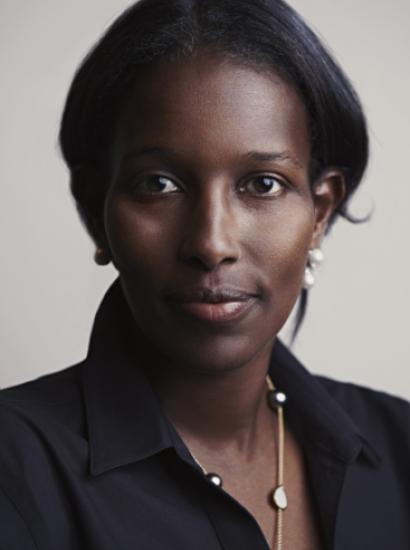
Ayaan Hirsi Ali
Articles
Managing the profound change demands harnessing advantages, mitigating risks, and creating careful legislation.
October 21, 2026
Videos
The Fed, inflation, and the economic case for long-term price stability.
October 20, 2026
Articles
Scott Kirby wants a national wealth tax and inheritance taxes near 100%. Among those who would pay are the investors he ultimately works for.
October 20, 2026