

Working Papers
A Network Approach to Geopolitics
Economics Working Paper 26127
October 16, 2026
Recorded on April 1, 2019
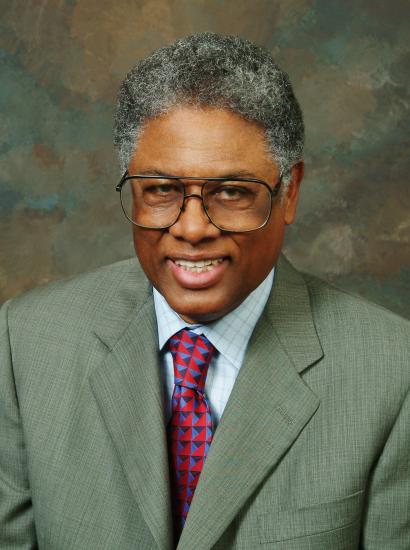
Is discrimination the reason behind economic inequality in the United States? Thomas Sowell dismisses that question with a newly revised edition of his book Discrimination and Disparities. He sits down with Peter Robinson to discuss the long history of disparities among humans around the world and throughout time. He argues that discrimination has significantly less of a role to play in inequality than contemporary politicians give it credit for, and that something as incontrovertible as birth order of children has a more significant and statistically higher impact on success than discrimination. He discusses why parental attention is the most important aspect of a child’s intellectual development.
Sowell goes on to break down different minority groups around the world who went on to have more economic and political success than their majority counterparts, such as the Indians in East Africa, Jewish people in Eastern Europe, Cubans in the United States, and the Chinese in Malaysia. He argues that there is an underlying assumption that if discrimination was absent equality would prevail, which historically has been proven wrong.
Sowell goes on to discuss changes in crime rates and poverty since the expansion of US welfare programs in the 1960s and how this has had a huge impact on the success of African Americans. He talks about his own experience growing up in New York, how housing projects used to be considered a positive place to live, and his experience as the first member of his family to enter the seventh grade. Robinson asks Sowell his thoughts on the case for reparations currently being made in Congress, and Sowell presents an argument about why a plan for reparations is not only illogical but also impossible to implement, with so many US citizens’ ancestors arriving long after the Civil War. He also explains that slavery was common throughout the known world for thousands of years and that abolition movements didn’t begin anywhere in the world until the late 18th century. He reminds us that the United States was not the only country guilty of participating in slavery and yet is the only country debating reparations.
Working Papers
Economics Working Paper 26127
October 16, 2026
Podcasts
Hoover Institution fellow Lanhee Chen on why good policy so often fails politically.
October 20, 2026
Articles
Ethan Allen, at times “imprudent,” was a timely leader for a country of action.
October 15, 2026