
Working Papers
The Anatomy of Capital Returns over the Very Long Run: Germany, 1465–2025
Economics Working Paper 26128
November 6, 2026

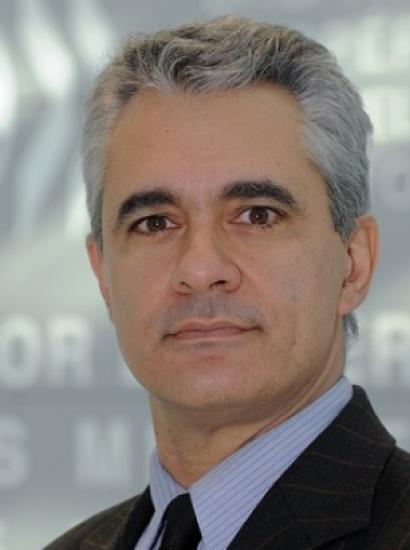
At the Jackson Hole Economic Policy Symposium, OECD chief economist Stefano Scarpetta joins Steven J. Davis to discuss how distributed ledger technology, stablecoins, and tokenization could make transactions more efficient and less expensive, while expanding access to financial markets.
Scarpetta explains that for these technologies to perform successfully at scale, users need to have confidence in them and acquire financial and digital literacy to understand how they work. Scarpetta points to interoperability, open standards, data portability, consumer safeguards, and international cooperation as necessary conditions for capturing the benefits of these payment system innovations while minimizing their risks.
Recorded on August 28, 2026.
ABOUT THE GUEST
Stefano Scarpetta is the OECD chief economist, Head of the OECD Economics Department, and G20/G7 finance deputy since April 2026. Previously, he was director for Employment, Labour and Social Affairs (ELS) at the OECD for 13 years and before that held several positions in the Economics Department and ELS. From 2002-2006 he worked at the World Bank. Scarpetta has published extensively in academic journals and edited several books.
RELATED SOURCES
Working Papers
Economics Working Paper 26128
November 6, 2026
Articles
Where data centers locate to fuel the growth of artificial intelligence (AI) is of burgeoning political importance with economic and environmental implications. We highlight local factors associated with siting and opposition.
November 3, 2026
Event
The Hoover Institution Economic Policy Working Group hosted “Money and Power: Historical Lessons for Stablecoins and U.S Dollar Dominance” with Michael D. Bordo, the Duncan Stewart Distinguished Visiting Fellow at the Hoover Institution.
April 23, 2026