Videos
The Death Of Reading Featuring James Marriott
Are we living in the new Dark Ages? Despite vast technological advances, our societies are increasingly looking like those that preceded the advent of literacy.
September 21, 2026
Published June 15, 2022
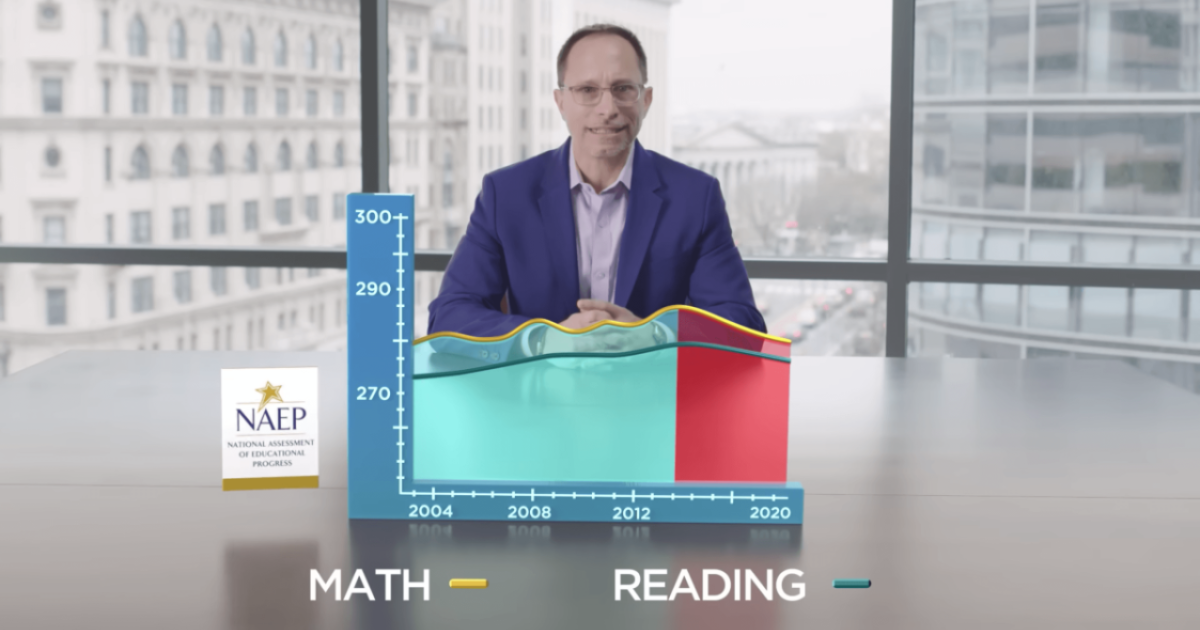
National test scores suggest that large economic shocks lead to long-lasting effects on student achievement. It happened with students born during the Great Recession and is likely to happen again with the COVID-19 generation. In the coming years, test scores in the National Assessment of Educational Progress (NAEP) will reflect these consequences, but there is still time to remedy the losses in education that children experienced during the pandemic.
Discussion Questions:
Additional resources:
Last year brought the latest results from the National Assessment of Educational Progress’s Long Term Trend series, and they were sobering. Just before the pandemic kicked in, thirteen-year-olds in America saw large declines in both math and reading—a first in the study’s nearly fifty-year history. Black, Hispanic, and low-achieving students saw the largest declines.
The Great Recession might be to blame.
The thirteen-year-olds who took the Long-Term Trend exam in January 2020 would have been babies when the economy started falling apart in 2007. Parents were thrown out of work. Many families were plunged into poverty. And the hardship was deep and long lasting. It would have been a miracle had such shocks not had a negative impact on the academic and non-cognitive development of these children.
Then this unlucky cohort of kids got hit again when they entered kindergarten during the era of deep spending cuts—roughly 2011 to 2013—after federal relief funds had been spent and districts went over a fiscal cliff. This was no typical downturn. It was the first time in recorded history that real per-pupil spending declined nationally.
High-poverty districts were hit hardest, and those districts rarely made cuts strategically. Instead, they laid off the most junior teachers (regardless of their effectiveness), raised class sizes across the board, eliminated reading coaches, and got rid of tutoring programs.
These cuts happened just as this cohort was making its way through kindergarten, first, and second grades—arguably the most important period for developing literacy and numeracy skills.
The reason this matters now is that it can help us make better decisions for the future.
We are entering a very challenging period, given the Covid-19 crisis and its consequences for student achievement. It’s the impact on kids that we should worry most about. We should expect that test scores will be depressed through at least the early 2030s. Many of today’s first-graders spent last year doing “remote kindergarten” where it is likely that little real learning occurred. They entered first grade a year behind. For our neediest students, who tend to enter kindergarten years behind in normal times, the challenge is even greater.
And we’re not yet out of the woods, given the aggressive quarantine policies of many states and districts, and the disruptions caused by staffing shortages. A typical first-grader is probably going to fall further behind this year, too.
In three years, when he takes the fourth-grade NAEP, these scars are going to show. And they will still be apparent seven years from now, when he sits for the eighth-grade NAEP, and eleven years from now, when he takes the twelfth-grade NAEP.
Changing the course of history for this cohort of kids is the challenge at hand today. Accelerating student learning will take commitment, smarts, and the political will to invest federal relief funds strategically. A decade ago, we failed to rise to the challenge in the wake of the Great Recession. Let us not repeat the same mistakes again.
Videos
Are we living in the new Dark Ages? Despite vast technological advances, our societies are increasingly looking like those that preceded the advent of literacy.
September 21, 2026
Articles
In the summer of 2026, the Stanford Graduate School of Business, the Rock Center for Corporate Governance at Stanford University, and the Governance of Organizations Working Group at the Hoover Institution at Stanford University jointly conducted a nationwide survey of 2,807—representative by gender, race, age, household income, and region of residence—to understand how the American public views CEOs who take public positions on environmental, social, and political issues. This survey is a follow up of a similar survey conducted in 2018.
September 18, 2026
Articles
John Cochrane, a senior fellow at the Hoover Institution, says that rate cuts will lower inflation only in the short term so long as fiscal policy favors borrowing and spending.
September 17, 2026