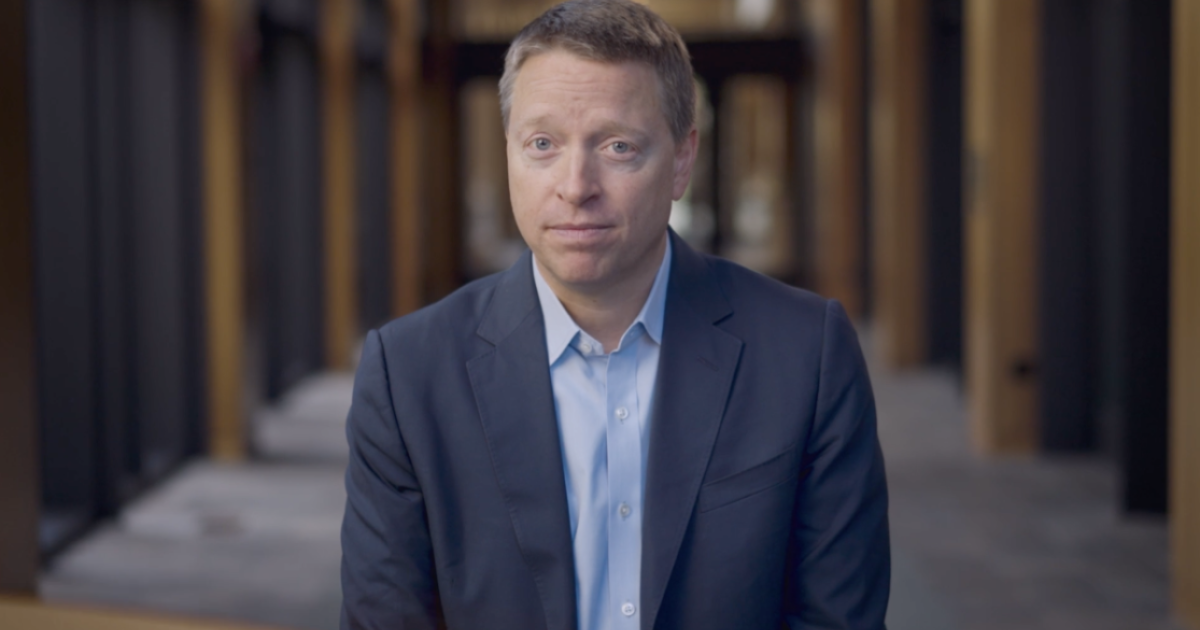
>> Matt Pottinger: If there is one lesson America should learn from Russia's invasion of Ukraine, it's that deterrence would have been a lot cheaper than war. Deterrence served the United States well during most of the Cold War, but in recent years, the United States and other democracies seem to have gotten worse at it.
Deterrence is an act of psychology to persuade your adversary to desist or delay their plans for war by demonstrating that you and your allies have the capabilities and the resolve to effectively resist their use of force. It's about persuading your adversary that war will be far more costly than they should like to bear.
As China's paramount leader, Xi Jinping, intensifies his calls for unifying Taiwan with mainland China, even by force, it might be easy to dismiss those calls as idle threats that don't require more than cosmetic changes in our deterrence posture. After all, Chinese leaders have been making threats for decades.
But unlike China's late leader Deng Xiaoping, who said China could wait 1,000 years for unification, Xi Jinping has said the issue can no longer be passed from one generation to another. He has called for the United States to break from decades of policy and publicly support Chinese unification.
In a speech to the 19th party Congress, Xi Jinping praised Mao Zedong's surprise attack on US Forces in Korea, signaling his readiness to go to war, war under what he seems to believe are similar circumstances. Most concerning of all, he has steadily intensified military activity around Taiwan over the past few years, launching missiles over the island and demonstrating the ability to impose a blockade.
His Ministry of Defense recently said that Taiwan's leaders now have, quote, a sword hanging over their heads. The ministry further vowed that pressure will only increase like a ratchet and that China's military actions, quote, will be pushed forward until the Taiwan issue is completely resolved. American leaders and policymakers can no longer afford to dismiss these sentiments as posturing.
The United States must step up and do everything within its power to deter a potential Chinese invasion of Taiwan and thwart Xi's ambitions head on. Failure to do so would be devastating to American power, security, and prosperity. Taiwan is rated as the most democratic state in Asia and the eighth most fully democratic state in the world ahead of the United States.
If Beijing coercively annexed Taiwan, it would extinguish the hopes of millions of Chinese people for a more liberal form of government at home. It would also undermine faith in US credibility as an ally, leading many people in Japan, Korea, Southeast Asia, and Australia to argue it would be better, as Hoover senior fellow, Larry Diamond put it, to surf the wave of China's rising hegemony rather than to be drowned by it.
Finally, it would undermine US technological and economic dominance. Taiwan is the world's leading producer of the most advanced silicon chips, chips that power smartphones, medical devices, defense weapons systems, and artificial intelligence. Were China to gain control of Taiwan's chip factories intact or even damaged, Beijing could either gain near monopolistic power over this crucial technology or cause supply chain disruptions that would compromise America's military and technological edge.
All of this, however, is avoidable so long as the United States, its allies Japan and Australia, and Taiwan itself take appropriate action now. These nations must first make military deterrence their explicit and primary goal. Diplomacy and economic sanctions can help, but won't work in the absence of credible hard power and a stated resolve to use it.
The US should maintain investment in legacy systems, especially submarines and long range bombers, even as it builds futuristic autonomous weapons. Adequate munitions stockpiles, anti ship missiles, and loitering drones can threaten to turn the Taiwan strait into a boiling moat, inhospitable to China's navy. The US must also work more tightly with its allies in Taiwan to conduct realistic training exercises to defeat an attempted blockade or invasion.
Fortunately, we don't need to match China ship for ship or plane for plane. In amphibious warfare, geography heavily favors the defender. Moderately higher investments in asymmetric weapons can offset China's massive investments in ships and planes and ballistic missiles, making the cost of invasion unbearably high for Xi Jinping.
Preventing war through strength is far less costly than fighting one through necessity. The United States must prepare for deterrence now or risk catastrophic conflict later. Taiwan's destiny, with its continental and regional global implications for democracy, national sovereignty, and prosperity depend on it.