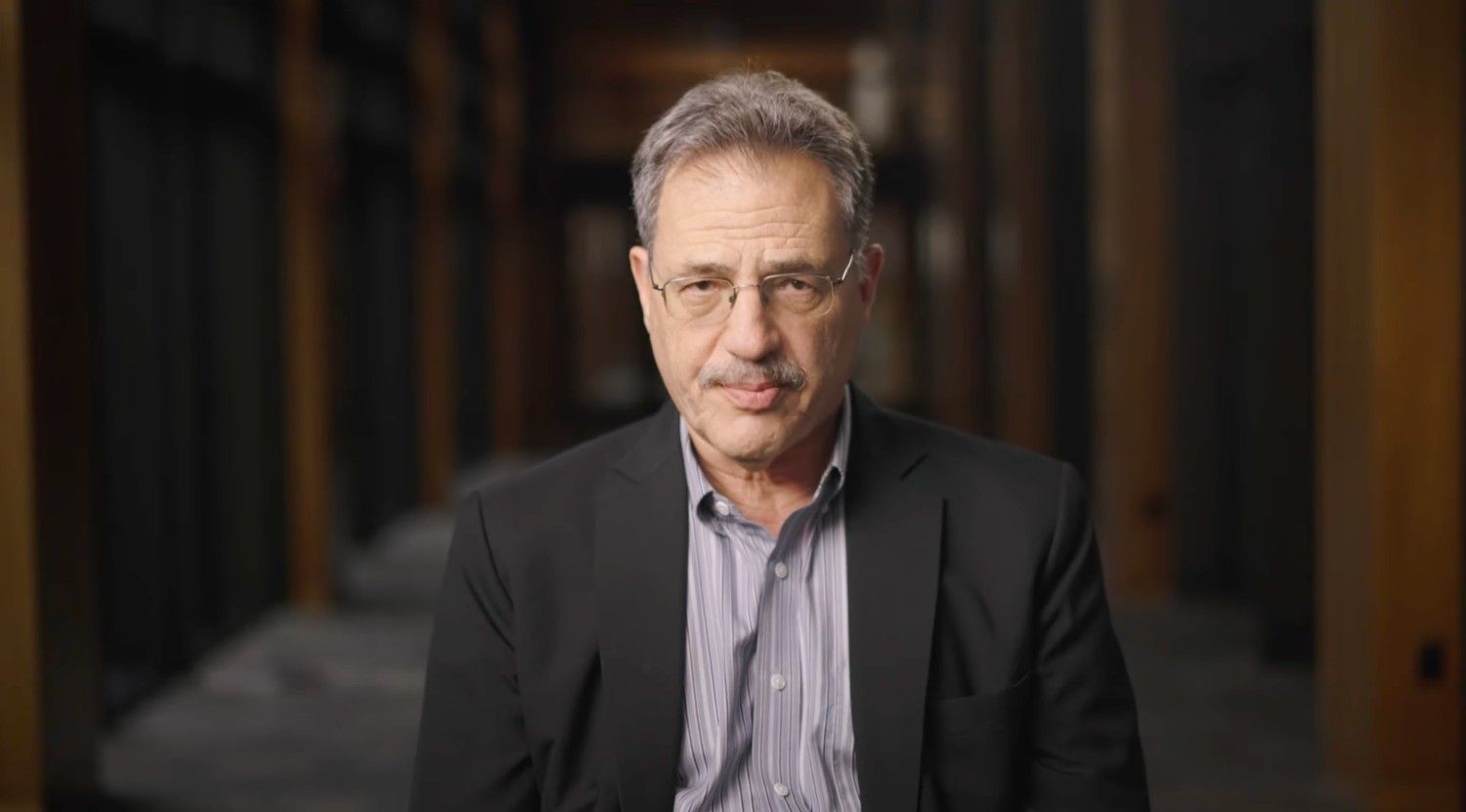
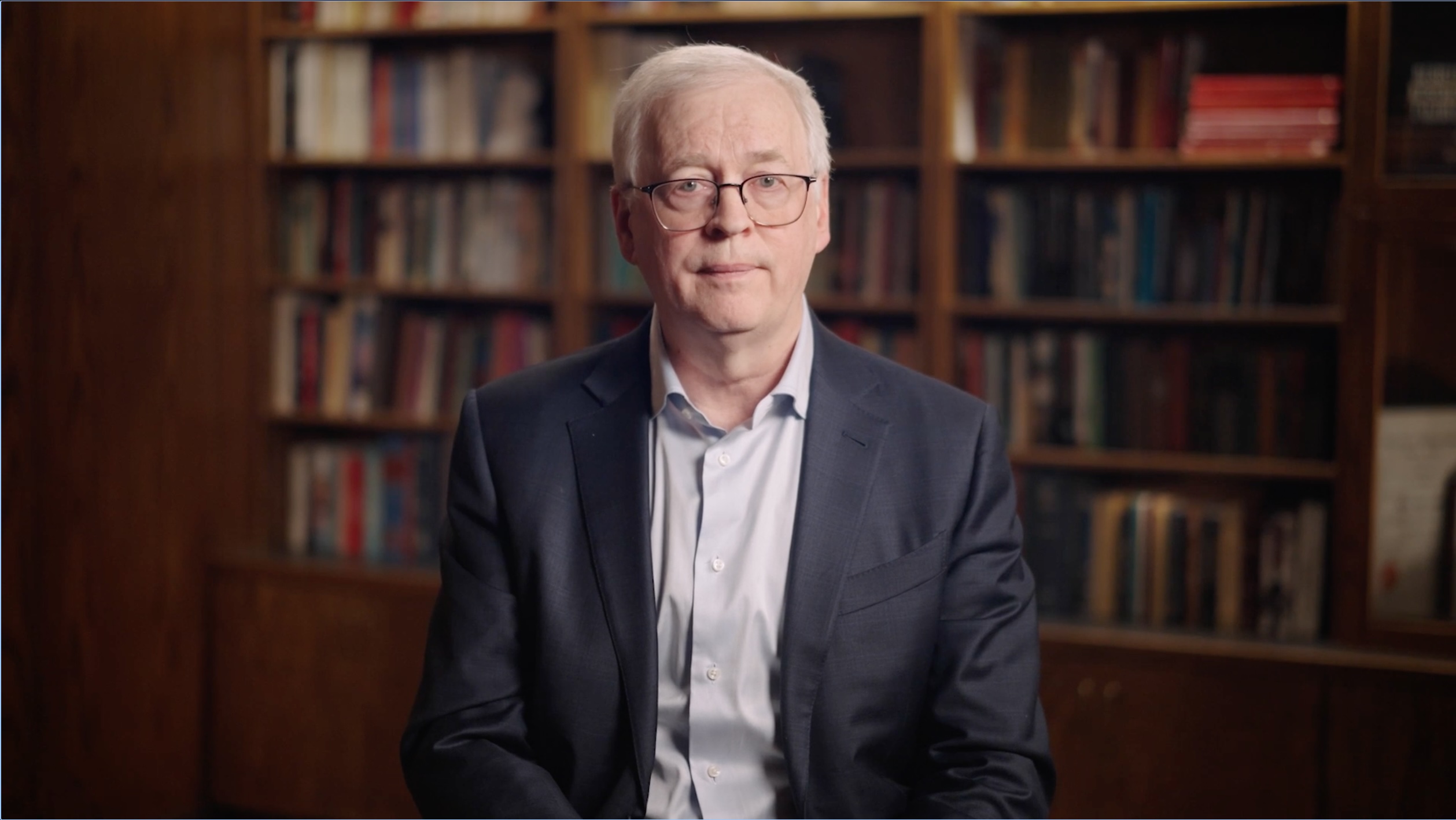
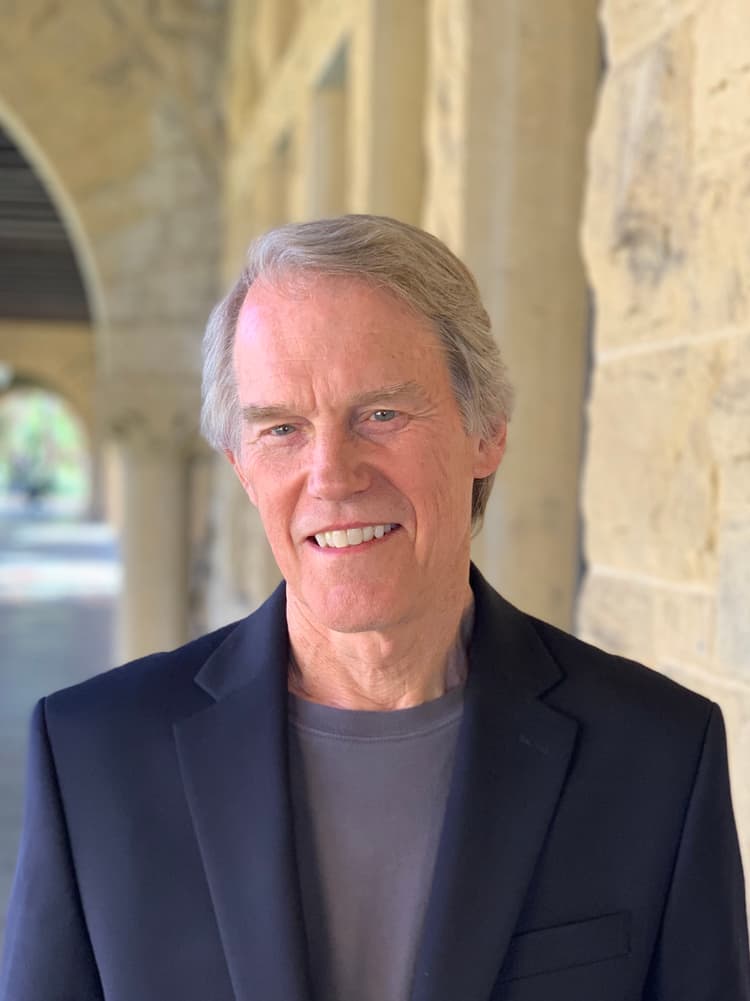
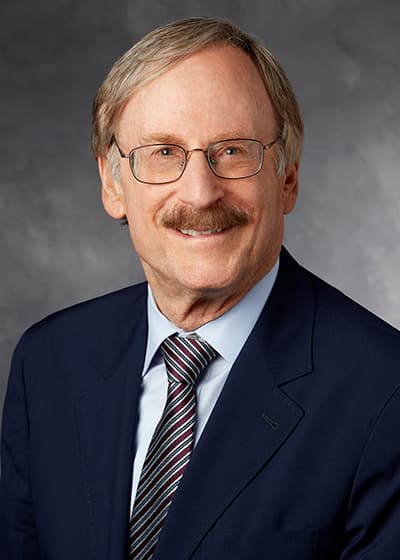
The Policy Stories series features Hoover Institution scholars in 4-5 minute "mini-documentaries" discussing the real-life implications of public policy throughout the world. These segments offer insights into why these policies are relevant and important for today's public policy discussion.
Terry M. Moe was a senior fellow at the Hoover Institution and the William Bennett Munro Professor of political science at Stanford University.
He has written extensively on the presidency and public bureaucracy as well as political institutions more generally, publishing many scholarly articles on these topics. His most recent books are Relic: How Our Constitution Undermines Effective Government--And Why We Need a More Powerful Presidency (with William Howell, 2016), and Presidents, Populism, and the Crisis of Democracy (with William Howell, 2020).
He has also written extensively on the politics of American education. His most recent books are The Politics of Institutional Reform: Katrina, Education, and the Second Face of Power (2019), The Comparative Politics of Education: Teachers Unions and Education Systems Around the World (edited with Susanne Wiborg, 2017), and Special Interest: Teachers Unions and America’s Public Schools (2011). His prior work on education includes Politics, Markets, and America's Schools (1990) and Liberating Learning: Technology, Politics, and the Future of American Education (2009), both with John E. Chubb, and Schools, Vouchers, and the American Public (2001).
Rose and Milton Friedman Senior Fellow on Public Policy (joint)
Michael J. Boskin is the Rose and Milton Friedman Senior Fellow on Public Policy (joint) at the Hoover Institution and the Tully M. Friedman Professor of Economics at Stanford. He is also a research associate of the National Bureau of Economic Research. In addition, he advises governments and businesses globally.
Boskin served as chairman of the President’s Council of Economic Advisers (CEA) from 1989 to 1993, when he helped resolve the Third World Debt and Saving and Loan financial crises, and place the first effective controls on government spending while protecting the defense budget. His CEA was rated by the Council for Excellence in Government as one of the five most respected agencies in the federal government. He earlier served on presidential candidate Ronald Reagan’s Tax Policy Task Force, helping develop the policies that, during Reagan’s presidency, substantially lowered marginal tax rates, indexed tax brackets for inflation, accelerated depreciation, and created IRAs and 401Ks, the economic rationale for which was predicated on his research on the effects of taxes on saving. He later chaired the highly influential blue-ribbon Advisory Commission to Study the Consumer Price Index, whose report has transformed the way government statistical agencies around the world measure inflation, GDP, and productivity.
Boskin serves on several corporate and philanthropic boards of directors, including those of the Oracle Corporation, the Koret Foundation and Bloom Energy.
In addition to Stanford and the University of California, Boskin has taught at Harvard and Yale. The author of more than one hundred fifty books and articles, he is internationally recognized for his research on world economic growth, tax and budget theory and policy, US saving and consumption patterns, and the implications of changing technology and demography on capital, labor, and product markets. His op-eds appear regularly in the Wall Street Journal and other leading newspapers. He also writes a bimonthly column on global economics and politics syndicated in 145 countries.
Boskin has received numerous professional awards and citations, including Stanford’s Distinguished Teaching Award in 1988; the National Association of Business Economists’ Abramson Award for outstanding research and its Distinguished Fellow Award; the Medal of the President of the Italian Republic in 1991 for his contributions to global economic understanding; and the 1998 Adam Smith Prize for outstanding contributions to economics.
Boskin received his BA with highest honors and the Chancellor’s Award as outstanding undergraduate from the University of California–Berkeley, where he also received his MA and PhD.
His research papers and op-eds are available at the Hoover Institution Archives and on his personal website. His current research focuses on the defense budget, federalism, the political economy of redistribution, and more generally, public economics and macroeconomics.
Eric Hanushek is the Paul and Jean Hanna Senior Fellow at Stanford University’s Hoover Institution and a leading authority on the economics of education. His pioneering research on teacher quality, school accountability, and the economic returns to educational achievement has shaped policy worldwide. Author of over 300 articles and 26 books, he received the 2021 Yidan Prize for Education Research. He is a Distinguished Graduate of the U.S. Air Force Academy and earned his Ph.D. at MIT.
David and Diane Steffy Fellow in American Public Policy Studies
Lanhee J. Chen, PhD, is the David and Diane Steffy Fellow in American Public Policy Studies at the Hoover Institution and cochair of its Healthcare Policy Working Group, At Stanford University, he is also director of Domestic Policy Studies, lecturer in the Public Policy Program, and an affiliated faculty member of the Center on Democracy, Development and the Rule of Law at the Freeman-Spogli Institute for International Studies.
In addition to his academic appointments, Chen is a partner at the Brunswick Group, a global business advisory firm. He is also a presidentially nominated and Senate-confirmed member of the Amtrak Board of Directors and a member and former chair of the Board of Directors at El Camino Health, an integrated health system in Northern California.
Chen’s writings have appeared in a variety of outlets, including The Wall Street Journal, The New York Times, and The Washington Post, and he is a contributing writer to the Opinion page at the Los Angeles Times. He is also an NBC News contributor and appears frequently on the network’s flagship public affairs program, Meet the Press.
A veteran of several high-profile political campaigns, Chen has worked in politics and government as well as business and academia. As a candidate for California State Controller in 2022, he was the strongest-performing statewide Republican and won endorsements from every major newspaper in the state. He also advised numerous major campaigns, including four presidential efforts.
In 2012, he was policy director of the Romney-Ryan campaign, serving as Governor Mitt Romney’s chief policy adviser, a senior strategist on the campaign, and the person responsible for developing the campaign’s domestic and foreign policy. During the 2014 and 2018 campaign cycles, Chen served as a senior adviser on policy to the National Republican Senatorial Committee.
From 2014 to 2018, Chen served as a presidentially appointed and Senate-confirmed member of the Social Security Advisory Board, an independent, bipartisan panel that advises the president, Congress, and the commissioner of Social Security on matters related to the Social Security and Supplemental Security Income programs. He also served in the George W. Bush administration as a senior official at the US Department of Health and Human Services.
Chen was honored in 2015 as one of the Politico 50, a list of the “thinkers, doers, and visionaries transforming American politics.” He earned a similar honor in 2012 when he was named one of Politico’s “50 Politicos to Watch.”
In 2017, Chen was the William E. Simon Visiting Professor in the School of Public Policy at Pepperdine University. At Stanford, he was previously a lecturer in law at Stanford Law School. An eight-time winner of Harvard University’s Certificate of Distinction in Teaching, Chen has produced scholarship that has appeared or been cited in several of the nation’s top political science journals.
Chen formerly practiced law at Gibson, Dunn & Crutcher LLP and was the Winnie Neubauer Visiting Fellow in Health Policy Studies at the Heritage Foundation. He was also an operating partner and strategic advisor at NewRoad Capital Partners, a private equity fund.
Chen serves in a variety of leadership and advisory roles in nonprofit organizations. He is a director of the Foundation for Research on Equal Opportunity; cochair of the Policy Advisory Board for Free the Facts, a policy education organization; a member of the Board of Directors of the Winston Health Policy Fellowship; a member of the external advisory committee for the AAMC (Association of American Medical Colleges) Research and Action Institute; and a member of the Council of Scholars for the Better Medicare Alliance. He is also a member of the Committee of 100, an organization of prominent Chinese Americans.
Chen earned his PhD and AM in political science from Harvard University, his JD cum laude from Harvard Law School, and his AB magna cum laude in government from Harvard College. He is a member of the State Bar of California.
Larry Diamond is the William L. Clayton Senior Fellow (joint) at the Hoover Institution, the Mosbacher Senior Fellow in Global Democracy at the Freeman Spogli Institute for International Studies (FSI), and a Bass University Fellow in Undergraduate Education at Stanford University. He is also professor by courtesy of political science and sociology at Stanford, where he lectures and teaches courses on democracy (including an online course on EdX).
At Hoover, he co-leads the Project on Taiwan in the Indo-Pacific Region and participates in the Program on the US, China, and the World. At FSI, he is among the core faculty of the Center on Democracy, Development, and the Rule of Law, which he directed for six and a half years. He leads FSI’s Israel Studies Program and is a member of the Program on Arab Reform and Development. He also co-leads the Global Digital Policy Incubator, based at FSI’s Cyber Policy Center. He served for thirty-two years as founding coeditor of the Journal of Democracy.
Diamond’s research focuses on global trends affecting freedom and democracy and on US and international policies to defend and advance democracy. His book Ill Winds: Saving Democracy from Russian Rage, Chinese Ambition, and American Complacency (2019; paperback ed. 2020) analyzes the challenges confronting liberal democracy in the United States and around the world and offers an agenda for strengthening and defending democracy at home and abroad. His other books include In Search of Democracy (2016), The Spirit of Democracy (2008), Developing Democracy: Toward Consolidation (1999), Promoting Democracy in the 1990s (1995), and Class, Ethnicity, and Democracy in Nigeria (1989). He has edited or coedited more than fifty books, including China’s Influence and American Interests (2019, with Orville Schell), Silicon Triangle: The United States, Taiwan, China, and Global Semiconductor Security (2023, with James O. Ellis Jr. and Orville Schell), and The Troubling State of India’s Democracy (2024, with Šumit Ganguly and Dinsha Mistree).
During 2002–3, Diamond served as a consultant to the US Agency for International Development and was a contributing author of its report Foreign Aid in the National Interest. He has advised and lectured at universities and think tanks around the world, as well as at the World Bank, the United Nations, the State Department, and other organizations dealing with governance and development. In 2004, Diamond served as a senior adviser on governance to the Coalition Provisional Authority in Baghdad. His book Squandered Victory: The American Occupation and the Bungled Effort to Bring Democracy to Iraq (2005) was one of the first books to critically analyze America’s postwar engagement in Iraq.
Among Diamond’s other edited books are Democracy in Decline?; Democratization and Authoritarianism in the Arab World; Will China Democratize?; and Liberation Technology: Social Media and the Struggle for Democracy, all edited with Marc F. Plattner; and Politics and Culture in Contemporary Iran, with Abbas Milani. With Juan J. Linz and Seymour Martin Lipset, he edited the series Democracy in Developing Countries, which helped to shape a new generation of comparative study of democratic development.
Sir Niall Ferguson, MA, DPhil, FRSE, is the Milbank Family Senior Fellow at the Hoover Institution, Stanford University, and a senior faculty fellow of the Belfer Center for Science and International Affairs at Harvard. He is the author of sixteen books, including The Pity of War, The House of Rothschild, Empire, Civilization and Kissinger, 1923-1968: The Idealist, which won the Council on Foreign Relations Arthur Ross Prize. He is an award-making filmmaker, too, having won an international Emmy for his PBS series The Ascent of Money. His 2018 book, The Square and the Tower, was a New York Times bestseller and also adapted for television by PBS as Niall Ferguson’s Networld. In 2020 he joined Bloomberg Opinion as a columnist. In addition, he is the founder and managing director of Greenmantle LLC, a New York-based advisory firm, a co-founder of Ualá, a Latin American financial technology company, and a trustee of the New York Historical Society, the London-based Centre for Policy Studies, and the newly founded University of Austin. His latest book, Doom: The Politics of Catastrophe, was published in 2021 by Penguin and was shortlisted for the Lionel Gelber Prize.
George P. Shultz Senior Fellow in Economics (joint)
Joshua Rauh is the Ormond Family Professor of Finance at Stanford’s Graduate School of Business and the George P. Shultz Senior Fellow in Economics (joint) at the Hoover Institution. He leads the Hoover Institution's Fiscal Policy Initiative and the Hoover Institution State and Local Governance Initiative. He formerly served at the White House where he was principal chief economist on the President’s Council of Economic Advisers (2019-20), and taught at the University of Chicago’s Booth School of Business (2004–9) and the Kellogg School of Management (2009–12). At the Hoover Institution he has served as Director of Research (2018-19). He has testified before House, Joint, and Joint Select Committees of the United States Congress, and he is a member of the Panel of Economic Advisers of the Congressional Budget Office.
His research focuses on government liabilities, corporate and individual taxation, and institutional investing. His work has received media coverage in outlets such as the Wall Street Journal, the New York Times, the Financial Times, and The Economist. He has received various awards recognizing his scholarship including the Brattle Prize and the Smith Breeden Prize of the American Finance Association. His scholarly papers have appeared in journals such as the Journal of Political Economy, the Quarterly Journal of Economics, the Journal of Finance, the Journal of Financial Economics, the Review of Financial Studies, and the Journal of Public Economics. He is a Research Associate of the National Bureau of Economic Research.
He has published numerous op-eds in outlets including the Wall Street Journal, The Hill, and The National Review online. His PragerU videos on public pensions, the role of government, and taxation and inequality have together been viewed over 10 million times. He is the founder of the Liberty Lens Economics Substack.
Prior to his academic career, Dr. Rauh was an associate economist at Goldman Sachs in London. He received a BA from Yale University and a PhD from the Massachusetts Institute of Technology, both in economics.
Elizabeth Economy is the Hargrove Senior Fellow and co-chair of the Program on the US, China, and the World at the Hoover Institution. From 2021 to 2023, she served as the senior advisor for China in the Department of Commerce. Economy was previously at the Council on Foreign Relations, where she served as the C.V. Starr Senior Fellow and director for Asia Studies for over a decade.
Economy is an acclaimed author and expert on Chinese domestic and foreign policy. Her most recent book is The World According to China (Polity, 2022). She is also the author of The Third Revolution: Xi Jinping and the New Chinese State (Oxford University Press, 2018), which was shortlisted for the Lionel Gelber Prize for foreign affairs books, and By All Means Necessary: How China’s Resource Quest Is Changing the World (Oxford University Press, 2014) with Michael Levi. Her book The River Runs Black: The Environmental Challenge to China’s Future (Cornell University Press, 2004; 2nd edition, 2010) was named one of the top fifty sustainability books by the University of Cambridge, won the 2005 International Convention on Asia Scholars Award for the best social sciences book published on Asia, and was listed as one of the top ten books of 2004 by The Globalist, as well as one of the best business books of 2010 by Booz Allen Hamilton’s Strategy+Business magazine. She also coedited China Joins the World: Progress and Prospects (Council on Foreign Relations Press, 1999) with Michel Oksenberg and The Internationalization of Environmental Protection (Cambridge University Press, 1997) with Miranda Schreurs. Her books have been translated into a dozen languages.
She has published articles in foreign policy and scholarly journals including Foreign Affairs, Harvard Business Review, and Foreign Policy, and op-eds in the New York Times, the Washington Post, and the Wall Street Journal, among other news outlets. Economy is a frequent guest on nationally broadcast television and radio programs, has testified before Congress on numerous occasions, and regularly consults for US government agencies and companies. In June 2018, Economy was named one of the “10 Names That Matter on China Policy” by Politico Magazine.
Economy serves on the board of managers of Swarthmore College, as well as on the boards of the National Committee on US-China Relations and the National Endowment for Democracy. She is a member of the Aspen Strategy Group and the Council on Foreign Relations. In addition, she serves as the East Asia book reviewer for Foreign Affairs Magazine. At the World Economic Forum, she served as a member and then vice chair of the Global Agenda Council on the Future of China (2008–14) and a member of the Global Agenda Council on the United States (2014–16). She has taught undergraduate- and graduate-level courses at Columbia University, Johns Hopkins University's Paul H. Nitze School of Advanced International Studies, and the University of Washington's Jackson School of International Studies.
Economy received her BA with honors from Swarthmore College, her AM from Stanford University, and her PhD from the University of Michigan. In 2008, she received an honorary doctor of law degree from Vermont Law School.
Amit Seru is a Senior Fellow (joint) at the Hoover Institution, the Steven and Roberta Denning Professor of Finance at the Stanford Graduate School of Business (Stanford GSB), a senior fellow at Stanford Institute for Economic Policy Research (SIEPR), and a Research Associate at the National Bureau of Economic Research (NBER). He was formerly a faculty member at the University of Chicago’s Booth School of Business. He is currently co-directing Hoover initiatives on corporate governance, long-run prosperity, and regulation and the rule of law.
Professor Seru’s research focuses on corporate finance with an emphasis on financial intermediation and regulation, technological innovation and incentive provision and financing in firms. His research in these areas has been published in American Economic Review, Journal of Political Economy, Quarterly Journal of Economics, Review of Economic Studies, Journal of Finance, Journal of Financial Economics, Review of Financial Studies, and other peer-reviewed journals. He is a co-editor of the Journal of Finance and was previously an editor of Review of Corporate Finance Studies, department editor (Finance) of Management Science and an associate editor of the Journal of Political Economy.
He has presented his research to U.S. and international regulatory agencies, including the Bank for International Settlement (BIS), Consumer Finance Protection Bureau (CFPB), European Central Bank (ECB), Federal Reserve, Federal Deposit Insurance Corporation (FDIC), Financial Industry Regulatory Authority (FINRA), the International Monetary Fund (IMF), the Monetary Authority of Singapore (MAS), the Office of the Comptroller of the Currency (OCC), and the Securities and Exchange Commission (SEC). Most recently, he gave the Biennial Andrew Crockett lecture on regulation of banks in the era of fintechs to central bank governors around the world at the BIS. He has received various National Science Foundation grants, the Alexandre Lamfalussy research fellowship from BIS and was named as one of the top 25 Economists under 45 by the International Monetary Fund in 2014. His research has been featured in major media, including the Wall Street Journal, The New York Times, the Financial Times and the Economist. His opinion essays have appeared in several outlets including the Wall Street Journal and The New York Times.
Seru earned a B.E. in electronics and communication and an MBA from the University of Delhi. Subsequently, he received a PhD in finance from the University of Michigan. He was a senior consultant at Accenture before pursuing his Ph.D. Seru was the recipient of a Rackham Pre-Doctoral Fellowship at University of Michigan and received a Lt. Governor’s gold medal for overall academic excellence at the University of Delhi.
Steven E. Koonin is the Edward Teller Senior Fellow at Stanford University’s Hoover Institution. Before joining Stanford in 2024, he was a professor at New York University, with appointments in the Stern School of Business, the Tandon School of Engineering, and the Department of Physics. He founded NYU’s Center for Urban Science and Progress, which focuses research and education on the acquisition, integration, and analysis of big data for big cities.
Prior to his time at NYU, Koonin served as undersecretary for science in the US Department of Energy under President Obama from 2009 to 2011, where his portfolio included the climate research program and energy technology strategy. He was the lead author of the US Department of Energy’s Strategic Plan (2011) and the inaugural Department of Energy Quadrennial Technology Review (2011). Before joining the government, Koonin spent five years as chief scientist for BP, researching renewable energy options to move the company “beyond petroleum.”
For almost 30 years, Koonin was a professor of theoretical physics at Caltech. He also served for nine years as Caltech’s vice president and provost, facilitating the research of more than 300 scientists and engineers and catalyzing the development of the world’s largest optical telescope, as well as guiding research initiatives in computational science, bioengineering, and the biological sciences.
Koonin is a member of the National Academy of Sciences. His other memberships include the American Academy of Arts and Sciences and JASON, a group of scientists who solve technical problems for the US government; he served as JASON’s chair for six years. He chaired the National Academies’ Divisional Committee for Engineering and Physical Sciences from 2014 to 2019 and was a trustee of the Institute for Defense Analyses from 2014‒24. He is currently an independent governor of the Lawrence Livermore National Laboratory and has served in similar roles for the Los Alamos, Sandia, Brookhaven, and Argonne national laboratories.
Koonin has a BS in physics from Caltech and a PhD in theoretical physics from MIT. He is an award-winning classroom teacher and his public lectures are noted for their clarity in conveying complex subjects. He is the author of the classic 1985 textbook Computational Physics, which introduced methodology for building computer models of complex physical systems. He has published some 200 peer-reviewed papers in the fields of physics and astrophysics, scientific computation, energy technology and policy, and climate science, and he has been the lead author on multiple book-length reports, including two National Academies studies. His bestselling book Unsettled: What Climate Science Tells Us, What It Doesn’t, and Why It Matters was published in 2021.
Rose-Marie and Jack Anderson Senior Fellow (joint)
John H. Cochrane is the Rose-Marie and Jack Anderson Senior Fellow (joint) of the Hoover Institution at Stanford University.
His monetary economics publications include the books The Fiscal Theory of the Price Level, Crisis Cycle: Challenges Evolution and Future of the Euro (with Luis Garicano and Klaus Masuch) and articles on monetary policy and inflation. His finance publications include the book Asset Pricing and articles on dynamics in stock, bond, and foreign exchange markets and their links to economic fluctuations. He has also written articles on macroeconomics, health insurance, time-series econometrics, financial regulation, and other topics. He was a coauthor of The Squam Lake Report. He writes occasional Op-eds, mostly in the Wall Street Journal, and authors the “Grumpy Economist” Substack. He recently created the Coursera online course “Asset Pricing.”
Cochrane is also a Senior Fellow of the Stanford Institute for Economic Policy Research (SIEPR), Professor of Finance and Economics (by Courtesy) at Stanford GSB, a Research Associate of the National Bureau of Economic Research, and an Adjunct Scholar of the CATO Institute. He is a past President and Fellow of the American Finance Association, and a Fellow of the Econometric Society. He has been an Editor of the Journal of Political Economy, and associate editor of several journals including the Journal of Monetary Economics, Journal of Business, and Journal of Economic Dynamics and Control. He was a director of the NBER asset pricing program. Awards include the Bradley Prize, the APEE Adam Smith award, the TIAA-CREF Institute Paul A. Samuelson Award for Asset Pricing, the Chookaszian Endowed Risk Management Prize, the Faculty Excellence Award for MBA teaching and the McKinsey Award for Outstanding Teaching.
Before coming to Hoover, Cochrane was the AQR Capital Management Distinguished Service Professor of Finance at the University of Chicago Booth School of Business, where he taught the MBA class “Advanced Investments” and a variety of PhD classes in Asset Pricing and Monetary Economics. Cochrane earned a Bachelor’s degree in Physics at MIT, and earned his Ph.D. in Economics at the University of California at Berkeley. He was at the Economics Department of the University of Chicago before joining the Booth School in 1994, and visited UCLA Anderson School of Management in 2000-2001.
Outside of academic pursuits Cochrane is a competition sailplane pilot, and enjoys cycling, windsurfing, skiing, and other outdoor activities.
David R. Henderson is a research fellow with the Hoover Institution. He is also a professor of economics at the Naval Postgraduate School in Monterey, California.
Henderson's writing focuses on public policy. His specialty is in making economic issues and analyses clear and interesting to general audiences. Two themes emerge from his writing: (1) that the unintended consequences of government regulation and spending are usually worse than the problems they are supposed to solve and (2) that freedom and free markets work to solve people's problems.
David Henderson is the editor of The Concise Encyclopedia of Economics (Warner Books, 2007), a book that communicates to a general audience what and how economists think. The Wall Street Journal commented, "His brainchild is a tribute to the power of the short, declarative sentence." The encyclopedia went through three printings and was translated into Spanish and Portuguese. It is now online at the Library of Economics and Liberty. He coauthored Making Great Decisions in Business and Life (2006). Henderson's book, The Joy of Freedom: An Economist's Odyssey (Financial Times Prentice Hall, 2001), has been translated into Russian. Henderson also writes frequently for the Wall Street Journal and Fortune and, from 1997 to 2000, was a monthly columnist with Red Herring, an information technology magazine. He currently serves as an adviser to LifeSharers, a nonprofit network of organ and tissue donors.
Henderson has been on the faculty of the Naval Postgraduate School since 1984 and a research fellow with Hoover since 1990. He was the John M. Olin Visiting Professor with the Center for the Study of American Business at Washington University in St. Louis in 1994; a senior economist for energy and health policy with the President's Council of Economic Advisers from 1982 to 1984; a visiting professor at the University of Santa Clara from 1980 to 1981; a senior policy analyst with the Cato Institute from 1979 to 1980; and an assistant professor at the University of Rochester's Graduate School of Management from 1975 to 1979.
In 1997, he received the Rear Admiral John Jay Schieffelin Award for excellence in teaching from the Naval Postgraduate School. In 1984, he won the Mencken Award for best investigative journalism article for his Fortune article "The Myth of MITI."
Henderson has written for the New York Times, Barron's, Fortune, the Los Angeles Times, the Chicago Tribune, Public Interest, the Christian Science Monitor, National Review, the New York Daily News, the Dallas Morning News, and Reason. He has also written scholarly articles for the Journal of Policy Analysis and Management, the Journal of Monetary Economics, Cato Journal, Regulation, Contemporary Policy Issues, and Energy Journal.
Henderson has spoken before a wide variety of audiences, including the American Farm Bureau Federation, the Chicago Council on Foreign Relations, the St. Louis Discussion Club, the Commonwealth Club of California (National Defense and Business Economics Section), the Cato Institute, and the Heritage Foundation. He has also spoken to economists and general audiences at many universities around the country, including Carnegie-Mellon, Brown, the University of California, Berkeley, the University of California, Davis, the University of Rochester, the University of Chicago, Harvard University's John F. Kennedy School, and the Hoover Institution. He has given papers at annual conferences held by the American Economics Association, the Western Economics Association, and the Association of Public Policy and Management. He has testified before the House Ways and Means Committee, the Senate Armed Services Committee, and the Senate Committee on Labor and Human Resources. He has also appeared on the O'Reilly Factor (Fox News), C-SPAN, CNN, the Newshour with Jim Lehrer, CNBC Squawk Box, MSNBC, BBC, CBC, the Fox News Channel, RT, and regional talk shows.
Born and raised in Canada, Henderson earned his bachelor of science degree in mathematics from the University of Winnipeg in 1970 and his Ph.D. in economics from the University of California, Los Angeles, in 1976.
Morris Fiorina is the Wendt Family Professor of Political Science at Stanford University and a senior fellow of the Hoover Institution. He has published dozens of articles and written or edited fifteen books, most recently, Unstable Majorities Continue: The Trump Era, which will appear in February 2026.
George P. Shultz Senior Fellow in Economics, Emeritus
John B. Taylor is the George P. Shultz Senior Fellow in Economics, Emeritus, at the Hoover Institution and the Mary and Robert Raymond Professor of Economics at Stanford University. He chairs the Hoover Working Group on Economic Policy, co-chairs the Hoover Technology, Economics and Governance Working Group, and is director of Stanford’s Introductory Economics Center.
Taylor's fields of expertise are monetary policy, fiscal policy, and international economics. His book Getting Off Track was one of the first on the financial crisis; his latest book, First Principles, for which he received the 2012 Hayek Prize, develops an economic plan to restore America’s prosperity. His most recent book is Choose Economic Freedom: Enduring Policy Lessons from the 1970s and 1980s with George P. Shultz.
Taylor served as senior economist on President Ford's and President Carter’s Council of Economic Advisers, as a member of President George H. W. Bush's Council of Economic Advisers, and as a senior economic adviser to Bob Dole’s presidential campaign, to George W. Bush’s presidential campaign in 2000, and to John McCain’s presidential campaign. He was a member of the Congressional Budget Office's Panel of Economic Advisers from 1995 to 2001. From 2001 to 2005, Taylor served as undersecretary of the Treasury for international affairs where he was responsible for currency markets, international development, for oversight of the International Monetary Fund and the World Bank, and for coordinating policy with the G-7 and G-20.
Taylor received the Bradley Prize from the Bradley Foundation and the Adam Smith Award as well as the Adolph G. Abramson Award from the National Association for Business Economics. He was awarded the Alexander Hamilton Award for his overall leadership at the US Treasury, the Treasury Distinguished Service Award for designing and implementing the currency reforms in Iraq, and the Medal of the Republic of Uruguay for his work in resolving the 2002 financial crisis. At Stanford he was awarded the George P. Shultz Distinguished Public Service Award, as well as the Hoagland Prize and the Rhodes Prize for excellence in undergraduate teaching. He is a fellow of the American Academy of Arts and Sciences and the Econometric Society; he formerly served as vice president of the American Economic Association.
Taylor received the 2016 Adam Smith Award from the Association of Private Enterprise Education and the 2015 Truman Medal for Economic Policy for extraordinary contribution to the formation and conduct of economic policy.
Taylor formerly held positions as professor of economics at Princeton University and Columbia University. Taylor received a BA in economics summa cum laude from Princeton University in 1968 and a PhD in economics from Stanford University in 1973.
Russell A. Berman, the Walter A. Haas Professor in the Humanities at Stanford University, is a senior fellow at the Hoover Institution and the chair of The Working Group on the Middle East and the Islamic World.
At Stanford, he is a member of both the Department of German Studies and the Department of Comparative Literature at Stanford, and he specializes on politics and culture in Europe as well as in the Middle East. He has served in numerous administrative positions at Stanford, including as chair of the Senate of the Academic Council. He is a member of the National Humanities Council and, during the first Trump administration, served as a Senior Advisor on the Policy Planning Staff of the State Department.
He is the author of numerous articles and books including Enlightenment or Empire: Colonial Discourse in German Culture (1998) and The Rise of the Modern German Novel: Crisis and Charisma (1986), both of which won the Outstanding Book Award of the German Studies Association (in 2000 and 1987, respectively). Hoover Institution Press published his books In Retreat: America's Withdrawal from the Middle East (2014), Freedom or Terror: Europe Faces Jihad (2010), and Anti-Americanism in Europe: A Cultural Problem (2004). His other books include Fiction Sets You Free: Literature, Liberty, and Western Culture (2007), Cultural Studies of Modern Germany: Representation and Nationhood (1993), Modern Culture and Critical Theory: Art, Politics, and the Legacy of the Frankfurt School (1989), and Between Fontane and Tucholsky: Literary Criticism and the Public Sphere in Wilhelmine Germany (1983). He has published numerous articles in the Hoover Digest, Defining Ideas, and Advancing a Free Society as well as in The Caravan, the publication of the Middle East Working Group.
Berman has received many honors and awards including a Mellon Faculty Fellowship at Harvard University (1982–83), an Alexander von Humboldt Fellowship (1988–89), and the Bundesverdienstkreuz of the Federal Republic of Germany (1997).
Berman received his BA in 1972 from Harvard and his doctorate from Washington University in 1979.
PolicyEd introduces the new educational video series Perspectives on Policy, which brings Hoover scholars' research and analysis to life in engaging narratives. Visual metaphors and illustrations convey insights about public policy. This series enhances traditional academic lectures with modern motion graphics and story-telling.
Over the last century, free-market capitalism and socialism have been the two dominant and conflicting political and economic models. The Human Prosperity Project investigates the historical record to assess the consequences for human welfare, individual liberty, and interactions between nations of various economic systems ranging from pure socialism to free-market capitalism.
The UnArchived: Lessons from the Past video series explains why a given policy or strategy did or did not work. These short videos pair historical research with modern policy analysis to address the choices and challenges facing society today. Based on the work of Hoover fellows and the collections of the Library & Archives.