Can Deliberative Discussions Heal Political Divides?

Published December 13, 2022

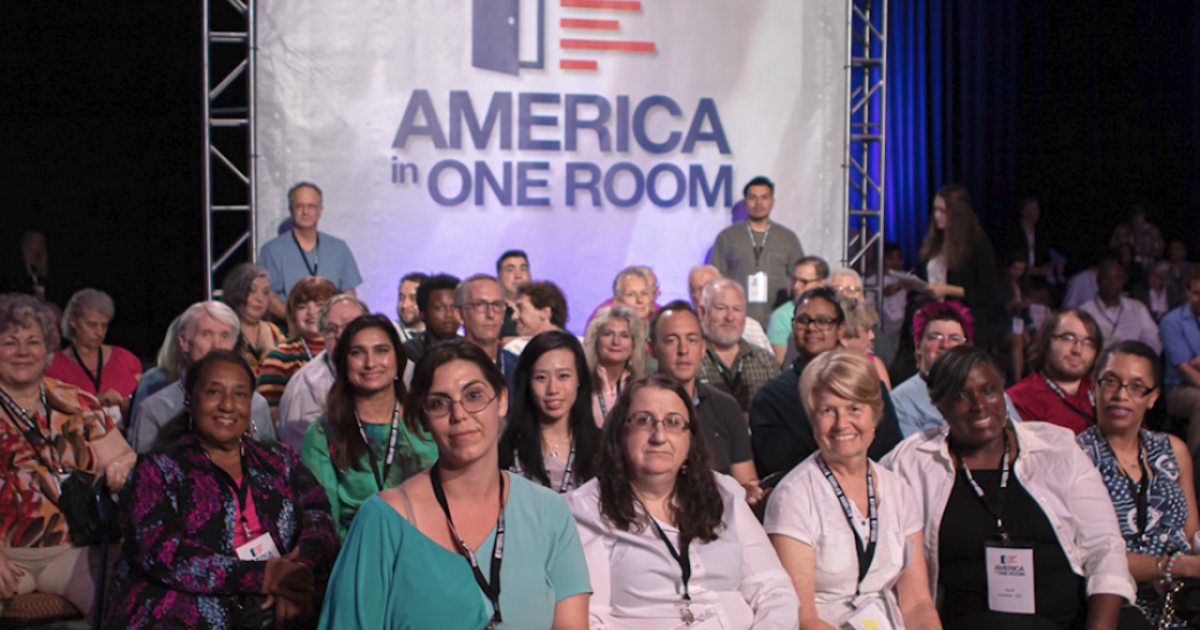
A national experiment called “American in One Room” brought together more than 500 randomly selected voters from around the country for a weekend of guided deliberation. Those who participated were more likely in the short run to moderate their political attitudes and more likely in the long run to engage in civil society.

Discussion Questions:

  1. Why do you think people ultimately went back to their old views after the study?
  2. Does this study show a way to reduce polarization permanently? What do you think?

Additional Resources:

  • Read “Is Deliberation an Antidote to Extreme Partisan Polarization? Reflections on ‘America in One Room,’” by James Fishkin, Alice Siu, Larry Diamond, and Norman Bradburn. Available here.
  • Watch “Morris Fiorina on Why Political Parties Have Polarized,” with Morris Fiorina. Available here.
  • Watch “Unstable Majorities,” with Morris Fiorina. Available here.

Cast

Valentin Bolotnyy

Valentin Bolotnyy

Related

Articles

The Presidential Seal Of Disapproval

Demonizing Donald Trump is a recurring theme in the closing arguments for California ballot initiatives. That’s even true of one measure making permanent a “temporary” state tax increase that has nothing to do with the president—but says plenty about the Golden State’s fiscal house of cards.    

October 22, 2026

Articles

After The Blue Wave

Why we still need democratic reform.

October 21, 2026

Articles

United CEO’s Wealth Tax Would Hit His Own Shareholders

Scott Kirby wants a national wealth tax and inheritance taxes near 100%. Among those who would pay are the investors he ultimately works for.

October 20, 2026