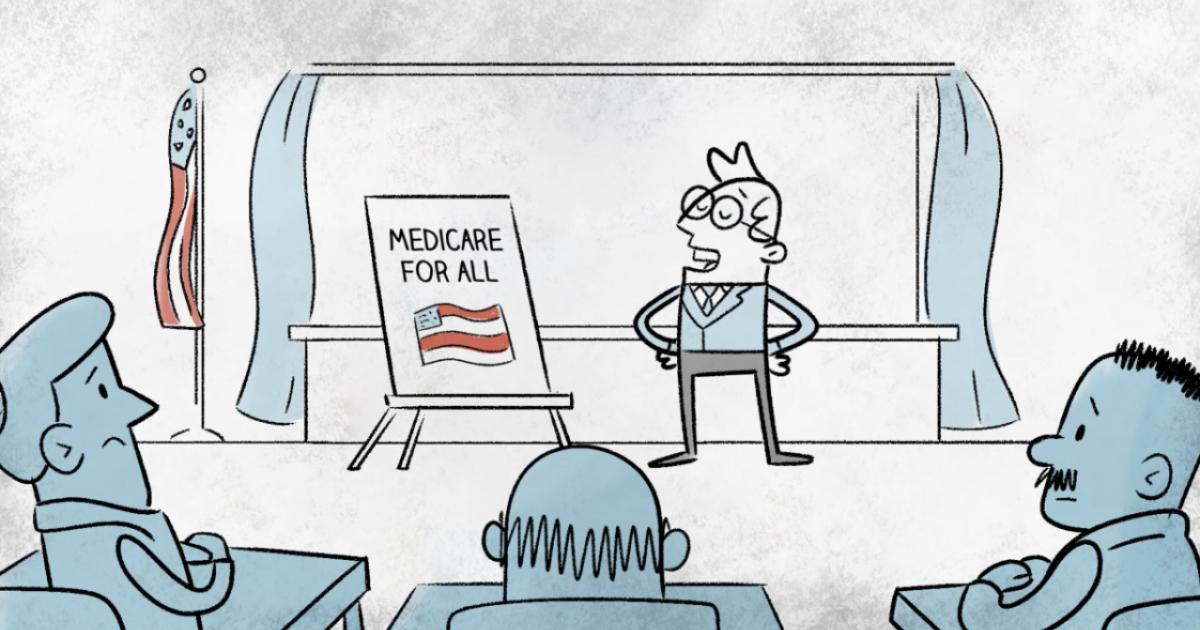



Supporters of Medicare for All argue that it would lower health care costs, because as the single payer, the government could force doctors and hospitals to accept lower payments than they earn now.
After all, Medicaid and Medicare already pay healthcare providers at lower rates than private insurance does. Why not just move the two-thirds of Americans with private insurance onto a single payer system like Medicare for All?
The problem is that since doctors and hospitals earn less for treating Medicare or Medicaid patients, they frequently charge more to people with private insurance.
This “cross-subsidy” makes it seem like lower Medicare and Medicaid reimbursement rates could save the country billions of dollars.
But widely cutting payments would have an enormous negative impact on the health care industry.
Doctors would find their salaries slashed, and many hospitals, particularly in rural areas, could go out of business.
The result would be fewer health care providers, longer wait times, and lower quality health care.
There are many other ways to lower the cost of health care. But policymakers should be skeptical of proposals that promise to provide savings without acknowledging inevitable reductions in both access to providers and the quality of care.