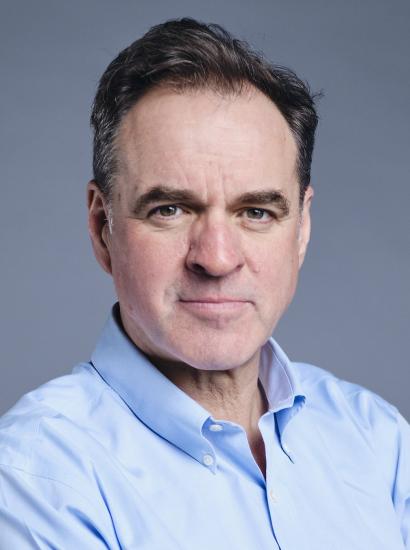
Doom: Niall Ferguson On The Politics And Policies Of The Pandemic

Niall Ferguson is the Milbank Family Senior Fellow at the Hoover Institution and the author of Doom: The Politics of Catastrophe, his new book on the decisions made by governments and public health officials around the world during the COVID pandemic. In this wide-ranging discussion, Ferguson describes what governments and leaders got right and got wrong—very wrong—over the 15 months since the coronavirus spread from China. Were the lockdowns instituted around the world prudent and life saving, or did they cause more damage by crippling economies and creating massive unemployment and enormous government debt across the globe? How can vaccines be created and distributed faster and more efficiently than this one? Finally, what lessons can we learn from this pandemic that can be applied to or even prevent the next one? Yes, Niall is certain there will be another one.

Recorded on April 28, 2021

To view the transcript of this conversation, click here.

Cast

Sir Niall Ferguson

Sir Niall Ferguson

Related

Articles

We Just Created More Than 1,000 Synthetic Controls To Study California's $20 Fast Food Minimum Wage

Synthetic control methods hold the promise of identifying a credible counterfactual by closely reproducing pretreatment outcome paths. Their reliability, however, depends in part on how effectively they constrain researchers’ less-visible degrees of freedom. We explore these methods’ sensitivity by constructing 1440 plausibly defensible specifications to estimate the employment effect of California’s $20 fast-food minimum wage. While over 96 percent of the estimated employment effects are negative, the range is vast, illustrating that synthetic control methods are sensitive to specification choice.

October 30, 2026

Articles

Government Waste, Fraud, And Abuse

Waste, fraud, and abuse of public funds are among the oldest and most persistent issues in American history.

September 16, 2026

Articles

Price Discrimination By Needless Complexity

“Personalized pricing” is in the news. Companies use big data to figure out what you’re willing to pay and charge accordingly. Politicians are already passing laws to ban it and the Federal Trade Commission is threatening action, as usual, before understanding the phenomenon. Economists call it “price discrimination.”

October 30, 2026