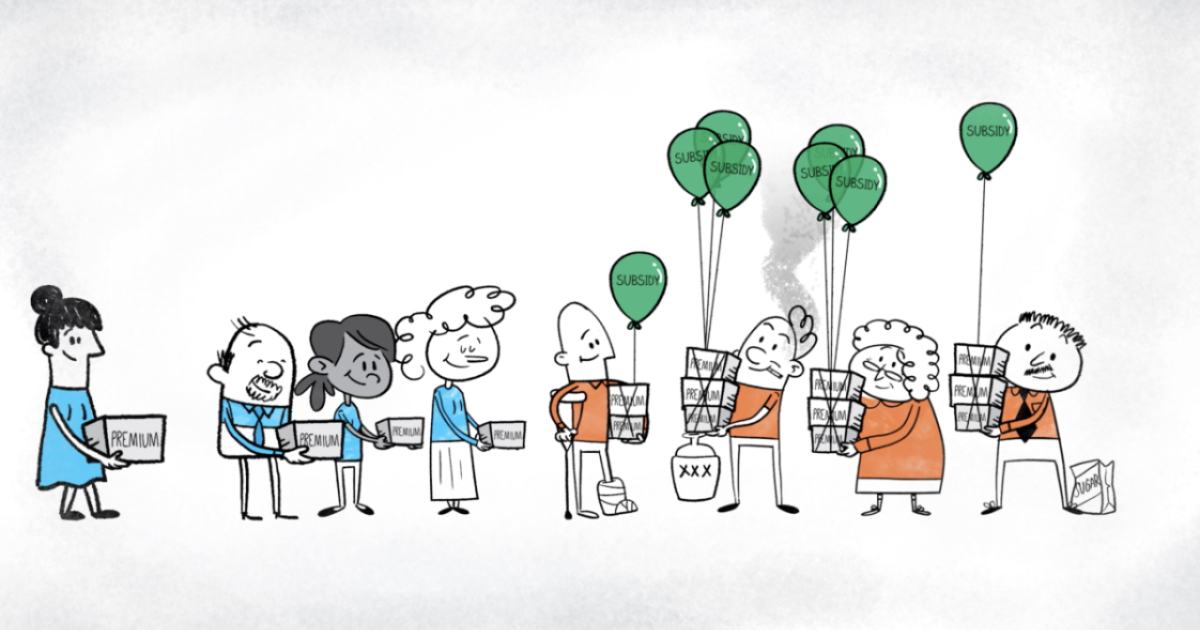

Many people think health insurers shouldn't be able to charge higher premiums to people who are expected to cost more because of their health, age, or lifestyle factors.
These well-meaning restrictions prevent insurers from pricing premiums based on risk, which has the unintended consequence of increasing the cost to everyone else in the marketplace.
That might not be much of a problem if healthier people didn’t change their behavior in response. But when their premiums go up, many of them decide that insurance coverage isn’t worth it at that price and drop out of the market altogether – or drop out and wait until they get sick to purchase insurance again.
That makes the remaining pool of people that still buys insurance relatively sicker, which causes insurers to raise prices even further to cover their costs. Which in turn, drives even more healthy people from the market.
So what's the solution? Instead of regulating prices, the government could provide higher-cost individuals with direct subsidies based on financial need.
That way, healthy people would stay in the market, leading to lower prices overall, and sick people would be able to purchase health insurance at rates they could afford.