Published October 8, 2020

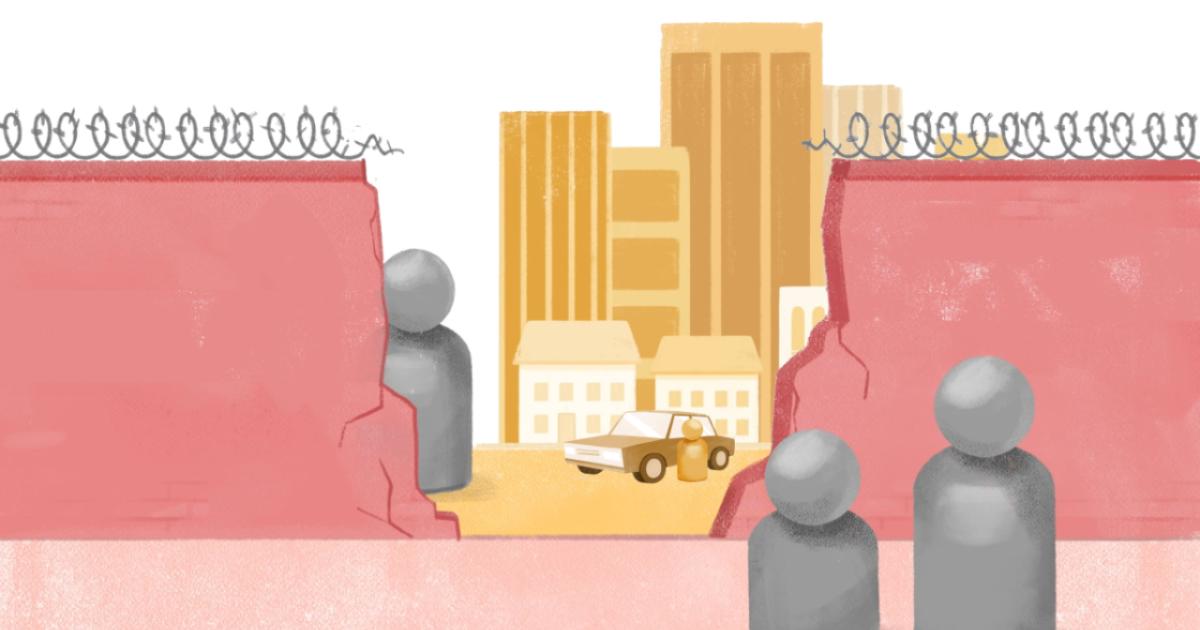
Socialism promises greater equality and shared prosperity, but the contrasting experiences of East and West Germany after World War II suggest a different reality. When the Soviet Union implemented repressive socialism in East Germany, their citizens fled to West Germany’s capitalism and freedom. East Germany eventually abandoned socialism for the liberal democracy and market economy of Western Germany.

Discussion Questions:

  1. What does socialism promise? What does it deliver?
  2. Besides East Germany, are there other examples of countries that have tried and then turned away from socialism?

Additional Resources:

  • To learn more, read “Leaving Socialism Behind: A Lesson from German History,” by Russell Berman. Available here.
  • Read “At 200, Marx Is Still Wrong,” by Russell Berman via Defining Ideas. Available here.
  • Read “Marx’s Kapital Crimes,” by Russell Berman via POLITICO. Available here.

Cast

Russell A. Berman

Russell A. Berman

In countries that have adopted socialism, governments inevitably infringe on the people’s liberties. 

Despite this checkered history, many -- particularly young Americans -- think socialism would be good for America. 

Fortunately, the U.S. Constitution makes it difficult to enact genuine socialist policy. 

Socialism demands the centralization of government power and the supremacy of the state over the individual. 

The framers of our Constitution sought to prevent exactly this. 

They understood that centralizing power threatened individual liberty; they purposely set up a system to prevent it. 

The Framers established a federal government of limited, enumerated powers, with most authority remaining with the states. 

Even within Washington, D.C., the Constitution would further break up the government with a separation of powers that would check and balance each branch of government. 

For socialism to prevail, it would have to eliminate these restrictions. 

Over the past century, the federal government has expanded its power at the expense of the states through expansive interpretations of its commerce and spending powers. 

While these actions have weakened the framers’ design, federalism resists the concentration of government. 

Maintaining and strengthening the balance between states and the federal government will ensure that socialism will fail, power will remain dispersed, and our liberties will flourish.

Related

Videos

How Thomas Sowell Thankfully Made Me A Contrarian Educator

Ian Rowe explains how Thomas Sowell’s uncompromising pursuit of truth inspires students to reject victimhood and become architects of their own lives.

September 8, 2026

Videos

Why Churchill Still Matters: Andrew Roberts On Great Men in History

Historian Andrew Roberts joins Peter Robinson to defend Winston Churchill’s legacy and explore how great leaders, historical memory, and the lessons of the past can guide a troubled West.

September 8, 2026 • 0 Min Watch

Podcasts

Andrew Roberts On Churchill, Napoleon, And The Men Who Change History

Historian Andrew Roberts joins Peter Robinson to defend Winston Churchill’s legacy and explore how great leaders, historical memory, and the lessons of the past can guide a troubled West.

September 8, 2026