Published December 17, 2019

In the normal politics of reform, bad institutions are protected by powerful vested interests, making them difficult or impossible to fix.  In the New Orleans school system after Hurricane Katrina, however, we get the rare opportunity to observe what happens when that power—which was destroyed by the storm—is removed from the equation.  The result was a revolution, suggesting that there is a vast revolutionary potential among everyday decision makers who want to fix their failing institutions—a potential that, during normal times, is stifled by power but only waiting to be liberated.

Additional resources:

  • Read The Politics of Institutional Reform: Katrina, Education, and the Second Face of Power, by Terry M. Moe, available here.
  • Read “An Accidental Revolution,” about Terry Moe’s book, in the City Journal, available here.
  • Learn more about The Politics of Institutional Reform here.


Discussion Questions:

  1. Why was New Orleans able to radically reform its public school system?
  2. What are some examples of poorly performing institutions in other policy realms, outside of education, that are difficult to reform because of vested interest power?

Cast

Terry M. Moe

Terry M. Moe

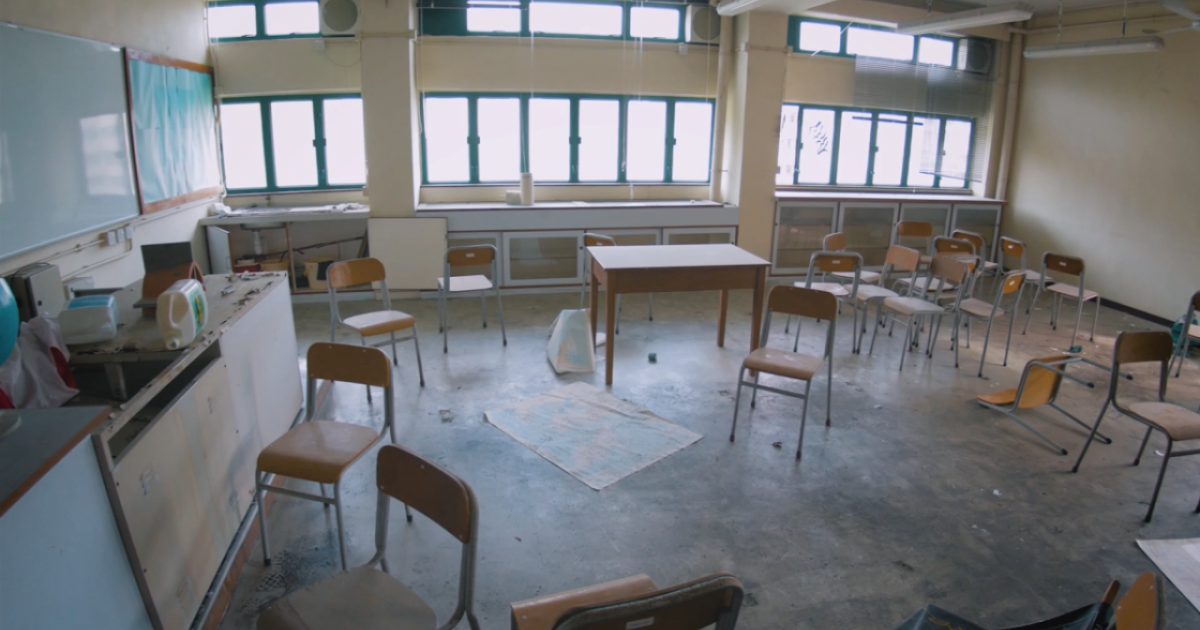
For decades, the New Orleans school system was horribly bad, but policy makers were unable to do anything about it.  Then, in late August of 2005, Hurricane Katrina slammed into New Orleans, destroying most of the city and its schools.  Out of the rubble, reformers managed to create the most innovative, distinctively different education system in the entire country: a system made up entirely of charter schools.  This reform was revolutionary.  They did fix a poorly performing institution.  And the city’s children are doing much better academically.

Other school systems can’t do what New Orleans did because the typical school system is protected by vested interests—the local teachers union and the local school board.  Both use their political power to resist reform—because even if the system is performing badly, they still benefit. This kind of thing is universal.  All institutional systems, across all realms of public policy, generate vested interests that use their political power to resist reform.  This is why institutions are so difficult to fix.   

So what about New Orleans?  It’s not just that the schools were physically destroyed.  The key is that Katrina also destroyed the power of the vested interests—the teachers union and the local school board. 

In so doing, Katrina provides a rare natural experiment.  It allows us to observe—for the first time in modern history—a reform process in which the power of vested interests has been removed, so decision makers are simply free to fix a failing institution.  So what did they do when there was no power to stop them?  And what was that power preventing during the normal times, before Katrina, when it was present? 

The Katrina experiment, then, sheds new light on the role of power and how it shapes the politics of reform.   

What happened in New Orleans is especially revealing because the key decision makers before Katrina—the governor and several others—remained in charge after the hurricane.  Before Katrina, they all had long track records as incrementalists. They weren’t radical reformers and they weren’t charter school fanatics. 

They were simply problem-solvers who wanted to fix a bad system.  But because power was stacked against them, they had always worked inside the box to make the existing system work a little better.   This was reform during normal times.  Change was small, and a bad system stayed bad.

So what happened, after Katrina, when the power was taken away?  The answer is that these same problem-solvers looked at one another and said, “This is the opportunity of a lifetime”—and they became revolutionaries. Their solutions didn’t need to be incremental anymore.  They could actually be solutions—comprehensive, bold, and transformative.

What would a solution look like? The beauty is, they didn’t know. But as problem-solvers, they were pragmatic—and what they found, over a period of several years, was that charter schools worked. They worked to get kids back into school quickly after the devastation.  They were popular with parents.  And the kids were learning more. 

So the problem-solvers just kept pushing ahead with what worked—until they had created the nation’s first all-charter school system.  They hadn’t set out to make a revolution.  They just wanted to fix a bad school system.  But what it took to do that, in the end, was a radical innovation that completely upended the traditional approach to public education.  

Here’s the main lesson to be learned.  In the normal politics of reform—meaning, the world we live in, almost all the time—bad institutions are protected by vested interest power, and it’s difficult or impossible to fix them.  But New Orleans shows us that this power is hiding something.  It’s hiding a vast revolutionary potential among very ordinary decision makers.  They may look like incrementalists, but they are actually willing to do whatever works—if they are only given the chance.  Power stands in their way—but the potential for big, bold, comprehensive institutional change is there.

Every democratic society desperately needs to fix its bad institutions. The challenge is to recognize the stifling role that power plays in preventing change—and the need to weaken that power in order to liberate the revolutionary potential that lies just beneath the surface in ordinary people. 

More from Policy Stories

Climate Anxiety and the Objectivity Crisis

Climate Anxiety and the Objectivity Crisis

China's Alternative World Order

China's Alternative World Order

The Boiling Moat: Urgent Steps to Defend Taiwan

The Boiling Moat: Urgent Steps to Defend Taiwan

America's Backyard

America's Backyard

Why Sanctions Fail and How to Make Them Work

Why Sanctions Fail and How to Make Them Work

The Billionaire Wealth Tax: A Recipe for Economic Disaster

The Billionaire Wealth Tax: A Recipe for Economic Disaster

The Enduring Failures of Rent Control

The Enduring Failures of Rent Control

Doctors vs. Bureaucrats: Who Should Control Patient Care

Doctors vs. Bureaucrats: Who Should Control Patient Care

China: Empire of Illusion

China: Empire of Illusion

Securing America’s Biotech Future

Securing America’s Biotech Future

More Like This

The Lapsed Atheist: Charles Murray Makes The Case For God

The Lapsed Atheist: Charles Murray Makes The Case For God

Norway: Defense And Diplomacy In The High North And Beyond

Norway: Defense And Diplomacy In The High North And Beyond

Thomas Sowell Legacy: A Conversation with Justice Clarence Thomas

Thomas Sowell Legacy: A Conversation with Justice Clarence Thomas

Can AI Libel You? The Robby Starbuck Case

Can AI Libel You? The Robby Starbuck Case

Jan Karski

Jan Karski

Complicated Legacy: Jay Bhattacharya On Fauci, RFK, And Vaccines

Complicated Legacy: Jay Bhattacharya On Fauci, RFK, And Vaccines

AI-Powered Business Formation

AI-Powered Business Formation

Iraq: Reform And The Fight For Sovereignty

Iraq: Reform And The Fight For Sovereignty

Securing the Future of Semiconductors

Securing the Future of Semiconductors

Tom Siebel On Education, Reinvention, And The AI Revolution

Tom Siebel On Education, Reinvention, And The AI Revolution

Related

Videos

The Lapsed Atheist: Charles Murray Makes The Case For God

Charles Murray joins Peter Robinson to discuss the evidence that forced him to reconsider God, the soul, and Christianity.

August 17, 2026 • 66 Min Watch

Articles

The Hidden Cause Of The Industrial Revolution

What if the Industrial Revolution began not with steam, but with property rights?

August 17, 2026 • 72 Min Watch

Event

Ideas Uncorked: Reclaiming Liberal Education In America Book Launch

The Hoover Institution in DC hosts Ideas Uncorked: Reclaiming Liberal Education in America Book Launch on Tuesday, September 15 from 5:00-6:30 pm ET. The event will feature Peter Berkowitz and Carl M. Cannon.

September 13, 2024