Articles
Who Needs The Bomb?
The Purpose of Nuclear Deterrence.
October 20, 2026
Published July 27, 2026
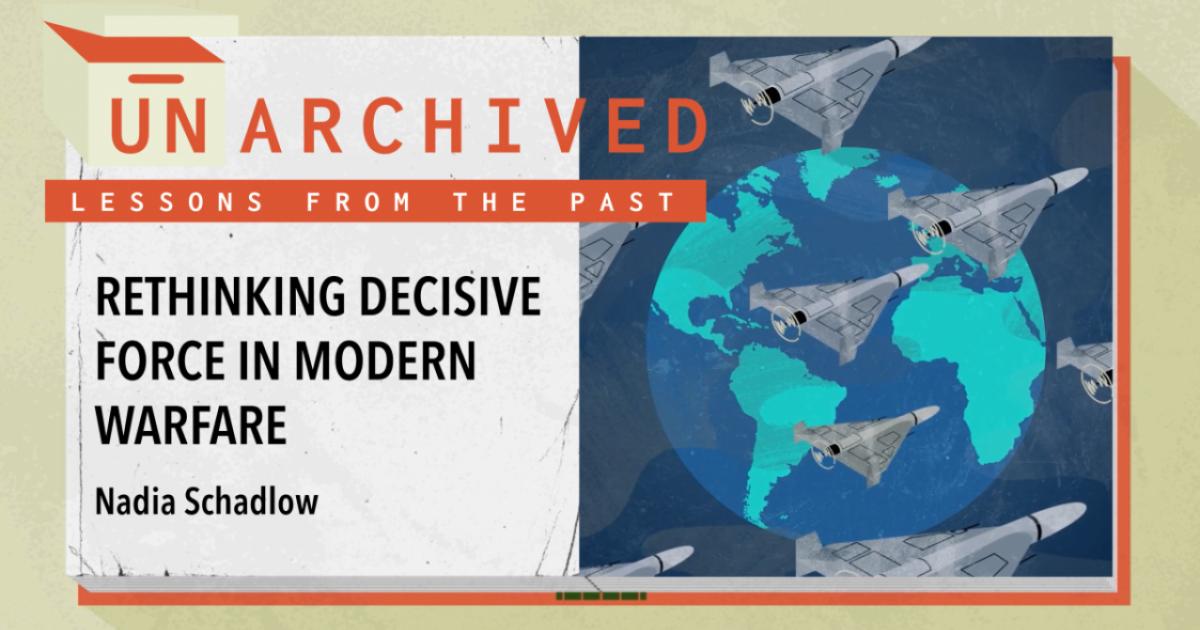
For centuries, commanders concentrated overwhelming mass at a single decisive point to win wars. Today, lethal yet inexpensive drones shatter that logic by delivering persistent, precise strikes across multiple fronts at once, turning the battlefield into a swarm of simultaneous threats. To maintain its military advantage, the United States must blend mass with flexibility — rapidly adapting while preserving the core strengths of troops, logistics, and combined arms.
To learn more, read "The Three D’s Of Mass: Decentralization, Democratization, And Deliverability" by Nadia Schadlow.
Explore more from Nadia Schadlow here.
__________
The opinions expressed in this video are those of the authors and do not necessarily reflect the opinions of the Hoover Institution or Stanford University.
© 2026 by the Board of Trustees of Leland Stanford Junior University.

Nadia Schadlow