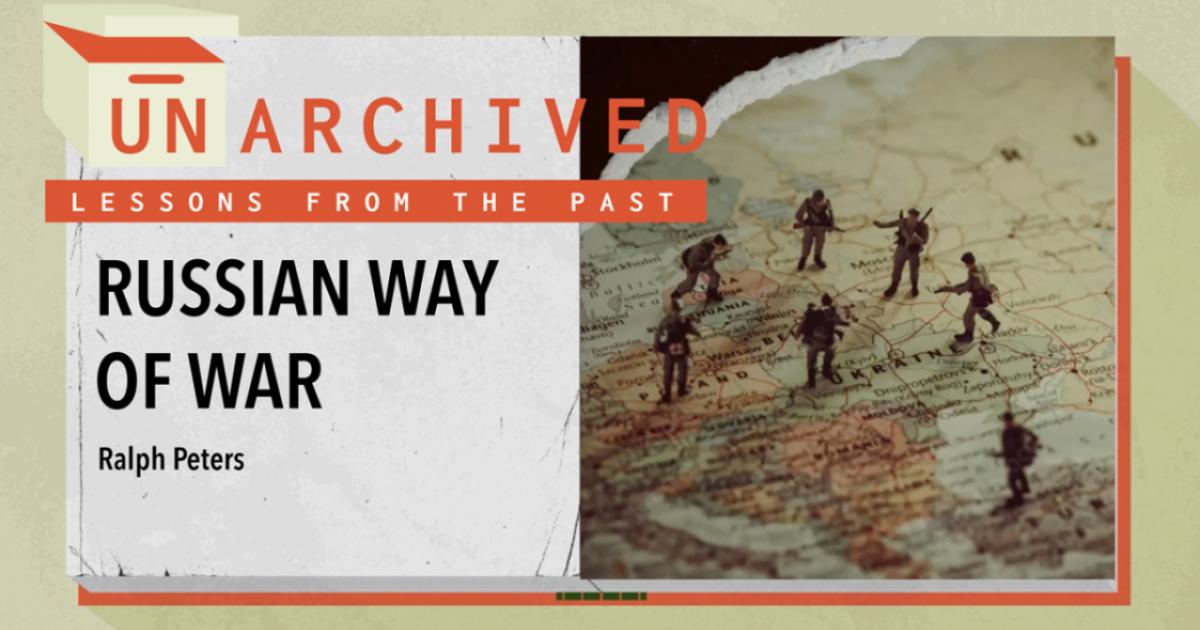
The Russian invasion and devastation of Ukraine has lasted longer than anyone expected. Yet the way it unfolded has followed tactical and operational characteristics that have repeated themselves over centuries. Known as the Russian way of war, Russia is rarely well prepared for war but proves to be resilient, inept at the outset, Russians persist and learn awful at short wars.
Moscow has achieved impossible victories as wars dragged on. In World War II, called the Great Patriotic War to Russians, Joseph Stalin refused to believe Nazi Germany would attack, and an unprepared red army lost millions of men in weeks. Russia seemed bound to lose the war, instead, the USSR created 17 armies from scratch and four years later took Berlin.
Second, Russian forces are clumsy on the offense but stalwart on defense, as opponents over the centuries have learned. In the Russo-Japanese War, Tokyo had all the apparent advantages, including surprise. Yet the dogged Russian defense of Port Arthur upset the Japanese timetable and over months drained irreplaceable manpower. Instead of a clear cut victory, Japan had to settle for a surly peace.
Third, whether czars, commissars, or presidential dictators lead the Kremlin, they do not hesitate to sacrifice soldiers lives. A clumsy giant is still a giant, and the Russians pile on, massive firepower reinforces struggling infantry units. What they lack in finesse, the Russians replace with high explosives and a willingness to absorb mass casualties.
Lastly, Russians have a sharp vision for how the post war environment should look subservient to Russia at all costs. Moscow will go to breathtakingly savage lengths to shape that future. In the early days of World War II, Russia's NKVD secret police executed over 20,000 polish officers, POWs, capable men who might have resisted the USSR's plans for post war Poland.
Today in Ukraine, Putin's strategy involves destroying Ukrainian identity and society, no matter the cruelty required. The Russian way of war views the opposing military as a hindrance, but its true enemy is always the opposing society. The key historical lesson is that time is on Russia's side, not Ukraine's.
Just as the Red army of 1948 was not the bumbling force of 1941, so will the Russian military of 2025 prove to be more capable than its hollow force of 2022. Ukraine needs our unstinting support now.