Published: March 31, 2020

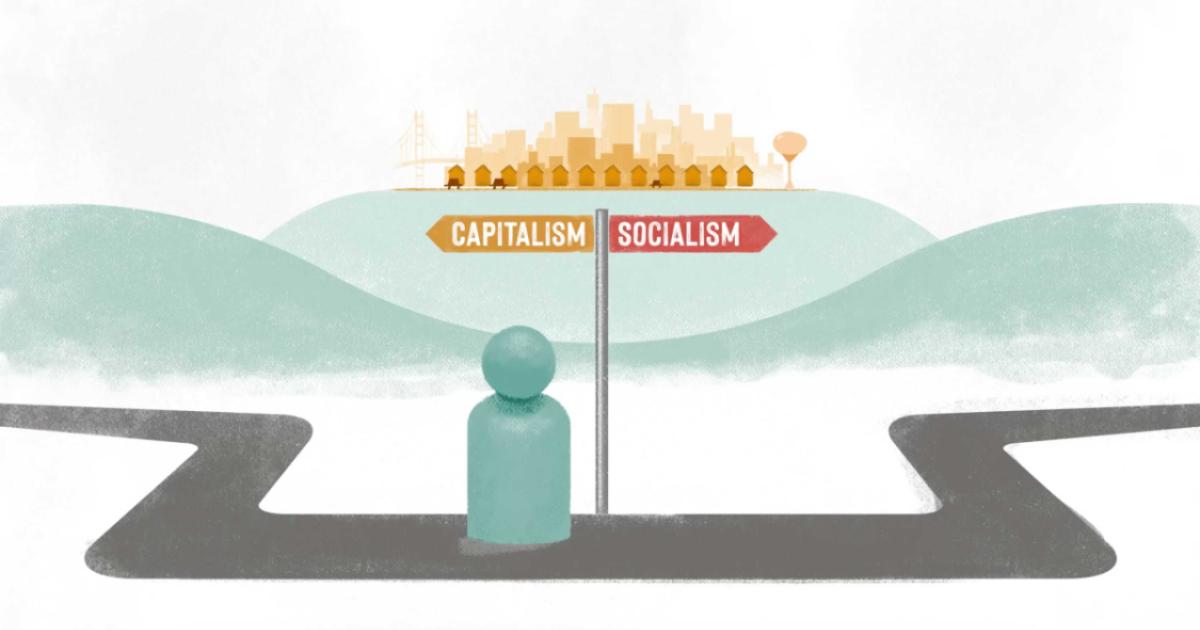
For nearly two centuries, societies have weighed the merits of free-market capitalism and socialism. Debates continue over which system maximizes prosperity and better protects individual liberty. The Human Prosperity Project at the Hoover Institution analyzes free-market capitalism and socialism to assess how each system affects human flourishing.

To read all of the essays in this series, click here.

Discussion Questions

  1. After the experience of socialism in the twentieth century, why do you think socialism continues to appeal to many people?
  2. Capitalism is often criticized for creating unequal societies. What kind of inequality exists in socialist economies?

Additional Resources

  • Read “Capitalism, Socialism, and Freedom” by Peter Berkowitz, available here.
  • Read “Capitalism, Socialism, and Nationalism: Lessons from History” by Niall Ferguson, available here.

Cast

Edward Paul Lazear

Edward Paul Lazear

Scott W. Atlas

Scott W. Atlas

For nearly two centuries, societies have weighed the merits of free-market capitalism and socialism. Debates continue over which system maximizes prosperity and better promotes human flourishing. Free-market capitalism decentralizes economic decisions, giving individuals control over what to produce, how much to charge, and what to buy. Their decisions are informed by market prices, which convey important information about scarcity and consumer value. Proponents contend that capitalism delivers the best economic outcomes, by giving individuals incentives to create and produce. Critics, on the other hand, point to the persistence of poverty in market economies, and rising inequality, as proof that capitalism fails to deliver broad-based prosperity. They maintain that this inequality ultimately gives the rich disproportionate economic and political power. In contrast, socialism grants the government the authority to make most economic decisions. The government chooses how to allocate scarce resources based upon what it determines to be most useful to society as a whole. Proponents argue that socialism ensures society’s resources are fairly distributed. Critics claim that socialism fails to give people proper economic incentives to innovate and produce, which ultimately reduces economic opportunities for all. Opponents further argue that socialism’s powerful central governments become autocratic and threaten political freedom. So which system is better for humanity? For as long as this question has been asked, the debate all too often devolves into name-calling and emotional arguments, that fail to advance the discussion. And yet, it IS imperative that we keep asking. The human prosperity project at the Hoover Institution seeks to overcome these preconceptions. It employs analysis of free-market capitalism and socialism and its many variants, to assess how each system affects human flourishing.

Related

Articles

The Rich World’s Climate Distraction

The World Bank and other institutions lose their focus on the best ways to help the poor.

September 1, 2026

Videos

The Fiscal Outlook And Housing Affordability

Richmond Fed president and CEO Tom Barkin joins Steve to discuss Kevin Warsh’s keynote speech at the Jackson Hole Economic Policy Symposium.

September 4, 2026

Videos

Crypto, Housing, And Banking Regulation With Rep French Hill

House Financial Services Committee chair French Hill joins Jon Hartley to discuss housing supply in the United States, crypto rules, securities reform, and expanding access to capital.

September 1, 2026