
Understanding Early COVID Data and Policies

Published June 21, 2022

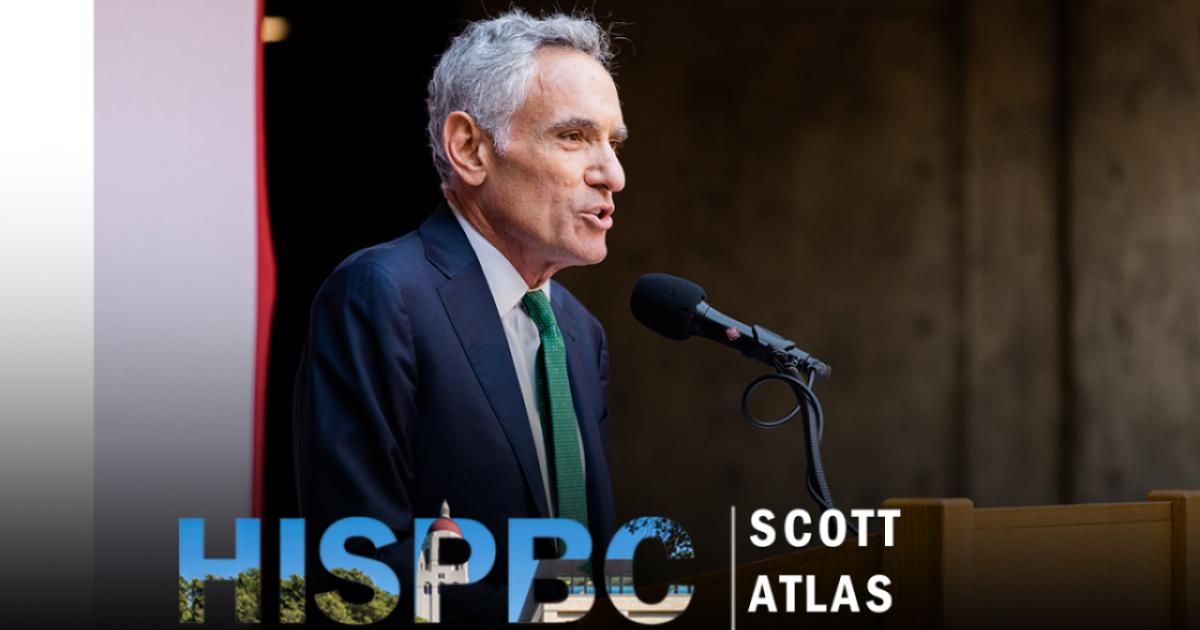
Scott Atlas reviews the early claims about the COVID-19 virus and the policy responses that followed. Atlas highlights the importance of understanding the limitations of COVID-19 data and how it resulted in ineffective responses. Finally, Atlas examines public health statistics and investigates the risk factors of COVID-19.

Discussion Questions:

  1. Is forced compliance ever justifiable during a pandemic?
  2. What would it take for medical experts to regain the trust of the public?

Additional Resources:

  • Read Scott Atlas’s book A Plague upon Our House: My Fight at the Trump White House to Stop COVID from Destroying America. Available here.
  • Read “During COVID, the More Prestigious the College, the Lower the Quality of Education,” by Paul Peterson, John Schoof, and Jay Greene via The Hill. Available here.
  • Watch “An Endless Summer: How COVID Has Reversed Academic Achievement,” with Macke Raymond on PolicyEd. Available here.

Cast

Scott W. Atlas

Scott W. Atlas

Related

Podcasts

Tom Church: Health Insurance Covers Too Much (And Coverage Mandates Are Partly To Blame)

Hoover Institution fellow Tom Church talks with Jared Rhoads of the Center for Modern Health about why American health insurance pays for routine and predictable care, and how state coverage mandates push premiums higher.

October 23, 2026

Articles

Seven Policies To Reduce Medicare Spending And Shrink The Federal Deficit

We asked Medicare policy experts to write up proposals that save taxpayers ~$100 billion over ten years. Here’s what they came up with.

October 20, 2026

Essays

Reducing Premiums Subsidies for High-Income Enrollees in Medicare Part B

General revenue now funds about half of Medicare. This brief proposes replacing Medicare Part B’s five IRMAA (Income-Related Monthly Adjustment Amount) premium tiers with a linear ramp that ends the taxpayer subsidy at $250,000 of income for single seniors and $500,000 for couples. The reform raises up to $113 billion over 10 years, removes premium cliffs to smooth out marginal tax rates, and leaves premiums unchanged for roughly 90% of Part B enrollees.

October 20, 2026