American Diplomacy: The Vanguard of US Foreign Policy

Published September 30, 2025

Diplomacy has long been a cornerstone of American power—securing military alliances, opening global markets, gathering intelligence, and advancing US values abroad. Today, as authoritarian regimes expand their diplomatic reach, the United States faces the risk of ceding influence without firing a shot. Budget cuts to the State Department threaten America’s ability to compete, compromising national security and soft power. Reinvesting in a robust diplomatic corps is essential to preserving US leadership in a more contested world.

Check out more from Michael McFaul:

  • Read "To advance American Interests, the U.S. Needs More Diplomats, Not Less" by  Michael McFaul here.
  • Read "How to Arm Ukraine for Negotiations" by Michael McFaul here.
  • Listen to "Should Russia’s allies count on Moscow to support them?", a podcast with Michael McFaul here.
  • Read "Autocrats vs. Democrats", a book by Michael McFaul here.

Learn more about Michael McFaul here.

__________

The opinions expressed in this video are those of the authors and do not necessarily reflect the opinions of the Hoover Institution or Stanford University.

© 2025 by the Board of Trustees of Leland Stanford Junior University.
Cast

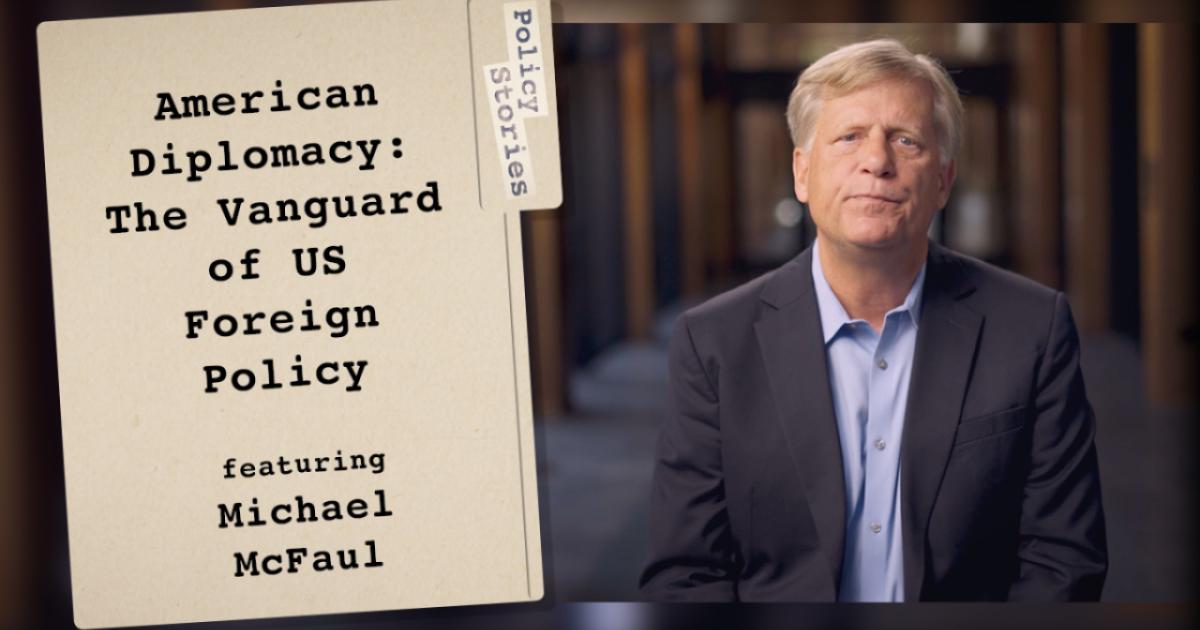
Michael McFaul

Michael McFaul

Related

Articles

Secretary Rubio’s Revaluation Of The West and Of America

On Oct. 7, against the stunning backdrop of the Acropolis, Secretary of State Marco Rubio delivered a rousing speech that illuminated Western civilization’s and America’s roots in classical Greece. Rubio’s unusual effort as secretary of state to educate European friends and fellow Americans about their shared ancient heritage elicited widespread praise from American conservatives. And rightly so: Citizens’ ignorance of, and frequently scorn for, their civilization weakens the West and America from within.

October 25, 2026

Articles

Two Kinds Of War: Ukraine, Gaza, And The Strategic Watershed

The 2025 National Security Strategy has ignited debates about several distinctive assertions, especially the choice of giving priority to the Western Hemisphere, thereby correcting the insufficient attention Washington has long paid to Latin America. In addition, the document may indicate a softening of the perception of China, and it repeats the appeal to European allies to do more for their own defense. Of particular note, furthermore, is the identification of culture as a dimension of security.

October 23, 2026

Articles

The Method To Trump’s Foreign Policy Madness

To understand Trump’s approach to Ukraine, Iran, and China, look to Richard Nixon. The president’s instinct for superpower dealmaking reflects a hard-nosed realism, backed by the American economy.

October 23, 2026