
Articles
For Medicare, Trust Fund Solvency Is The Wrong Number To Focus On
The more important budget issue is that almost half of Medicare’s spending is subsidized by taxpayers.
August 24, 2026
Published November 17, 2020
The health insurance public option promises to charge consumers premiums that fully cover its cost. But the history of federal health care programs tells us that Congress will inevitably subsidize enrollees. Instead of costing taxpayers nothing, the public option would quickly become a costly new government program.
Discussion Questions
Additional Resources

Lanhee J. Chen
As health care gets more expensive every year, a growing number of Americans are looking to the federal government to make it more affordable.
We’ve heard a lot about reforms that would create a one-size-fits-all, single-payer system like Medicare-for-All. But with all of the disruption and expenses that kind of system would create, there’s another proposal that may be more realistic: the public option.
Under a public option, bureaucrats in Washington, DC would run an insurance plan that competes directly with private insurers.
On the surface, the public option sounds appealing. Supporters argue that it could put competitive pressure on prices, forcing insurance companies to lower their premiums. And they also say it would reduce costs because the government can do things cheaper and reimburse doctors and hospitals less than private insurers do.
But perhaps most importantly, unlike Medicare for All and other single-payer plans, supporters claim it wouldn’t cost the federal government a dime. That’s because anyone who purchases insurance through the public option would pay premiums at the level that would fully cover the plan’s costs.
In short, public option supporters promise lower insurance premiums for everyone without any cost to taxpayers.
If it sounds too good to be true, that’s because it is. The assumptions on which supporters base their claim are completely unrealistic.
Most notably, they assume that Congress will be immune to political pressure. They believe that Congress will allow public option premiums to rise as health costs do. But that’s like assuming that politicians won’t act like…politicians. The more likely path is that Congress steps in to keep premiums low, making the public option a new and growing burden on taxpayers.
This might seem like merely a hypothetical. But Congress has intervened before.
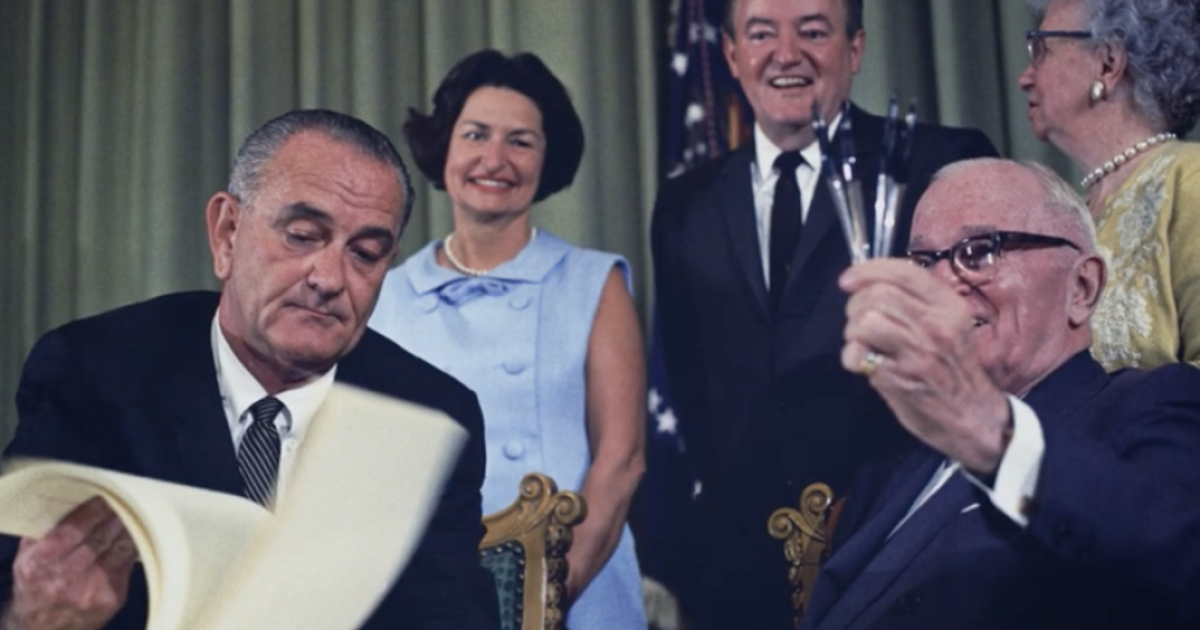
In 1965, Congress created Medicare. It included benefits for doctor visits and other medical procedures, covered in so-called Part B of the program. At the time it was passed, lawmakers promised that taxpayers would only pay for half of Part B’s cost. The other half, no matter how much costs grew, was to be paid through premiums by Medicare recipients.
Predictably, costs went up, and premiums had to increase too. But the politicians quickly acted to shield Medicare recipients from these increases. In just six years after Medicare began, the fifty-fifty split was formally undone. In just over a decade, taxpayers were on the hook for seventy-five percent of the cost of Medicare Part B—a 50% increase in the initial subsidy.
What went wrong? While the original authors of the Medicare program thought they had achieved a sustainable balance between expanding health care coverage and protecting taxpayers, they failed to account for the political pressure that would inevitably occur when health care costs rose.
Today’s public option proponents ignore what history tells us.
Once Congress begins subsidizing premiums, the public option is no longer “free” to taxpayers. Within short order, it would become a very costly government program. That means higher taxes, or higher deficits.
Providing access to affordable health insurance is important, but the public option isn’t the right answer.
Articles
The more important budget issue is that almost half of Medicare’s spending is subsidized by taxpayers.
August 24, 2026
Podcasts
Palantir UK chief Louis Mosley joins Secrets of Statecraft to discuss how the company’s technology is transforming warfare, healthcare, and policing.
August 25, 2026
Articles
oney, power and security are intimately connected. For extended periods, the world’s financial center has been concentrated in one country, one city, one currency, providing in effect a code of conduct, whose most effective modern variants have been the nineteenth-century gold standard (1873–1914), the Bretton Woods system (1945–1971), and the international system around the so-called Washington Consensus (1980–2008). Each of these orders eventually frayed, and alternatives needed to be constructed. Concentration around a financial center yields powerful network advantages, but the historical record warns against treating any such arrangement as permanent. The emergence of rival centers has repeatedly been associated with heightened conflict, war, and destruction.
August 24, 2026