Join Julia and Jackie in this bonus episode as they discuss what they’ve learned throughout the podcast. Who are the new defense influencers that will shape America’s unmanned arsenal? What does this all mean for the Trump administration and the future of defense innovation?
WATCH THE EPISODE
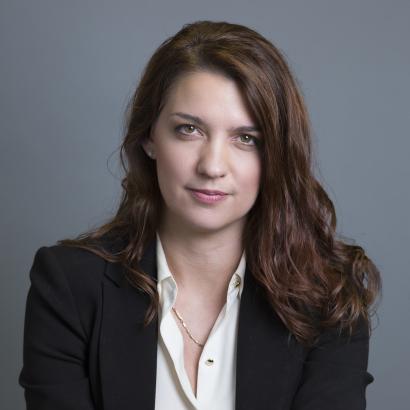
>> Jacquelyn Schneider: Julia and Jackie Weigh In.
>> Jacquelyn Schneider: Hey, guys, I wanted to give you a little context on what we're calling the Bonus Episode. So over the last seven episodes, we've been bringing you pieces of the book, we've been bringing you interviews from experts, and we're trying to tell what was a relatively cohesive story.
But as we've alluded to, this is a relatively messy, difficult story. And as we finished episode seven, we felt like there was something else that we still wanted to say. So episode eight, or the Bonus Episode, is about Julia and I having a conversation. What did we learn from this experience with the podcast and writing the book?
And maybe most importantly, what is the direct application to the last seven episodes to what's going on today in the Trump administration? So, with no further ado, the Bonus Episode.
>> Julia Macdonald: We began this book with a puzzle, why drones? Why do we end up with this contemporary arsenal dominated by remote controlled, expensive platforms like the Predator, the Reaper, the Global Hawk, and by contrast, not more advancements in mines and missiles and munitions?
But when we started this book, this contrast and this choice was hypothetical, right, Jackie? Why did America envisage one theory of victory over another? And our explanation has been one about beliefs and identities, people and exogenous shocks, how the American defense community built what they thought was the unmanned arsenal of the future.
But now, as we came to the conclusion of our story, as we finished the book, it wasn't hypothetical anymore. It wasn't a case of counterfactuals. There were battlefields in Armenia, Ukraine, obviously Syria, Yemen, demonstrating a different unmanned reality. And this isn't one of the large unmanned platforms in the US arsenal.
This is an army of small unmanned systems, loitering munitions, kamikaze drones, mines. So I guess the question is, what does this tell us about the future battlefield? And what can we draw from our book about the trajectory of US Unmanned Systems?
>> Jacquelyn Schneider: I think we've spent most of this time previewing what other people think.
You have folks that I think cleave pretty closely to this idea of the importance of exquisites, of the unique kind of American way of war, which is at a distance, and with overwhelming technological advantage. And then you have on the other side, folks that are advocating for more AI, more autonomy, cheaper stuff, more of it.
And then, this kind of in between, which I think appeals to us as academics here, Stacie Pettyjohn, the Mike Horowitz, who are saying, no, no, no, it's just not a true binary. We need to buy more things but we also need exquisite and precise, but mass, and high, low.
So I think maybe it's our turn to weigh in on the debate about what the future of the arsenal could be. What are your thoughts, Julia? Where do you fall in that kind of mix of the debates?
>> Julia Macdonald: I was reading Mike Horowitz's piece and I was like, this makes total sense.
I really like this idea that, the suite of technologies that the US held onto and sort of had this secret access to at the end of the Cold War that enabled sort of this long range precision have now democratized, have now proliferated across the battlefield. And so that you have this confluence of the ability to create mass with precision.
So this idea of precision mass. But I'm doubtful, and this is where I think the lessons of the book really come through to me, that the US can pivot towards that so quickly, that it can invest in this and it can build this arsenal so quickly that it'll be able to compete in the current wars.
I mean, what we see throughout the book is the role of service identity being ingrained in bureaucratic processes that are incredibly hard to change. And so how does this new reality on the battlefield match up with all the systems and processes that are ingrained in the US military over decades?
And that's where I get stuck.
>> Jacquelyn Schneider: Let's take one technology and kind of walk through why this is difficult to adopt. And I think if you look at the small quadcopters and in our conversation with Michael Kaufman, he talked about how these really smaller systems are being used as a way to lay mines, as a way to bring logistics to the battlefield, as a way to provide persistent ISR.
That's the intelligence and the surveillance for the battlefield, but most importantly to be able to support the ground unit. So it's not that these are kind of strategic air power assets that are being used to create a new contest in the air. And yeah, there's a contest, drone.
But the they are intrinsically tied to the ground forces. So in our story that would mean that the quadcopters need to be an investment that comes from the army. And I think the army, the marines, these ground units. But there has been historically this reaction from the Air Force when something is in the air, they will do everything they can to co opt the mission.
And in some way take that mission, o it is focused on strategic air power as opposed to combat air support or CAS. And I think this is part of where the tension has been. And where the difficulty is for the US and if we're thinking about China's scenario, who's adopting these small systems?
If there's not a forward line of troops, if they're not tied to the ground unit, then what's their role? And you're sitting in the Asia Pacific right now. These lessons from Ukraine, are they applicable at all for the air sea dominated fight? That would be a US China fight over Taiwan.
>> Julia Macdonald: The key takeaway, right, that we have shifted in this world of near peer competition versus the global war on terror that dominated earlier, where I think, as we say in the book, political cost was the driving force, the desire to sort of keep US personnel, US military forces from harm's way.
And so really invested in these platforms that protected people, kept them at a distance. We've shifted to near peer competition where actually mass is the driver, the ability to generate these much cheaper unmanned platforms that can slow down war, right, that create this friction. And that is gonna be a feature of any war with US, China.
And China hasn't been investing in this, they've seen the future. They know where it's going, they've been investing much more in hypersonic missiles. We know that the US is behind in that investment race. The latest DoD budget I saw, Stacie Pettyjohn, talking about this as well, seems to actually have less investment in munitions than the previous, which seems crazy given what we've learned from the war in Ukraine.
When I think about this, I think about it in terms of, how can the US innovate to be able to catch up on some of these dimensions. And maybe Trump, and this is where we go into uncharted territory, cuz I don't know your views on this. Maybe Trump's willingness to kind of break the bureaucracy in some ways could lead to something positive.
>> Jacquelyn Schneider: Well, I think what we can see is that there have been very few instances in history where presidents or executives are able to exert long term influence over the trajectory of these weapons. There are moments when they infuse vast amounts of money, which leads to path dependencies and critical junctures.
If you think about like the end of the Cold War and Reagan, but Reagan's happening also at the same time as Goldwater Nichols, where for the first time in a while, the services need to play nice with each other. And so you have this kind of moment where the Air Force and the army are teaming up together, just as you have this huge infusion of defense resources.
And then, boom, the Cold War ends and now we got to draw down programs. And so all that research and development that goes in the late 70s and the early 80s, and that becomes an inflection point and a path dependency for technology. And so Reagan ends up having kind of a larger influence on the trajectory of American arsenal because of some things he was in control of and some things that he's not in control of.
So the problem that presidents generally have is they have short terms. And these are programs that last 20, 30 plus years. So executives, generally, the biggest thing that they can turn on and turn off is the Secretary of Defense and their management inside the Pentagon, how those civilian leaders are able to control or work with the different services.
You saw Bob Gates, for example, took a really direct role in influencing the Air Force's acquisition. He felt like the Air Force was not acquiring the unmanned systems that he was prioritizing. And there was a nuclear incident, and that provided the impetus for Gates to be able to fire the chief of staff, the Air Force, and tell the Air Force you are prioritizing the remotely piloted aircraft that we need in the global war on terror.
So you can have that influence, but you really have to have Congress on your side if you wanna beat the services. And I think one of the big lessons that comes out of our book is that Congress plays this really, really important and really good role in mediating the services natural proclivities and forcing the services to question some of the platforms.
If Trump wants long, lasting changes, he definitely has a Secretary of Defense that's willing to fire people. So there are definitely shakeups going on there. But he really needs to have Congress on his side for long term change.
>> Julia Macdonald: Yeah, I mean, you know this better than me watching the sort of US domestic political scene at the moment.
They're champions. Can you see internal champions who would be able to take this forward, right? Do you see champions anywhere?
>> Jacquelyn Schneider: My gosh. I mean, the book we call these people like policy entrepreneurs, like our fancy political science terms. And I think in the podcast we've talked about them more colloquially as influencers.
Watch what Secretary of Defense Hegseth is doing. He has turned the department into an influence campaign. What's unclear is what are the beliefs that they're trying to promote. One thing that is just so remarkable about Andy Marshall is that he, from very on, had a very clear idea about what he thought the future was.
And his success was his ability to articulate through various influence channels, whether that's through think tanks, academics inside the Pentagon, to articulate the same coherent narrative over and over and over again that we don't have. And so I think part of the problem is, we actually probably do have a lot of influencers in the Department of Defense.
What is their belief about what the future of war is? And I think our previous conversations where we're highlighting people like Stacie Pettyjohn and Michael Horowitz, these are people that could like, truly be influencers, but we're still kind of coalescing on what that belief about future war was.
You and I have been looking at these beliefs, and I think fundamentally what war comes down to is cost. And this is something that Mike Brown talks about in his interview. We have to be able to sustain the conflict. You have to sustain the conflict with political will.
And that means do the American people, do they believe in it? Are they willing to pay for it? And are they willing to lose lives for it? And if you can create technology that allows for those three things to happen, then we have a very credible opportunity to win war.
When you're sitting in New Zealand right now, but you've done a ton of research on American public opinion, the willingness to withstand costs, I think.
>> Julia Macdonald: Well, as Peter Fever's work has shown, right, context matters. So people in low states, conflicts aren't gonna want to support loss of life, loss of US military personnel.
So political cost is real during those times when you get to greater peer competition, great power wars, existential crises, people are more willing and therefore you can shift to prioritizing economic cost, as you said, right? Endurance, having the ability to sustain a war over a long period of time.
And people will accept that because of the stakes. But that requires people to understand the stakes, to know what kind of war they're in. It requires communication with the public to be able to shape that narrative.
>> Jacquelyn Schneider: I think what this comes back to is we keep talking about beliefs about war, beliefs about what wins wars, but there's also, underneath that, this belief about why Americans fight and what is worth fighting for.
And there have been administrations, in contemporary times, you can think about the Bush administration, second Bush, in that administration, there was a clear articulation within the strategy that Americans fight wars because we believed in something bigger than ourselves, that we believed in democracy. Reagan talks about city on the hill.
Eisenhower is a bit of this as well. As we look back, there is this real story about Americans believing in fighting for good and for democratic regimes. It is clear that the Trump foreign policy, wherever it ends up aligning with in terms of kind of priorities, is a transactional foreign policy.
The American people are not going to be given a argument that we should be defending countries because it's the right thing to do.
>> Julia Macdonald: That is absolutely true.
>> Jacquelyn Schneider: So if you're building a military under a transactional foreign policy, what does unmanned bring you? I thought when we were gonna start this podcast that at this point, you and I would be having a conversation about how we take the tactical and operational lessons from Ukraine and to some extent, Israel, Iran, the Houthi rebels, and then we convert it to China, because the US is going to defend Taiwan against China, because China's a bad guy.
We don't really know is the US Foreign policy about building luxury hotels in Gaza? Is it about supporting Taiwan? Is it about finding ways to blockade other countries so you can enforce economic tariffs? I don't know.
>> Julia Macdonald: Well, I think the problem is with a transactional administration without necessarily having these sort of overarching, values driven goals, right?
There's sort of the liberal underpinnings of previous administrations. There isn't a clear set of types of wars that you're selecting into or not, right? You could be in very different types of wars depending on the deal that you make with a country. And that is very tricky to build an arsenal for, right?
You can't build an arsenal for all possible conflicts, as we've shown. You end up with one type that's ill suited to another. It seems just messy. The future just looks very messy. What kind of systems the US invests in seems to be almost disconnected from the types of wars that it might end up in that might be based on sort of investing in the defense industrial base or something.
Because the Trump administration wants to create profit, and that is completely different from whatever war or conflict the US might end up in.
>> Jacquelyn Schneider: Yeah. So our book, we cover a large span of history, but the book itself focuses on kind of contemporary history, 30, 40 years. In that time period, the defense industrial base really takes its cues from the Department of Defense.
In our book, I think there's like one example of a company that really goes out on a limb and starts investing in technology absent clear demand signal from the Department of Defense, and that's General Atomics. So, shout out to General Atomics and their willingness to really stick their head out and start investing in remotely piloted aircraft.
Before there was this really significant demand signal from the Department of Defense. Well, I live in Silicon Valley, so I'm gonna use some Silicon Valley words. Now we have an entire ecosystem of venture capital backed startups in the defense tech community that supposedly kind of leaning forward ahead of Department of Defense requirements.
So these are the Anduril, to some extent the Palantir. But we should be clear that Palantir is absolutely responding to Department of Defense requirements and is very good actually at understanding what the DoD says it wants and building a widget and a thing for that. But there are venture capital funds and firms that are leaning heavily into the defense tech space.
And actually a lot of them have invested in companies that are not being used in the United States yet, but are instead being used in Ukraine with the idea that technology that's tested in Ukraine potentially has the ability to proliferate into the United States military. So, okay, we're in the Trump administration.
This is an administration that has signaled that it likes the tech world. Secretary Hegseth has already put out some executive memos saying that we're gonna double down on these OTAs, which is just the fancy acronym for faster than the normal bureaucratic acquisition pathway. So we're going to be investing more in these tech companies.
Okay. So under Trump, we see an administration that's okay firing people at the top and shaking up service leadership. They're leaning into technology and new companies promising to buy more and faster. But there's also this broader cultural shift. So I wanna ask you, okay, huge focus on lethality within this administration, but it seems to be different than the Mattis lethality.
Well, it seems to really be about human lethality. You need to be physically fit, you need to look good. There's a real focus on kind of these warrior characteristics. How strong you are, how fast you are, your endurance. All of these are kind of antithetical to this idea of unmanned technology.
I wonder, Julia, what you think, how do we reconcile the kind of drive for lethality and the real focus on the man and the warrior versus the last few decades and our desire to create something that is more unhuman, uncrewed substitution of technology for these core qualities of the warrior man.
>> Julia Macdonald: I don't know if the administration would see it as mutually exclusive, right? They can invest in these uncrewed unmanned technologies as well as they're probably thinking this is a plus plus, right? As well as trying to build up this image of a ready fighting force. And I wonder how much of it is about image, right?
How much of this is about projecting and this is make America great again, American strength first. And that this is tied up in a vision of sort of an America that is ready to fight. If you bother us, we are ready to go. Look at all of our high tech arsenal, look at our investment and all the missiles, sort of sweet, very sophisticated systems.
But also our people are ready to go. And I wonder how much of it is really about projecting American strength across all frontiers. And that is one facet of it. That's one take on it, what do you think?
>> Jacquelyn Schneider: I find it interesting because I think they're squaring this like it's GI Joe, but GI Joe has a VR headset.
I think we're definitely, to some extent, an unprecedented time.
>> Julia Macdonald: Yes.
>> Jacquelyn Schneider: In our book, we kind of tell the story of torpedoes and move on. But there's actually a lot of similarities between that time period and today. It's a time period where there was a lot of new technology.
There was a lot of uncertainty about which technologies to invest in. You had a world that looked increasingly like it was going to end up at war. You had these kind of fractious alliances that were being created in this kind of unwieldy way. There wasn't this strong kind of ideological international order.
It was power politics, right? So basically, I mean, I'm leading into World War I here. So I guess what I'm sending to you, Julia, is, are we in this World War I type of situation? And one of the theories about why World War I started, which, by the way, is like this giant puzzle because it really shouldn't have started.
And so there's all these kind of confusion using variables that work together. But one of the theories is that this is technology driven, that states actually acquired weapons because they felt insecure and they watched other people acquiring weapons. And then this cult of the offensive where they're buying more offensive weapon cuz another state is buying more offensive weapons, and this technological drive ends up inadvertently creating a situation that is more likely for war.
And is that where we are today? Is there an unmanned or autonomous arsenal that leads to inadvertent escalation on war?
>> Julia Macdonald: I mean, I think there's certainly an unmanned arms race going on, right? You can see across China, you see it, Russia, the US all investing rapidly in unmanned systems of different types, autonomous weapons, introducing AI as much as possible to make more effective systems or systems that people think will be more effective.
But as you said, this is like the translation of that into conflict requires a confluence of variables. I'm never a believer that it's technology alone. Technology doesn't act alone. It's a combination of technology with this fraying and rapidly disintegrating international order that has glued so many countries together since the Second World War, combined with rising powers, rapidly rising powers, China.
And then, of course, you've got India, if I'm looking at the region from my vantage point, all vying for influence in different ways. And I think the uncertainty at the moment that the US is leaving the world, which is dominating every conversation here. Can I just say, we are at the bottom of the world, right?
New Zealand is literally at the bottom of the world. And there's no conversation that happens about international politics now that isn't centered on the US and what the Trump administration is doing and what the future is for the Indo Pacific. And the uncertainty that that creates. The uncertainty for alliances, for allies who are trying to depend on the US or have been depending on the US for decades, creates scope for misperception, inadvertent escalation, and that is where the combination of arms racing and uncertainty can certainly drive the possibility of greater conflict, right?
That's the combination. That's the World War I story, right? That all of these technologies combined with uncertainty and secure alliance systems and people not trusting one another or knowing what each other were doing was what actually sort of led to war. You can see that happening. As the world moves from unipolarity, one dominant power, to what is going to be much more multipolar system, the chances of war are gonna increase.
>> Jacquelyn Schneider: So the folks that will be leading the Department of Defense into this new generation of warfare are also the officers that really grew up in Iraq and Afghanistan and a war on terror. A lot of our book talks about the role that Vietnam played in generating beliefs that were organic to the Department of Defense about how we achieve strategic victory.
What do you think, Julia, the lessons from 911 will be? What do you think that those two decades of combat, how is it gonna drive the beliefs that this generation of officers has about what types of technology they should be buying?
>> Julia Macdonald: I think from maybe a non US perspective, that was not a successful war in many ways.
>> Jacquelyn Schneider: Strategically, I think that's one of the big kind of beliefs that comes out of those two wars for these veterans. There actually are these great examples of kind of operational and tactical success, and yet you have a strategic failure, which is a lot like Vietnam, right? So how do we fix that?
>> Julia Macdonald: That creates difficulty when you're thinking about the belief systems that generate. But, yeah, what do you invest in? Because at the tactical level, these systems are working but clearly the overall theory of victory isn't unsuccessful, right? It doesn't work. Maybe some of the beliefs become about mistrust in government, in strategic thinking, in how technologies have been used in the past and harnessed to achieve strategic ends.
I mean, you've done all these town halls. What are you hearing when you're out talking to the veterans?
>> Jacquelyn Schneider: Yeah, I mean, this is a generation that's really diverse. You have two decades of warfare, which means that somebody could serve and their child could serve in the same kind of generation of veterans.
You also have veterans who spent three, four or five deployments on the ground. And you have veterans that like me, who spent their entire career in Asia or who had one tour or their tour was not on the front lines. It was kind of back in a operating center, right?
Or the command center. And so you have this kind of wide divergence of opinion, I think, because you have a wide divergence of experiences. And once again, here is an example where you had very strong beliefs that came out of Vietnam that really shaped a generation of officers.
And we have a bit of a vacuum here, right? I would say what I take from the Town Hall is that it's a really complicated generation of veterans. It's a very complicated relationship with two decades of conflict, and that there are very few kind of overarching lessons that you can pull.
And because of that, once again, here we are without beliefs to define where we're going to be buying weapon systems.
>> Julia Macdonald: I mean, we look back at Vietnam now we're decades beyond and we're looking back and able to evaluate it. And we've sort of developed but the beliefs from Vietnam grew over time.
Do you think we're just too close?
>> Jacquelyn Schneider: Different type of conflict. The Vietnam veterans came back and within a short period of time, they had fundamentally changed the structure of the US military. We went from a draft force to an all volunteer force. And from that is many ways the result of the lessons learned from Vietnam and the role of those veterans in lobbying for that change.
So I do think that it's just different. I think that there's more attenuation. We've left Afghanistan and we're done. I mean, we still have all these kind of conflicts in all these places. It doesn't feel like the clear break that you had at the end of the Vietnam war.
I think what this should all say is that we are in a period of deep uncertainty. Uncertainty about the lessons learned from the last 20 years. Uncertainty about the strategic priorities for the United States, uncertainties about the world order in which the United States has been a leader for 20 years, and then uncertainty about the direction of technology.
And I think when we put it in that way, the focus on technology really comes after all these other variables. I think, when we talk about the Palmer Lucky's and the Andurils and all this cool technology that's driving the future of war. We're in a period where technology may have more agency simply because there does not seem to be an overarching set of beliefs or policy entrepreneurs or an understanding of who we are as Americans and why we fight that would drive towards a specific arsenal.
So I guess absent that, you're gonna get maybe two competing things, which is the new defense industrial base and the new investors in that defense industrial base. And you have the services and how the services, core identities which have not significantly shifted, will interact with this new defense industrial base.
In an administration that likes to talk about things and technology and lethality, but absent kind of strong so far strategic vision about the ways in which those technologies, lethality is going to be used as a part of American foreign policy.
>> Julia Macdonald: Yeah, I agree. I think we need to reconvene in five years time and rewrite the end of our book to see what happens.
This is kind of a moment in history where we as scholars put out hypotheses about what's gonna happen and we've laid a few out in this podcast and it's almost sort of an experiment, right? How is this going to play out?
>> Jacquelyn Schneider: I don't like natural experiments that have to do with war in general.
>> Julia Macdonald: It's very unsettling, I think, is the feeling right? I said unsettling time. Yeah, I think you're right. You're exactly right. How does the defense industrial base and these service identities interact over the next year or two to shape what is going to be the unmanned arsenal, absent strong priors, and this overall theory of victory.
>> Jacquelyn Schneider: Yeah, so watching kind of who Secretary Heathcliff ends up putting in these leadership positions for the Navy, the Air Force, and the army, which so far are younger, very tech-driven. And not necessarily from core war fighting constituencies. We're not representing core war fighting constituencies that usually kind of come up through the ranks.
I think, Julia, when we started this project, the puzzle that surprised us was that there was this perception of the inevitability of technology. And that as we looked at it, we thought, no, no, no. There are all these human hands that have made these choices. These technologies don't happen in a vacuum.
And then the book is about the story of those people. This is not a book about technology absent human intervention. It is all about the human intervention. So concluding this podcast, helping people read the book, what do you think is the lesson moving forward? What is the role of technology versus the human?
>> Julia Macdonald: I mean, I think what this book has taught me is, technology is always gonna be a driving force. None of this happens without technological advances. But where those technological avenues, journeys, trajectories go is all about people, right? People make choices along those lines. There's forks in the road and there's critical junctures as wars that teach us lessons that we could never have expected.
And so to understand where we are now, you have to understand the history. That is what this book teaches me. You have to understand the context within which these decisions have been made. And that can tell us a lot about where we're going. I mean, there's uncertainty now, but I still think we have ideas about how these different variables might play out.
And it's complicated. My key takeaway, it's not a simple story, but it is an inherently interesting one. I'm Julia.
>> Jacquelyn Schneider: And I'm Jackie.
>> Julia Macdonald: This is the Hand Behind Unmanned podcast. If you liked it, buy the book. It's by Oxford University Press and available on Amazon. Thanks for listening.
>> Jacquelyn Schneider: The Hand Behind Unmanned is a Hoover Institution podcast. It is written by me and Julia Macdonald and edited by Usha Sahay. Production and digital support courtesy of Angel Dial and Anna Rains of Simplified Impact. Big thanks to the Hoover marketing team for their work with graphics and all the ins and outs of making this podcast a reality.
Led by Shawna Farley and Jonathan Mavridis. And our opening song, the Anime Movement of a String Trio, is written by French torpedo captain Jean Cross. The work is played by Cindy Wu, Che Yen Chen, and Sunny Yang as part of the Sun Kissed Mozart concert series.