Recorded on December 5, 2018
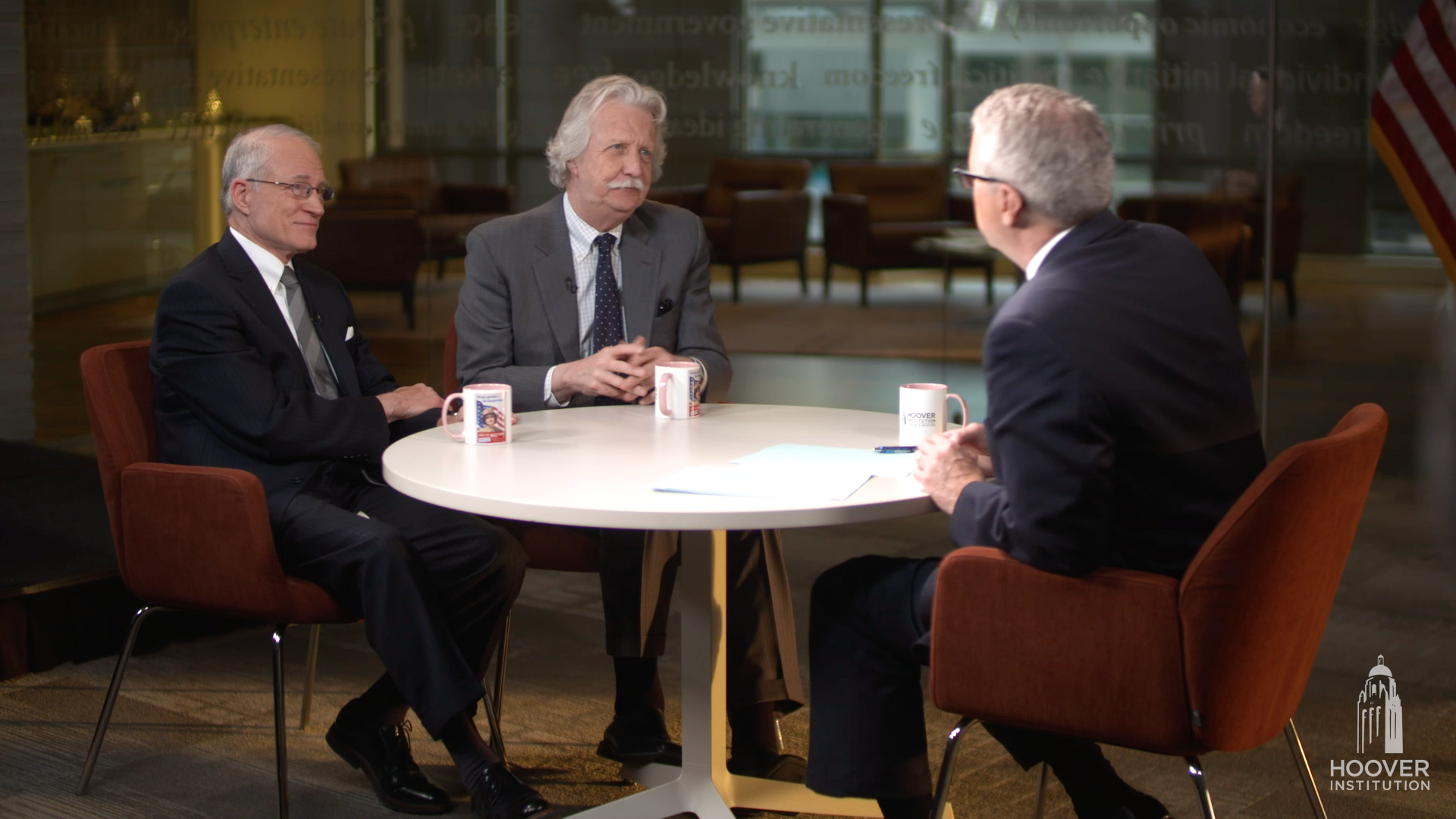
On November 30, 2018, forty-first president George H. W. Bush passed away. Andrew Ferguson and Peter Robinson both served as speechwriters for Bush during his tenure in the White House as both the vice president and president. Chase Untermeyer served as the ambassador to Qatar under the forty-first president. The three men gather to remember the man they knew and the legacy he left behind.
Untermeyer, Ferguson, and Robinson reminisce about their experiences with George H. W. Bush. Robinson relates a fond memory he has of meeting with Bush, who was vice president at the time, to discuss Robinson’s career as a speechwriter or as a law student. They discuss Bush’s amazing military career as a pilot in WWII. Bush postponed his university studies at Yale after the attack on Pearl Harbor on December 7, 1941, and enlisted at age eighteen. By the age of twenty, Bush had flown fifty-eight combat missions and had been shot down once. After the war Bush finished his education and went on to become an expert in foreign policy as ambassador to the United Nations and then as director of Central Intelligence. Bush was president during the fall of the Berlin Wall in 1989 and oversaw the nonviolent transition period from the Cold War to peacetime. They remember the former president’s graciousness, kindness, humility, and desire to help others (and not hold grudges), and they discuss how those qualities translated into his life and political career.
Related Resources: